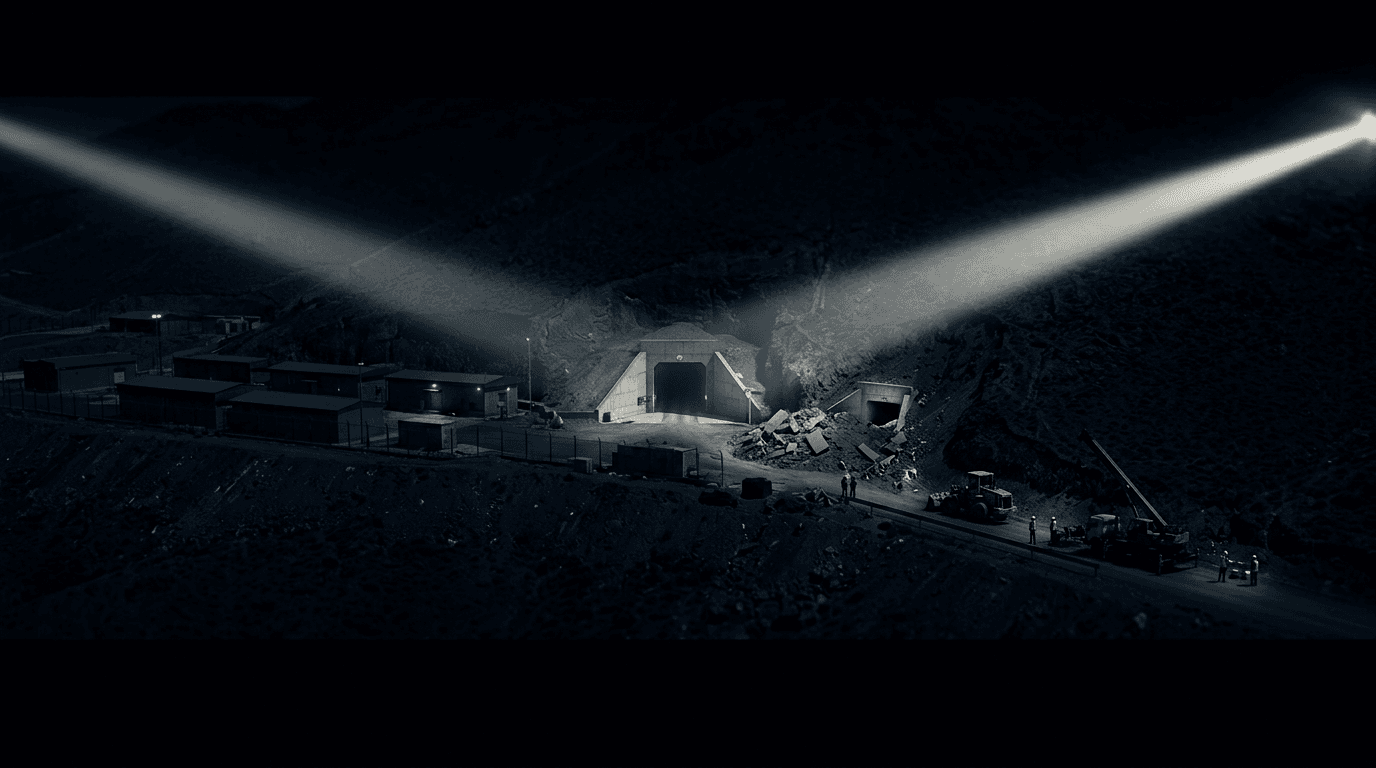
High-resolution satellite images from Vantor show tunnel entrances at the Isfahan nuclear site are still completely sealed with dirt, nearly a year after Israeli strikes and the US "Midnight Hammer" operation in June 2025. Iran reportedly filled the openings deliberately in early 2026 to protect enriched uranium stores.
High-resolution satellite imagery from Vantor, obtained by the desk, reveals that all tunnel entrances at the Isfahan nuclear complex in central Iran remain completely sealed with dirt nearly a year after they were struck in June 2025. The strikes — Israeli operations and the U.S. "Midnight Hammer" campaign — targeted the underground facility, which was assessed by Israeli intelligence to have held much of Iran's 60% enriched uranium stockpile.
According to the satellite analysis, Iran deliberately filled the tunnel openings with earth in early 2026, apparently as a defensive measure to shield the remaining enriched uranium stores, which are believed to be stored deep underground. The move suggests Tehran is prioritizing physical entombment over retrieval or removal.
As The Zioneer reported in June (article, June 13), assessments indicated hundreds of kilograms of fissile material remained inaccessible. Separate reports from U.S. intelligence sources detailed how Iran had collapsed some tunnels and laid mines at entrances — further complicating any potential deal to transfer the material out of Iran. The new Vantor imagery provides visual confirmation that the blockage is both deliberate and sustainable, with no visible recent excavation or reopening activity.
- DevelopingSatellite imagery shows Isfahan nuclear facility tunnel entrances still buried under rubble a year after strikes
- StrongNew satellite imagery reveals ongoing earthmoving at Iran nuclear site bombed in March
- StrongIsraeli assessment: Iran's enriched uranium entombed in attacked Isfahan tunnels, Fordow ruins
- StrongNew satellite imagery details vehicle activity at Iran's Natanz and Isfahan nuclear sites
Source and signal
- Open-source intake