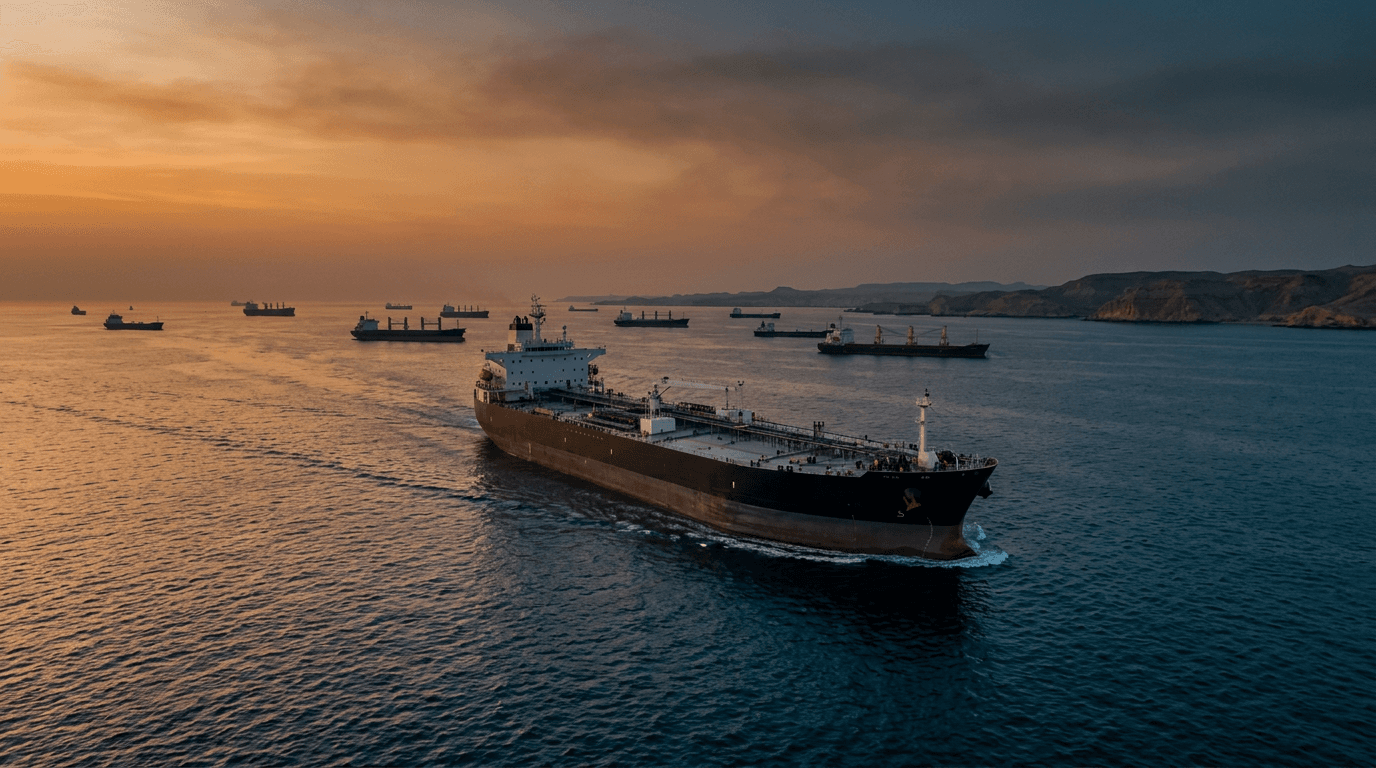
Two large oil tankers carrying 4 million barrels of crude have crossed the Strait of Hormuz, following the opening of the strategic waterway, according to Israeli Channel 12 citing its foreign desk. Two smaller tankers sailed through the strait to the Gulf of Oman.
Two supertankers carrying 4 million barrels of crude crossed the Strait of Hormuz on Monday, the first major passage since the reopening of the strategic waterway, Channel 12's foreign desk reported. Two smaller tankers continued through the strait to the Gulf of Oman. The transit follows a period of heightened tensions during which Iran had threatened to close the strait. As The Zioneer reported over the past two weeks, commercial traffic has resumed in stages: on June 20 U.S. Central Command reported 55 merchant vessels transiting the strait in a single day, after President Trump disclosed a covert operation that had moved over 100 million barrels since mid-May. Earlier this month, Saudi tankers carrying approximately 6 million barrels also passed through. Monday's shipment of another 4 million barrels adds to the picture of a return to normal commercial traffic through the waterway, which carries roughly a fifth of the world's daily oil supply.
- StrongReport: Three Saudi oil tankers with 6 million barrels cross Strait of Hormuz
- DevelopingCENTCOM: 55 commercial ships transit Strait of Hormuz, traffic increases
- StrongTrump reveals 100+ million barrels of oil crossed Hormuz in secret operation
- StrongMalta-flagged LNG tanker transits Strait of Hormuz after US-Iran understanding, reports say
Source and signal
A single-sourced dispatch is never rated Confirmed or Strong. Its Signal strengthens only when a second, independent source corroborates it.
- Internal intake