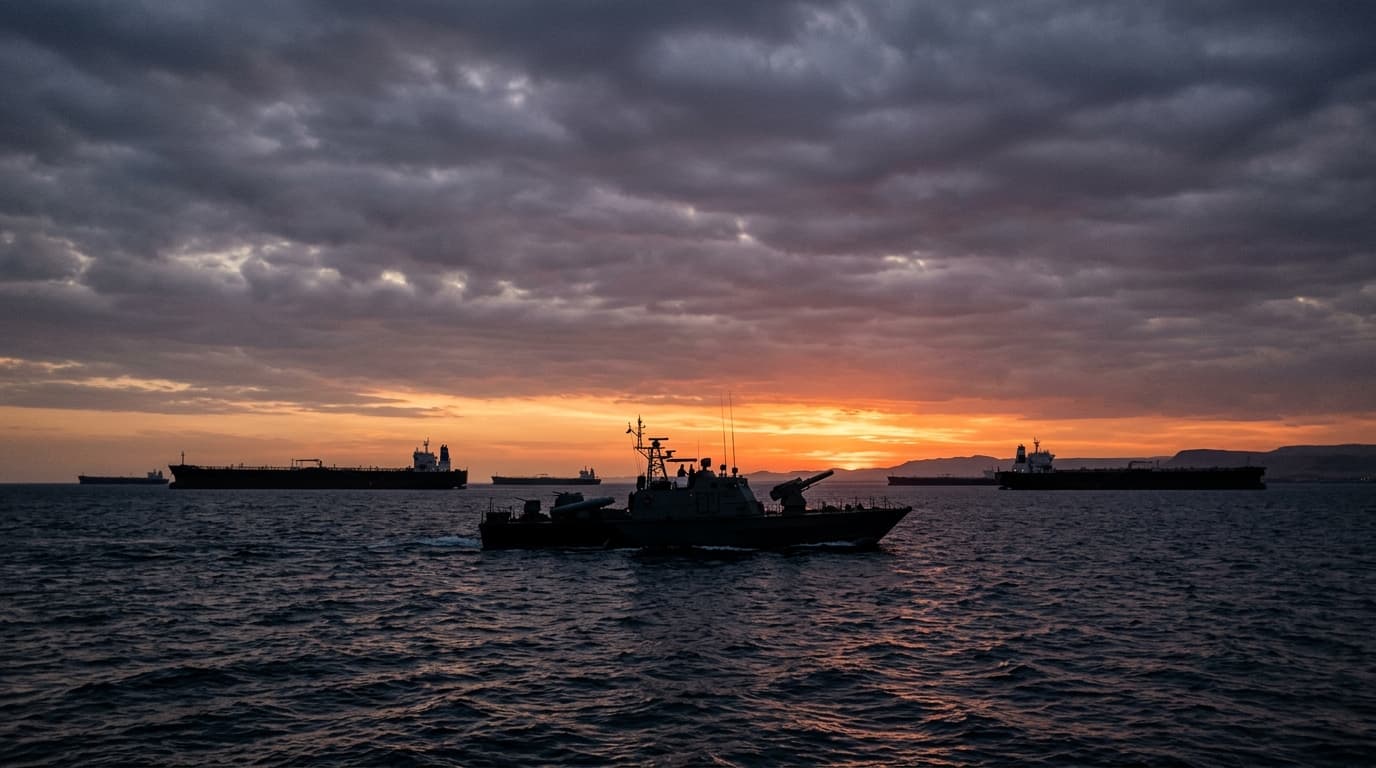
According to foreign sources, the IRGC Navy has warned vessels that navigation in the Gulf and the Strait of Hormuz must proceed south of Larak Island, calling passage outside that route 'extremely dangerous and unacceptable.' Simultaneously, Iran and Oman discussed maritime cooperation frameworks, while Iran's VP stated the current situation 'cannot continue this way' and is unlikely to produce a deal or ceasefire. U.S. envoys Witkoff and Kushner are expected to attend Tuesday's meeting with Iranian representatives in Doha.
The IRGC Navy has escalated its maritime posture in the Gulf, warning vessels to route exclusively south of Larak Island — a designated transit corridor well south of the standard Hormuz shipping lane — and describing any deviation as 'extremely dangerous and unacceptable,' according to foreign sources cited by a single source.
Tuesday's planned meeting in Doha between U.S. envoys Steve Witkoff and Jared Kushner and Iranian representatives comes amid the tightened restrictions. Iran's Vice President Mohammad Reza Aref stated the current situation 'cannot continue this way' and is unlikely to lead to either a deal or a ceasefire, signaling continued deadlock.
This maritime note follows weeks of escalating IRGC threats against Gulf shipping, including the formal closure declaration of the Strait of Hormuz on June 20, which Tehran linked to the U.S. failure to enforce ceasefire terms and the continued Israeli presence in southern Lebanon. On June 28, the IRGC navy issued a separate threat against U.S. vessels and bases.
The channel also reported that Iran's judiciary chief, Gholam Hossein Mohseni Ejei, accused the United States of being the source of 'many crimes in the world,' and that Iran ordered documentation of American officials' alleged admissions of crimes and preparation of a catalog of grievances for possible indictment. These judicial steps remain attributed to single foreign sources and have not been independently corroborated.
The Zioneer previously reported on the broad sequence: the IRGC's June 20 formal closure of Hormuz, the U.S. Navy's subsequent escorting of tankers through the threatened route (June 28), and successive IRGC threats against American military vessels and bases in the region.
- StrongIran tightens Strait of Hormuz transit rules: mandatory insurance, threat of IRGC Navy sanctions
- StrongIran warns Oman it cannot guarantee Strait of Hormuz security without Tehran's approval, according to source
- DevelopingUS Navy escorts tankers through Iranian-threatened Hormuz route despite recent attacks
- DevelopingIran's IRGC Navy says only Iran-authorized routes allowed through Strait of Hormuz
Source and signal
- Internal intake