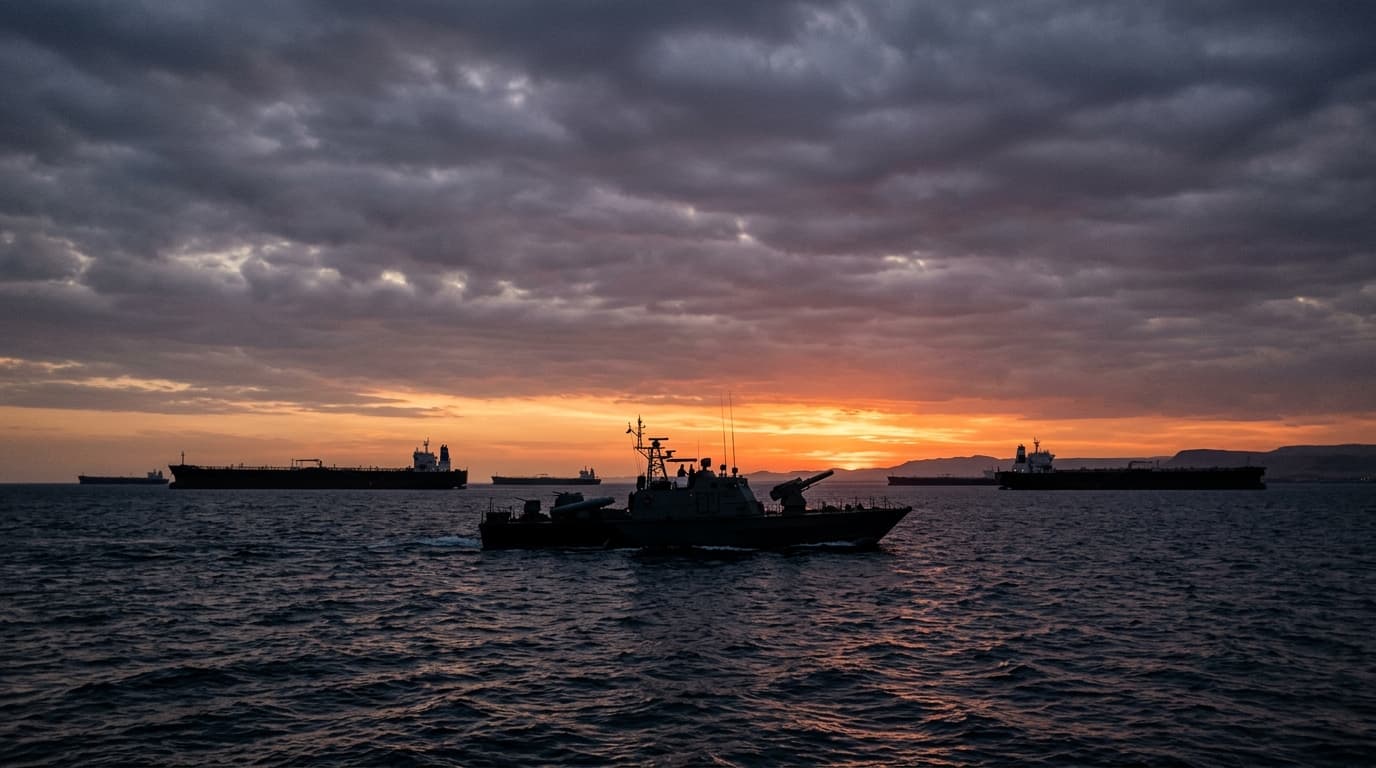
Politico reports that growing gaps between Arab states over the future of relations with Iran and the war effort are complicating efforts to reopen the Strait of Hormuz. The report cites a former US ambassador and an Arab diplomat, noting that the UAE's withdrawal from OPEC in April partly reflected the rift. Diverging priorities — some states have alternative export routes, others are more tied to Iran's economy — hinder progress toward a political solution.
Politico reports that the deepening rift among Arab states over Iran and the Strait of Hormuz is stalling diplomatic and military efforts to reopen the strategic waterway, according to a report carried by Asaf Rozentzweig (N12). The report cites a former US ambassador to Saudi Arabia, Michael Ratney, who described Oman as the most open to Iran, Qatar somewhat less, the UAE as the most determined to act forcefully, and Saudi Arabia in the middle. An Arab diplomat from a non-Gulf state said the UAE's withdrawal from OPEC angered other countries, especially Saudi Arabia, and that the Gulf Cooperation Council 'is not functioning'.
The Zioneer has previously reported on the broader Hormuz crisis, including Iran's threats to keep the strait closed indefinitely and demands for an Israeli withdrawal from Lebanon (June 19), internal Iranian rifts over the issue (June 14, July 17), and a reported US-Saudi rift over the use of airspace for Operation Liberty (July 1). The current report adds a new dimension: the divisions among Arab states themselves, which the report says make any political solution or reopening of the strait highly difficult.
What remains unclear is how these divisions will affect ongoing US-led mediation efforts, and whether the UAE's more hawkish stance will drive a wedge between Riyadh and Abu Dhabi.
- DevelopingProgress reported in Iran-Oman talks on reopening Strait of Hormuz
- DevelopingIranian ultra-conservative bloc splits over Hormuz — analyst assesses rift deepens
- StrongIranian diplomat to WSJ: US pressure deepens regime rift, hardliners push for Hormuz seizure
- DevelopingSaudi Arabia demands return to pre-war Hormuz status; Iran refuses
Source and signal
A single-sourced dispatch is never rated Confirmed or Strong. Its Signal strengthens only when a second, independent source corroborates it.
- Open-source intake