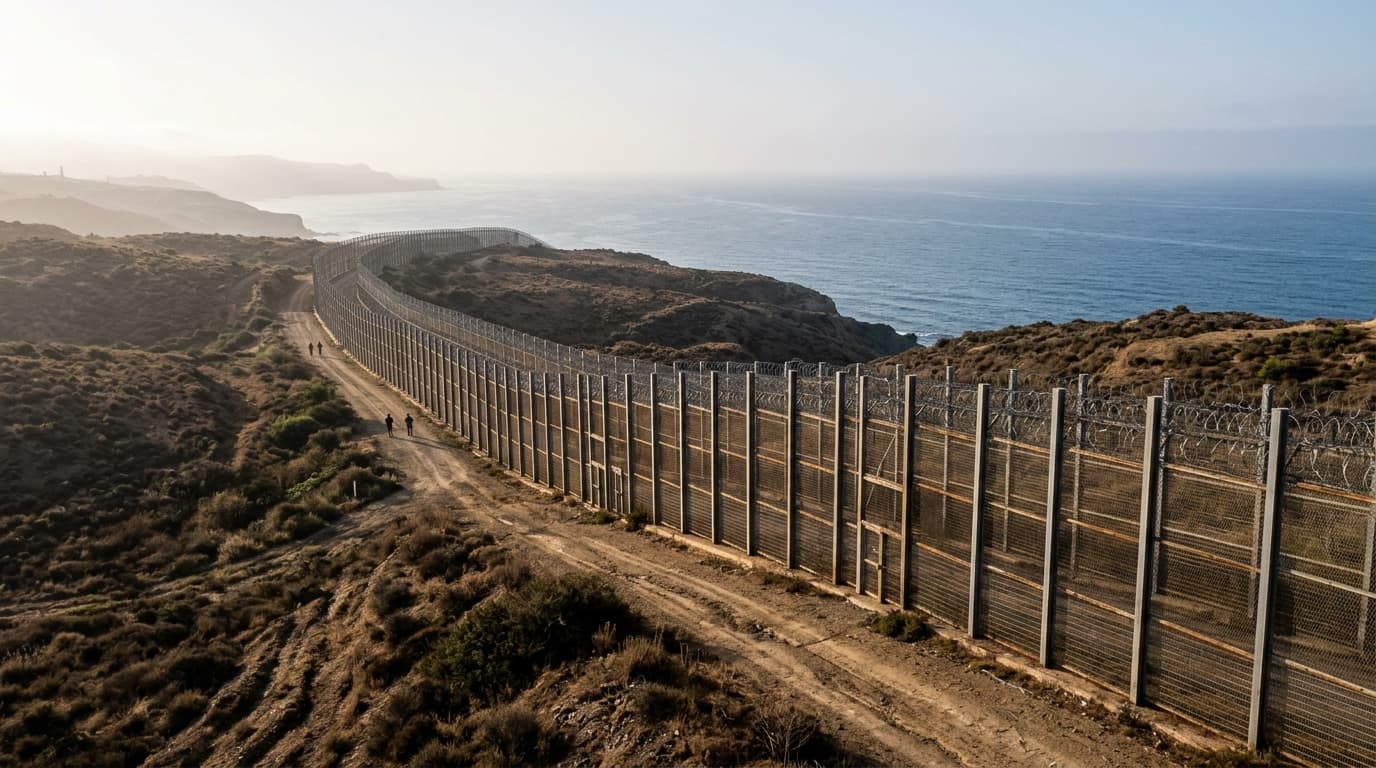
Spanish Foreign Minister José Manuel Albares announced he will summon the Italian ambassador in Madrid, according to Asaf Rozentzweig (N12). The move follows Italian Foreign Minister Antonio Tajani's statement supporting the closure of the free-travel border with Spain, citing the migrant crisis in Ceuta and Spain's decision to grant citizenship to some 500,000 migrants. Albares wrote that the statement is 'unbecoming of a foreign minister of a friend and partner.'
The diplomatic row escalated on Friday as Spain's top diplomat summoned the Italian ambassador, marking the latest rift between European Union members over the migrant crisis in the Spanish enclave of Ceuta. The announcement by Foreign Minister José Manuel Albares came after his Italian counterpart Antonio Tajani expressed support for closing the Schengen free-movement zone with Spain, citing the mass influx of migrants into Ceuta and Spain's plan to regularize some 500,000 undocumented migrants. Albares stated that the Italian foreign minister's remarks were 'not appropriate for a foreign minister of a partner and friend.'
The incident follows a series of European reactions to the Ceuta crisis. Earlier on Friday, French Interior Minister Laurent Nuñez ordered reinforced border controls with Spain (as The Zioneer reported). Italy's Prime Minister Giorgia Meloni has also stated that she is prepared to suspend Spain from the Schengen area over the crisis, according to prior reports. The Spanish government, meanwhile, has rejected calls to declare a national emergency, opting instead for police reinforcements and legal procedures.
Tajani's comments align with his government's hardline stance on migration, which has been a hallmark of the Meloni administration. The Spanish government's decision to grant citizenship to a large number of migrants has drawn criticism from several European leaders, who argue it incentivizes illegal migration and undermines border security. The summons of the Italian ambassador represents a formal diplomatic protest, raising tensions between two EU member states that are traditionally aligned on many issues.
- StrongItaly and Spain impose mutual border checks amid Ceuta crisis
- DevelopingMacron orders reinforced border controls with Spain amid Ceuta migrant crisis
- StrongSpain announces migrant transfer into Europe, Italy rejects 'ultimatum'
- StrongEU interior ministers expected to convene Tuesday for emergency meeting on Ceuta migrant crisis
Source and signal
- Open-source intake