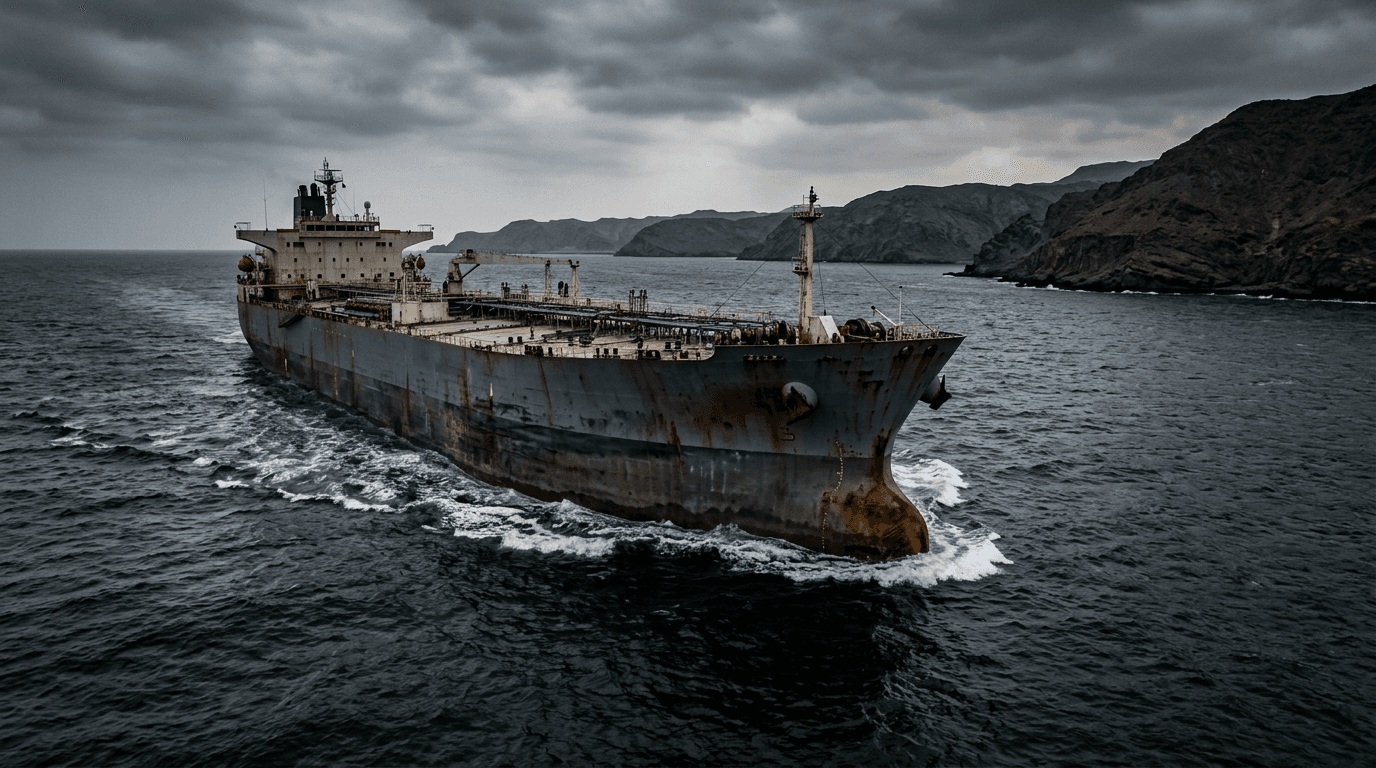
The Lead
The Islamic Revolutionary Guard Corps (IRGC) issued a formal statement early Sunday morning declaring the Strait of Hormuz closed to all vessels linked to Israel and its supporters. The Iranian paramilitary force asserted that it is no longer bound by any prior maritime agreements or understandings, warning that any attempt to violate this closure will be met with military force.
The Islamic Revolutionary Guard Corps (IRGC) has significantly escalated its rhetoric regarding global energy arteries, announcing that the Strait of Hormuz is now closed to shipping associated with the "Zionist entity." In a statement released shortly after midnight on Sunday, the IRGC claimed that "international silence" and a perceived failure by the United States to pressure Israel into halting its military operations in Lebanon have effectively nullified all prior diplomatic understandings.
This development marks a hardening of the position taken by the IRGC late Saturday night, when it first signaled it was "released from all commitments" regarding maritime passages. The new declaration explicitly names the Strait of Hormuz and extends the threat to any vessel supporting Israel, placing full responsibility for potential consequences on Jerusalem and the Trump administration in Washington.
Strategic Context and Analysis
This move by the IRGC appears to be a direct challenge to the emerging 'Islamabad Agreement'—a diplomatic framework between the U.S. and Tehran that the IRGC has consistently criticized. By linking the security of the Strait of Hormuz to the conflict in Lebanon, the IRGC is attempting to exert leverage over international maritime trade to force a change in Israeli military policy.
According to material reviewed by The Zioneer Intelligence Desk, the IRGC frames this blockade as a "legitimate right" to defend regional security and support the "resistance." However, the move also signals internal Iranian friction, as the paramilitary arm continues to act independently of, or in opposition to, official diplomatic channels that had been seeking to stabilize the region.
Outlook for Maritime Security
The threat of force against vessels attempting to transit the strait raises the risk of a direct naval confrontation. While the U.S. Navy has previously warned IRGC vessels to halt interference in the waterway, this formal declaration of closure suggests that the IRGC may be preparing for more aggressive interdiction efforts. Shipping companies with even tangential links to Israel are facing an environment of acute risk in one of the world's most vital maritime chokepoints.
6 developments
- The Zioneer Intelligence Desk