The Lead
General Alexus Grynkewich, commander of U.S. European Command (EUCOM), has reportedly warned the Pentagon that his current naval assets are insufficient to sustain the defense of Israel against ballistic missile threats. According to reports first published by The Washington Post and cited by Israeli media on Saturday, Grynkewich stated that without an additional destroyer, he would be forced to prioritize the protection of the U.S. homeland over regional defense commitments.
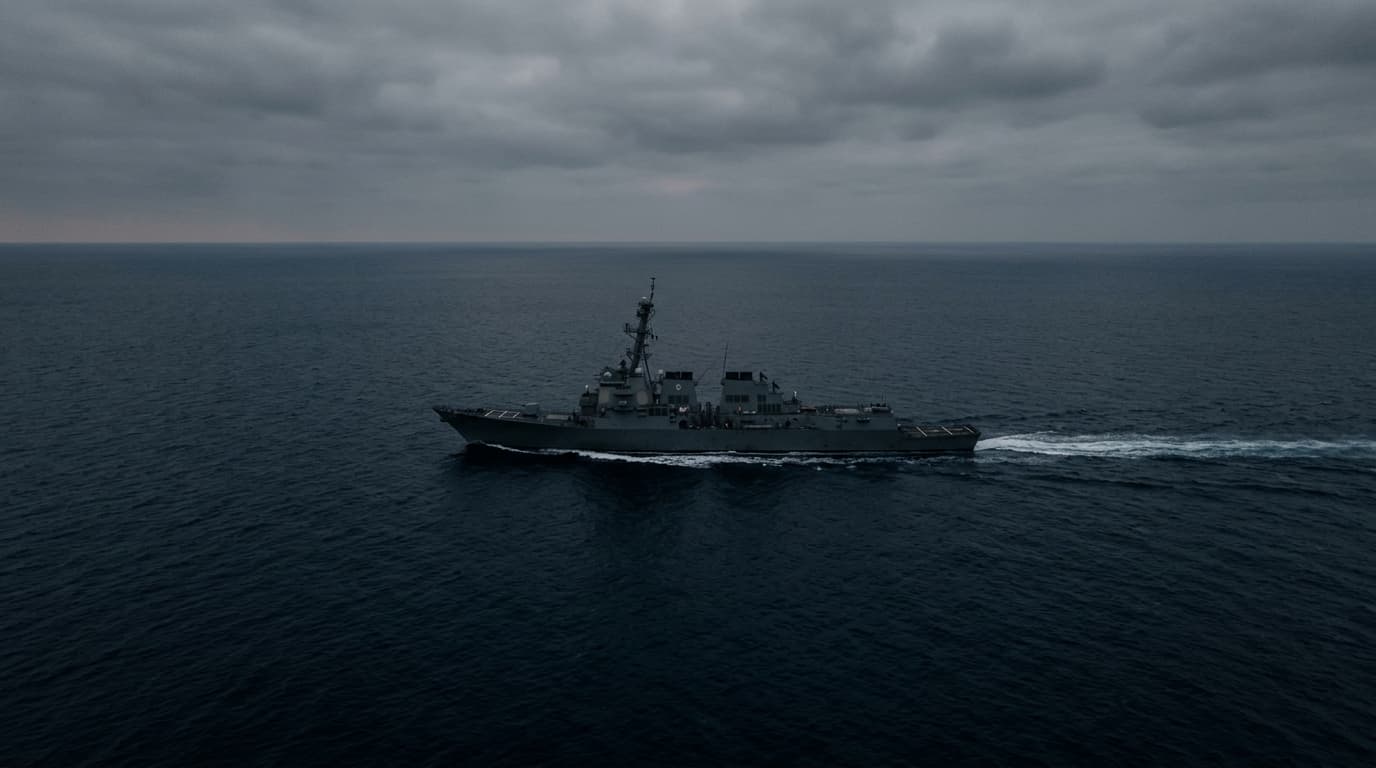
The warning from the EUCOM commander highlights a growing strain on American military resources as regional tensions remain high. Currently, only two U.S. warships are deployed in the eastern Mediterranean, with a third stationed in the Red Sea. This deployment level, according to the reported internal communication, leaves a critical gap in the ability to intercept ballistic missile salvos while simultaneously maintaining domestic security protocols.
Strategic Resource Strain
This development follows prior warnings regarding the depletion of American munitions and assets. As The Zioneer reported earlier, concerns have been raised within the Pentagon about the sustainability of long-range air defense stockpiles. Furthermore, recent shifts in the U.S. defense posture—including reported plans to reduce fighter jet allocations in Europe—suggest a broader re-evaluation of how American assets are distributed globally. The current naval shortage in the eastern Mediterranean represents a specific tactical bottleneck for Israel's multi-layered defense umbrella, which has relied on U.S. naval integration to counter threats from Iran and its proxies.
Analysis of the Defense Gap
The reported dilemma faced by General Grynkewich—choosing between "the homeland" and Israel—indicates that the Pentagon's global force management is reaching a tipping point. While the U.S. has maintained a significant presence in the Middle East, including aircraft carriers and destroyers, the specific requirement for Aegis-equipped destroyers capable of ballistic missile defense is a finite resource. If the Pentagon does not allocate the requested additional destroyer, Israel may find itself increasingly reliant on its own independent interception capabilities, such as the Arrow and David's Sling systems, without the forward-deployed naval layer provided by the U.S. Navy.
Implications for Israel
For the Israeli defense establishment, this warning serves as a reminder of the strategic necessity for self-reliance. While the security partnership with the United States remains a cornerstone of regional stability, the physical limitations of U.S. naval deployment could impact the operational response to future escalations. Observers will be watching to see if the Pentagon reshuffles assets from other theaters to address Grynkewich's warning or if Israel will be required to adjust its defensive posture in anticipation of a reduced American naval footprint.
7 developments
- The Zioneer Intelligence Desk
- Pentagon orders immediate acceleration of weapons production, cites 'extreme shortage' of ammunitionEditorially linked
- Report: Pentagon to Cut US Fighter Jets Assigned to NATO in Europe from 150 to 100Editorially linked
- US reportedly takes control of second-largest proven oil reserves, Pentagon gains 35% stakeEditorially linked
- Netanyahu: Draft dodgers will 'enlist or go to prison'; admits current draft law failedEditorially linked
- Overnight: Iran launched 20 ballistic missiles at US bases in Jordan, reports say
- Israel tells British consulate in Jerusalem diplomats will lose status within 30 days
- IDF Confirms for the First Time: Hamas Removing Weapons From Storage
- US Treasury expands sanctions on Iranian aviation, adds 28 airlines and targets foreign facilitators