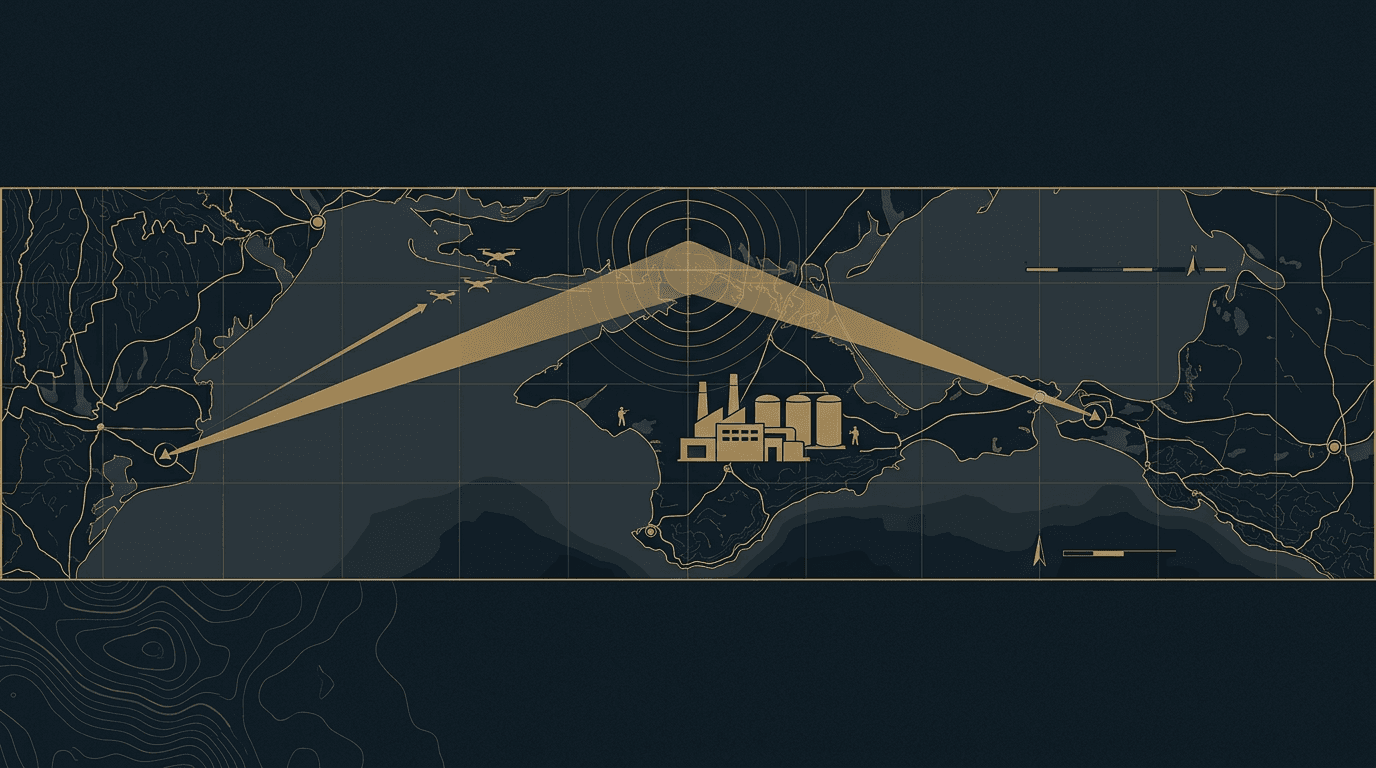
According to a Financial Times report, Ukrainian drone strike teams receive briefings from certified engineers and target the most complex, hard-to-replace components in Russian refineries. The campaign has reportedly disabled more than 30% of Russia's refining capacity over the past year, leading to the country's worst fuel crisis since the fall of the Soviet Union.
A Financial Times report published Thursday details how Ukrainian drone strike teams are systematically targeting the most complex and hard-to-replace components in Russian oil refineries. The report, citing Ukrainian military sources, says the teams receive briefings from certified engineers to identify critical parts such as distillation columns and catalytic crackers, which are difficult to manufacture or import due to sanctions.
The strikes have reportedly disabled more than 30% of Russia's refining capacity over the past year, forcing Moscow to allow lower fuel quality standards to avoid shortages. The report describes the resulting fuel crisis as the worst Russia has experienced since the collapse of the Soviet Union, with fuel queues at gas stations and rising prices.
The Financial Times report adds to a growing body of evidence about Ukraine's evolving drone warfare strategy. As The Zioneer has previously reported, Ukrainian drone strikes on Russian energy infrastructure have intensified significantly in 2026, with attacks on Moscow's central oil refinery, critical infrastructure in Crimea, and shadow fleet tankers in the Sea of Azov. The reported targeting of specific refinery components represents a more surgical approach aimed at maximizing long-term damage to Russia's energy sector.
- StrongPOLITICO, Financial Times: Ukraine strikes disabled 40% of Russia's oil refining capacity
- DevelopingReport: Ukraine strikes Russia's largest oil refineries with 100 missiles and 400 drones
- StrongUkrainian drones reportedly strike major oil refinery in Russia's Yaroslavl region
- DevelopingRussia reportedly allows refineries to lower fuel quality as Ukrainian drone strikes double
Source and signal
A single-sourced dispatch is never rated Confirmed or Strong. Its Signal strengthens only when a second, independent source corroborates it.
- Open-source intake