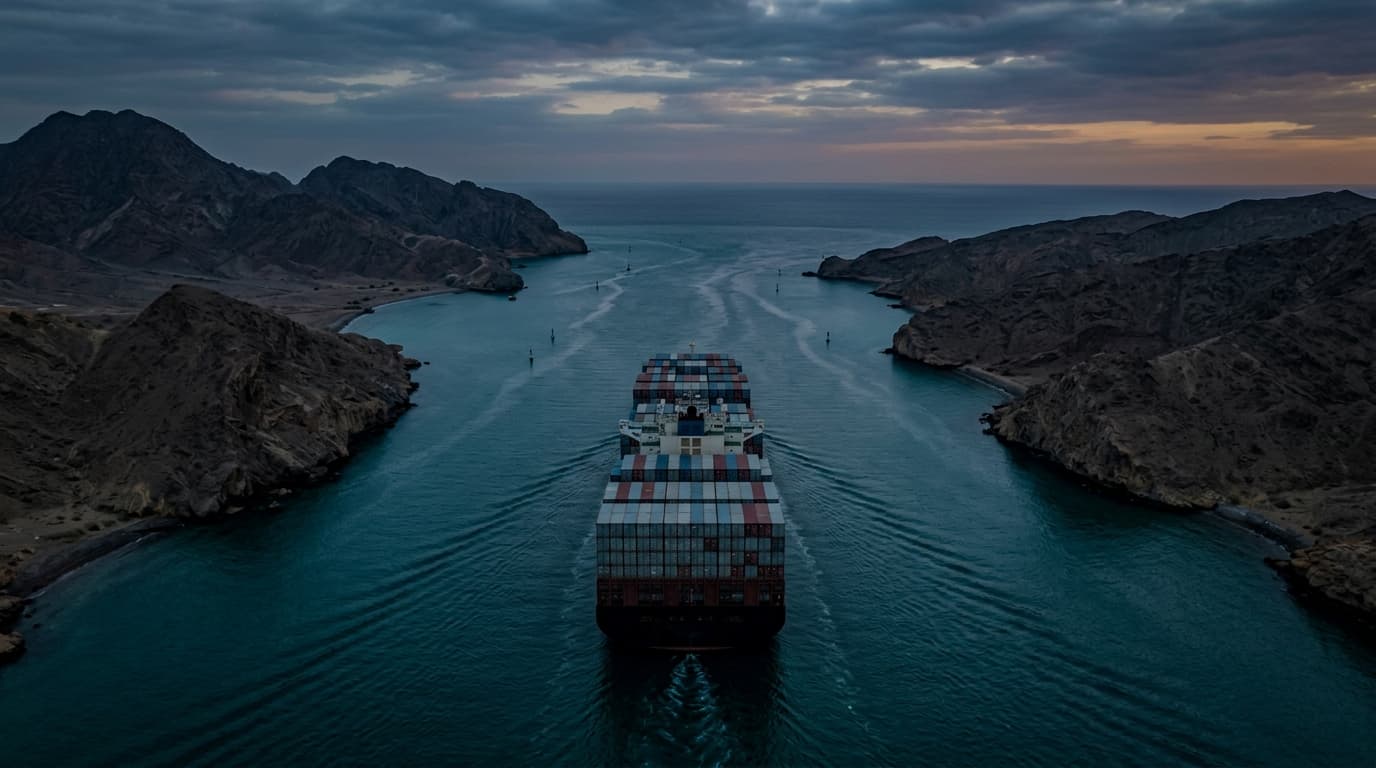
Oman proposed during talks in Muscat on Saturday that both the southern and northern routes of the Strait of Hormuz operate fully, according to a diplomatic source cited by Channel 12's Barak Ravid. The southern route, in Omani waters, would reopen without pre-war approval requirements. Iran did not agree at the meeting and took the proposal for internal deliberations in Tehran.
In Muscat talks on Saturday, Iran deferred an Omani proposal to fully operate both the southern and northern routes of the Strait of Hormuz, referring the plan for internal deliberation in Tehran, a diplomatic source told Channel 12's Barak Ravid. The proposal, which would have reopened the southern route without pre-war approval requirements and allowed full operation of the Iranian-controlled northern route, was not accepted at the meeting. The development follows a series of reports that emerged around 21:59 Jerusalem time on Saturday detailing the evolving diplomatic initiative.
The story unfolded through multiple reports Saturday evening. An initial CNN report, cited by analyst Yair Goldblatt, indicated Oman proposed that ships on the northern route seek prior clearance from Iran without fees. A subsequent CNN report specified that the southern route would be fully reopened under pre-war arrangements while the northern route required Iran approval. A third report from CNN added that the plan would establish two separate lanes — one under Iranian supervision and one under Omani control — with no fees. The final version, reported by Channel 12's Barak Ravid, confirmed that Oman proposed full operation of both routes. All reports were published at 21:59 Jerusalem on Saturday, reflecting the rapid consolidation of details.
The Muscat talks were initiated by Iran, as The Zioneer reported in a Saturday article (published at 17:26 Jerusalem). The Zioneer has also documented Iran's prior rejection of an Omani plan for an alternative southern route under US supervision (July 5, 18:18 Jerusalem) and its explicit linkage of the strait's reopening to Israeli restraint in Lebanon (June 21, 17:51 Jerusalem). These conditions remain part of the broader context.
It remains unclear when Iran's internal deliberations will conclude, and no timeline for a response has been announced. The proposal's viability may also depend on developments in Lebanon and the US position.
7 developments
- DevelopingIranian FM Araghchi departs Tehran; destination undisclosed
- StrongAraghchi sets two conditions for US talks: Lebanon MoU clause, Israeli withdrawal
- DevelopingIranian Foreign Minister Araghchi discusses Iran's response with Qatari and French counterparts
- DevelopingNo event: message contains only name of Iranian foreign minister
Source and signal
- Internal intake