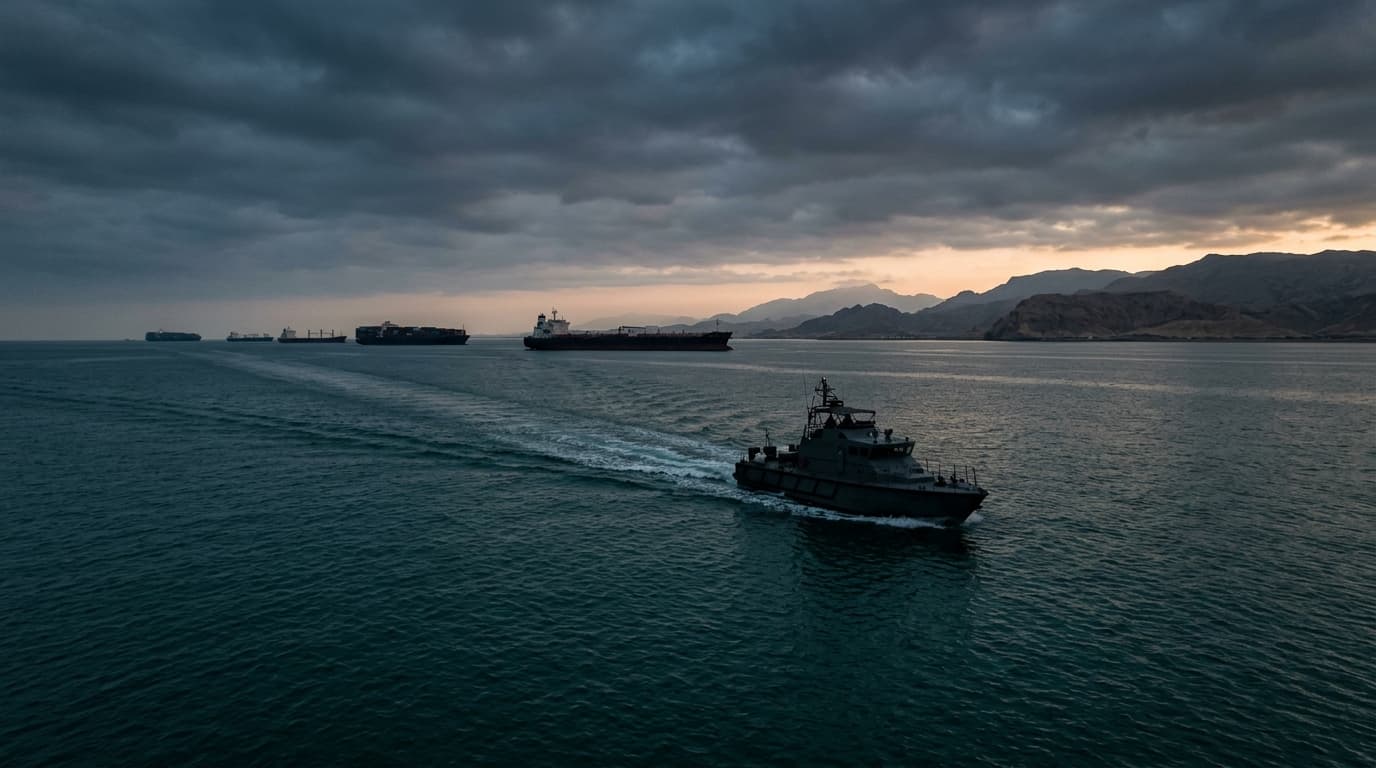
The Islamic Revolutionary Guard Corps (IRGC) said new initiatives for safe passage through the Strait of Hormuz are unacceptable without Iran's approval, according to Asaf Rozentzweig (N12). The statement tightens Tehran's position on the critical maritime chokepoint.
The IRGC published its latest maritime restriction early Thursday, reiterating that any uncoordinated transit in the Strait of Hormuz is unacceptable and will not be permitted without Iranian authorization, as reported by N12 journalist Asaf Rozentzweig. This comes hours after The Zioneer reported a similar September 4 statement in which the IRGC already warned that uncoordinated passage was “unacceptable and dangerous” and promised measures against vessels deviating from the permitted route. The new phrasing—specifically “new initiatives for safe passage”—appears to respond to recent diplomatic or operational suggestions for de-escalation at the chokepoint. While September 4's statement broadened the warning to all uncoordinated vessels, today's statement more precisely frames the condition of Iranian approval for any new safe-passage initiative. No military escalation, exercises, or specific vessel interceptions were reported alongside the statement.
2 developments
- ConfirmedIRGC declares Strait of Hormuz closed to Israel-linked vessels until further notice
- StrongIran tightens Strait of Hormuz transit rules: mandatory insurance, threat of IRGC Navy sanctions
- StrongIRGC announces closure of Strait of Hormuz after Iran's World Cup disqualification
- StrongIranian chief of staff claims full control of Strait of Hormuz, threatens shipping
Source and signal
- Internal intake