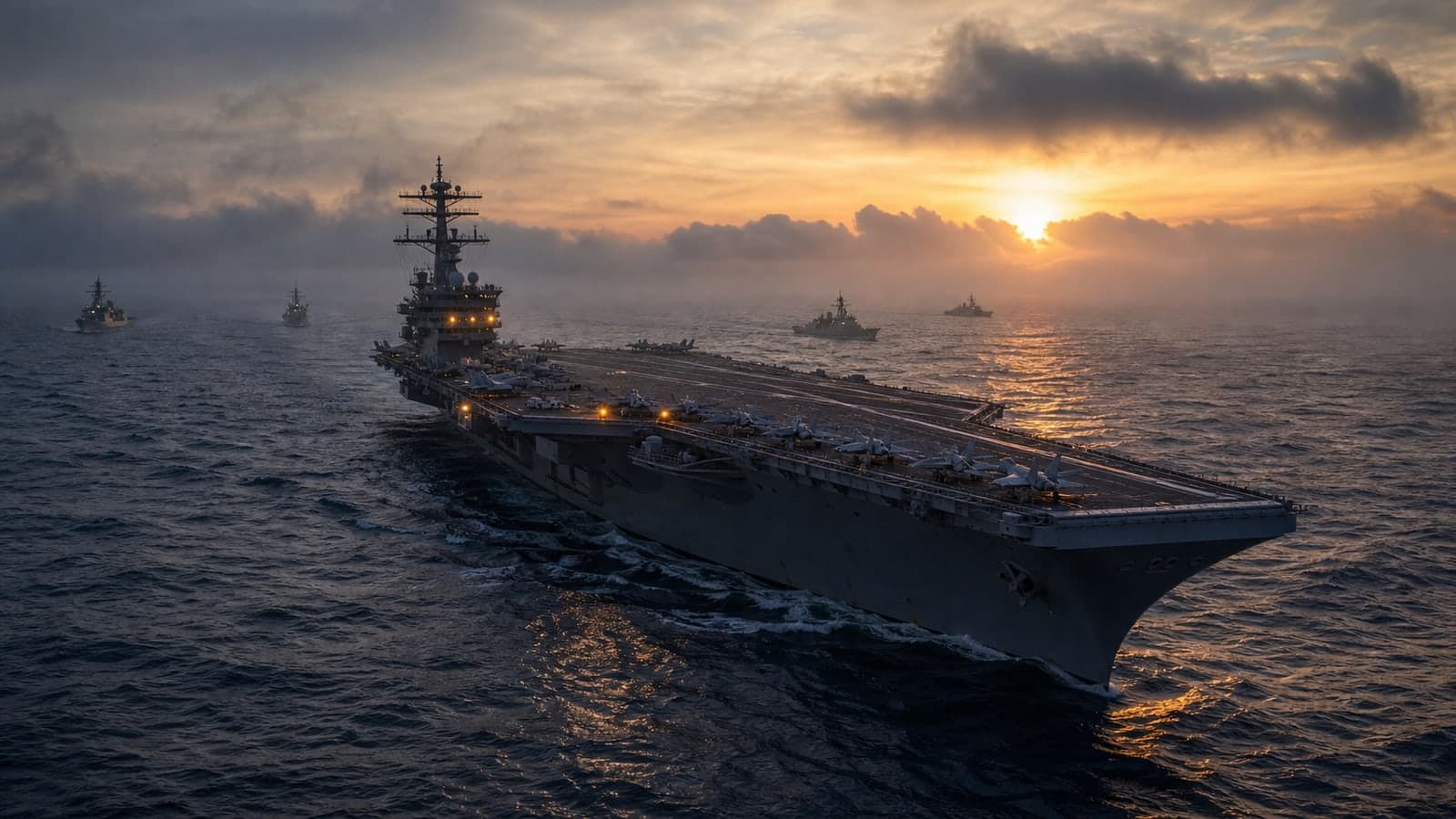
US Central Command says more than 20 Navy warships and aircraft crossed the Arabian Sea in close formation, demonstrating military power and regional stability efforts. The deployment underscores the continued US naval presence in the Middle East amid tensions with Iran.
The US Central Command (CENTCOM) said Wednesday that more than 20 US Navy warships and aircraft crossed the Arabian Sea in close formation, demonstrating 'unmatched American firepower' and regional commitment. The warships are scanning waters across the Middle East as part of an ongoing effort to maintain stability, according to the command.
As The Zioneer reported moments earlier, CENTCOM confirmed over 20 American warships are currently deployed across the Middle East. The latest statement adds detail on the specific maneuvers — a close-formation transit through the Arabian Sea — and emphasizes the visible demonstration of power.
The deployment comes amid heightened tensions with Iran over the Strait of Hormuz and ongoing US naval operations in the region. The US maintains a significant presence, including two aircraft carrier groups, as part of its posture toward Iran and its proxies.
4 developments
- StrongCENTCOM conducts night drills with US Marines somewhere in the Middle East
- StrongUS maintains 50,000 troops across Middle East on two aircraft carriers
- DevelopingUS Central Command releases footage of disabling Iranian-affiliated vessel
- StrongCENTCOM: USS George H.W. Bush carrier operating in the Arabian Sea
Source and signal
- Internal intake