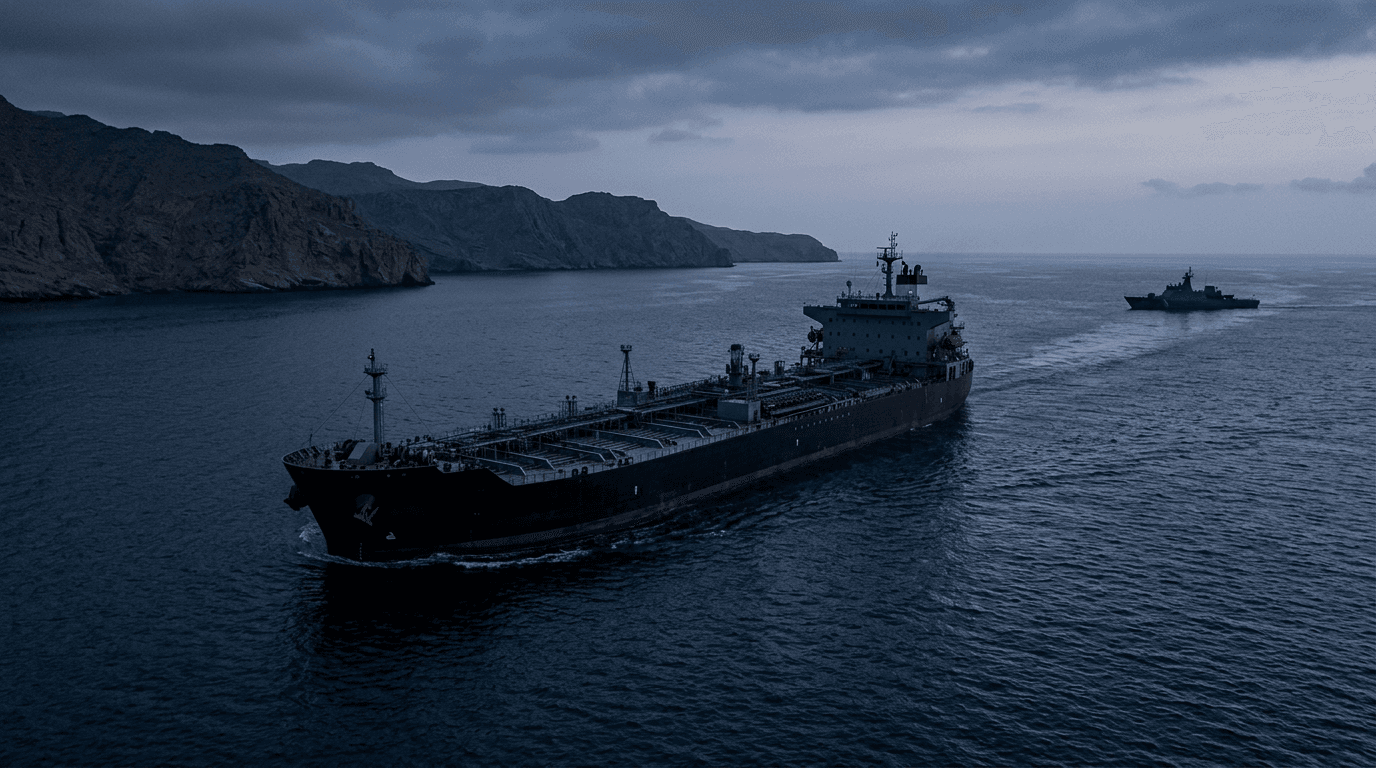
The Zioneer Intelligence Desk, in an analysis by Tamir Mor released Tuesday, assesses that the United States now controls the Strait of Hormuz and Iran's blockade strategy has backfired, intensifying the economic pressure on Tehran. The analysis warns the failure may push Iran to renew hostilities in the coming weeks, possibly ahead of November's congressional elections, in a bid to force Washington to lift the economic stranglehold it describes as an existential threat to the regime.
Tamir Mor, writing for The Zioneer Intelligence Desk on Tuesday, argues that the debate over oil volumes transiting the Strait of Hormuz under US escort has effectively ended. The United States, he assesses, now controls the chokepoint, and Iran's attempt to impose a blockade has backfired, leaving Tehran's economy under severe pressure.
The analysis comes against the backdrop of months of escalating confrontation over the strait. As The Zioneer has reported, Iran declared the waterway closed in June 2026 following US strikes on its coastal military infrastructure. Subsequent US operations, including naval escort missions, gradually restored commercial transit despite Iranian threats. The Wall Street Journal and The Zioneer have previously assessed that the blockade strategy failed and that Iran's economic pain has deepened.
Mor's assessment goes further, warning that the regime's desperation may push it to launch a fresh military escalation in the coming weeks, possibly timed before November's US congressional elections. He describes the economic squeeze as an existential threat to the regime, making a renewed conflict a 'last-ditch attempt' to force Washington to relent. The analysis does not specify the form such a renewal would take but frames it as a likely Iranian response to its strategic defeat in the Hormuz theater.
Source and signal
A single-sourced dispatch is never rated Confirmed or Strong. Its Signal strengthens only when a second, independent source corroborates it.
- Open-source intake