The Lead
The Islamic Revolutionary Guard Corps (IRGC) reportedly intercepted multiple oil tankers in the Strait of Hormuz on Friday, with Iranian state-aligned media and international wire services providing conflicting accounts of the engagement. While Iranian outlets claim two vessels were stopped for using "unauthorized routes," other reports indicate that Iranian forces struck two tankers that were operating under United States air escort.
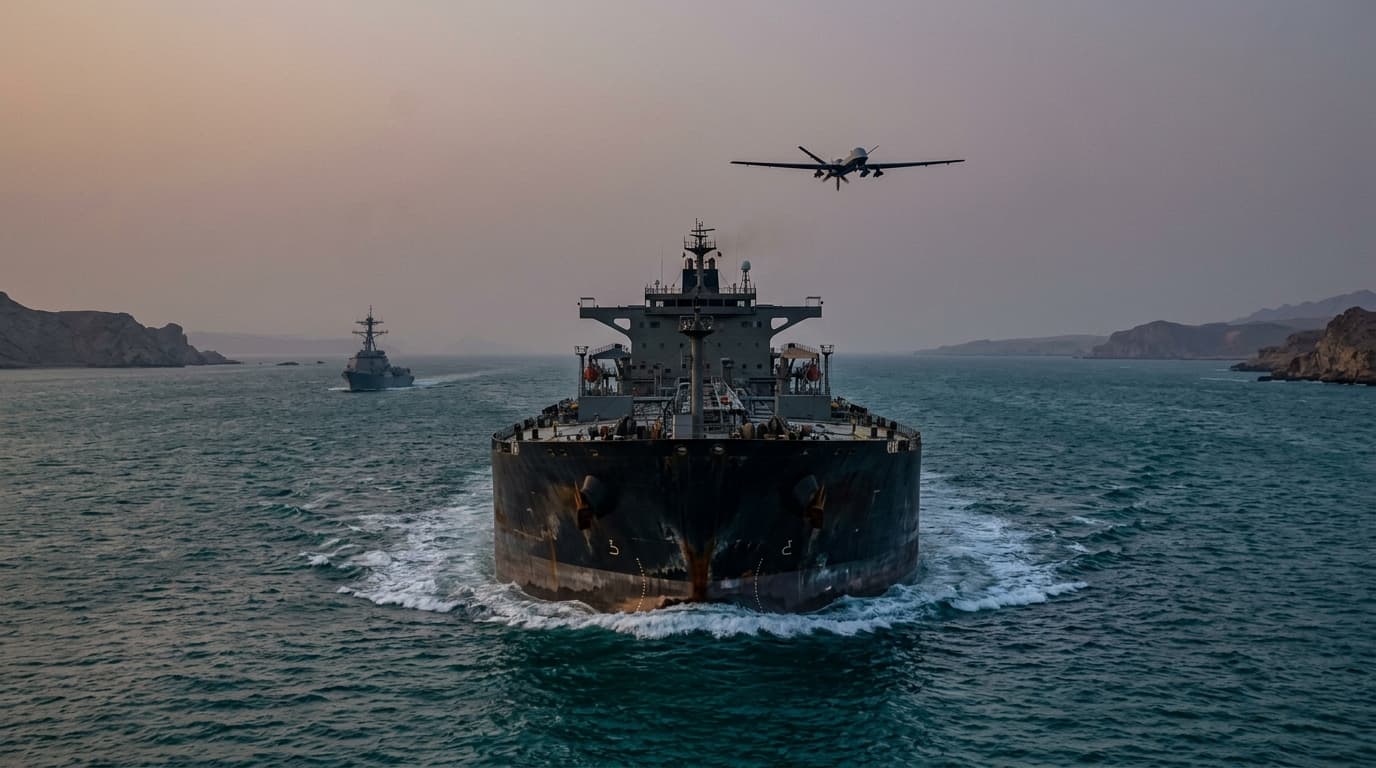
The Strait of Hormuz, a critical chokepoint for global energy supplies, saw a significant escalation in maritime friction on Friday as Iranian forces moved against commercial shipping. According to reports from the AFP wire service, the Islamic Revolutionary Guard Corps (IRGC) targeted two tankers that were traversing the waterway under the protection of U.S. air assets. Iranian state-aligned channels, including the Fars news agency, framed the incident as a law enforcement action, claiming that two tankers were halted while four others were forced to alter their course.
Conflicting Accounts of the Strike
Reports emerging from Tehran suggest the IRGC targeted vessels that allegedly attempted to cross through an "unrecognized route" with American support. The specific nature of the "strike" reported by international agencies remains unverified; it is currently unclear whether the engagement involved direct kinetic fire, such as missiles or drones, or a forced boarding and seizure. Iranian sources emphasized that the tankers were operating under "US air escort" at the time of the encounter, a detail that underscores the high state of alert and direct involvement of U.S. Central Command (CENTCOM) in the region.
Context of Regional Escalation
This incident follows a sustained period of direct kinetic confrontation between the United States and the Iranian regime. As The Zioneer has previously reported, the collapse of the 'Islamabad' memorandum earlier in 2026 has led to a cycle of U.S. air campaigns against Iranian strategic infrastructure and retaliatory Iranian strikes on maritime traffic. Just this week, major U.S. strikes targeted Iranian energy and military facilities, while the IRGC has repeatedly attempted to enforce a maritime blockade in the Strait. The use of drones and short-range missiles has become a recurring feature of these encounters, as seen in prior incidents on July 7 and July 29.
Strategic Implications
The reported strike on vessels under active U.S. air escort represents a bold challenge to the American "peace through strength" posture adopted by the second Trump administration. By targeting ships despite the presence of U.S. aircraft, Tehran appears to be testing the limits of American maritime protection and the rules of engagement currently in place. For Israel and the broader region, the stability of the Strait of Hormuz remains a primary security concern, as any prolonged disruption to shipping or a direct naval clash could trigger a wider regional conflagration. Observers are now watching for a formal response from CENTCOM to clarify the status of the tankers and the extent of any damage sustained during the encounter.
5 developments
- The Zioneer Intelligence Desk
- Reports: Number of Moroccan migrants reaches 50,000
- IDF confirms demolition of 6 Hezbollah tunnel networks in southern Lebanon, 4 under Beaufort Ridge
- Spanish PM Sánchez calls Ceuta migrant surge 'attack on national sovereignty'
- Moran Zer Katzenstein calls for abolition of Israel's Nation-State Law, says Shin Bet left her 'more left-wing'