The Lead
Iran has expanded its maritime offensive to the southern shipping lanes of the Strait of Hormuz near Oman, reportedly seeking to enforce protection payments from merchant vessels. This shift follows a weekend of kinetic exchanges between the United States and the Islamic Republic, with analysts assessing that Tehran is testing President Trump's resolve by targeting commercial traffic and regional U.S. interests in Kuwait and Bahrain.
The Protection Racket Strategy
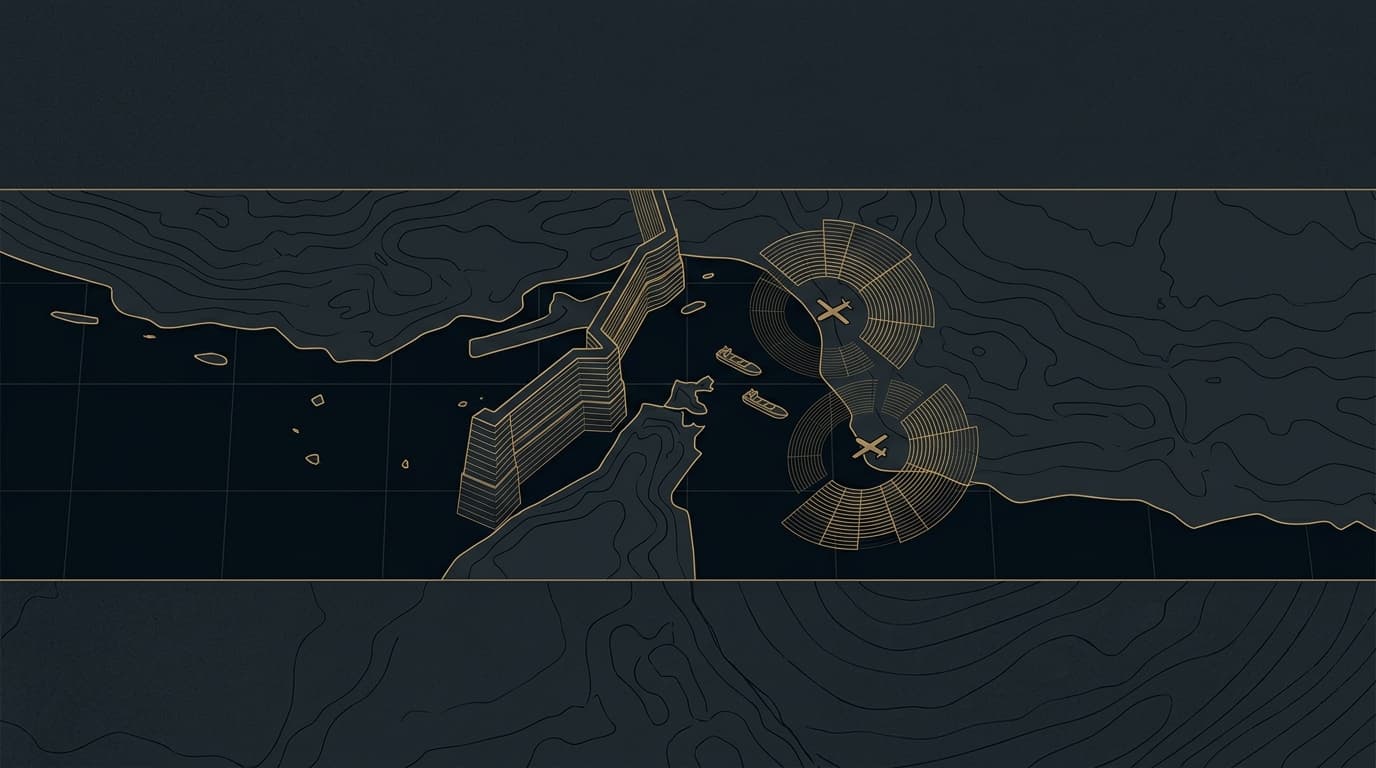
Recent developments in the Strait of Hormuz indicate a strategic shift by the Iranian regime. According to material reviewed by The Zioneer Intelligence Desk, Iran is now targeting the southern shipping route near Oman. Analysts suggest this is not merely a military provocation but a calculated attempt to establish a protection racket, forcing vessels to pay for safe passage or adhere to IRGC-approved northern routes. This escalation follows the signing of a recent memorandum of understanding, which Tehran now appears to be leveraging to test the limits of American deterrence.
Regional Retaliation
The maritime friction has already spilled over into broader regional instability. Following measured U.S. strikes on missile and drone depots in southern Iran—conducted by U.S. Central Command (CENTCOM) in response to earlier shipping attacks—Tehran has reportedly launched retaliatory strikes. Reports indicate that U.S. interests in Kuwait and Bahrain have faced missile and drone attacks. While Vice President J.D. Vance has stated that "violence will be met with violence," the continued targeting of merchant ships suggests that the Iranian leadership perceives the current U.S. response as insufficient.
Analysis: Testing the Trump Administration
The prevailing assessment among regional analysts is that Tehran has concluded President Trump is currently unwilling to engage in a full-scale confrontation, viewing his diplomatic overtures as a sign of weakness. By striking at the southern route—traditionally considered safer and closer to Omani waters—Iran is signaling its ability to close the world's most critical maritime chokepoint entirely. Unless the U.S. demonstrates a significant shift in its enforcement of freedom of navigation, the cost of passage through the Strait is expected to rise, both in terms of physical risk and the "protection fees" sought by the regime.
2 developments