The Lead
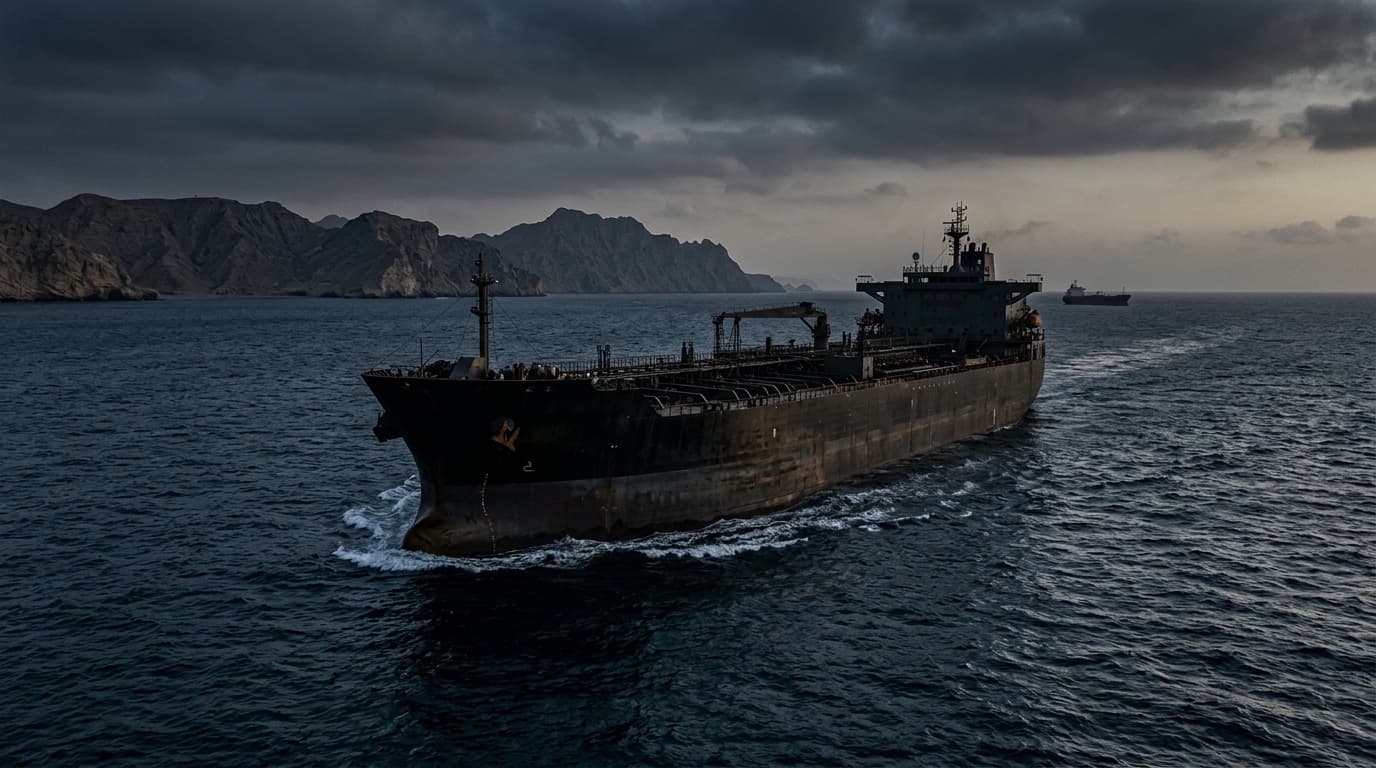
The Islamic Revolutionary Guard Corps (IRGC) claimed Thursday morning that it prevented two oil tankers from exiting the Strait of Hormuz via an unauthorized southern route. According to Iranian statements, a severe fire broke out on one of the vessels, forcing both to turn back. The IRGC accompanied the report with threats to maintain the closure of the strategic waterway and warned that "the aggressor will be punished today."
The Islamic Revolutionary Guard Corps (IRGC) reported on Thursday morning that its naval forces intercepted two oil tankers attempting to transit the southern portion of the Strait of Hormuz. Iranian officials claimed the vessels were utilizing an "unsafe route" and were acting with the encouragement of American aircraft. According to the IRGC account, a significant fire erupted on one of the tankers, leading both to abandon their course and return to the Persian Gulf.
Escalating Threats and Maritime Control
In statements carried by regional media, the IRGC asserted its effective control over the Strait of Hormuz, describing it as Iranian territory. The paramilitary organization warned that the waterway would remain closed as long as it perceives "provocations and threats" from United States forces. "We will not allow any foreign party, coming from thousands of kilometers away, to intervene," the IRGC stated, adding that countries assisting the "aggressor" would face a "harsh response" if they do not alter their behavior.
Regional Context and Economic Impact
This incident follows a period of heightened tension in the region. As The Zioneer reported earlier this month, the IRGC has repeatedly declared the Strait of Hormuz closed, citing security conditions and foreign intervention. The ongoing instability has already impacted global energy markets; QatarEnergy recently declared force majeure on its liquefied natural gas (LNG) shipments due to the Iranian blockade. To maintain its status as a reliable supplier, the Qatari firm has reportedly purchased dozens of LNG shipments from the United States to fulfill its obligations to Asian customers.
Analysis of the Situation
While the IRGC claims the tankers turned back due to a fire and its own enforcement actions, these accounts remain unverified by independent maritime monitors. Some reports suggest the vessels may have been targeted directly while attempting to cross through Omani territorial waters. The IRGC's rhetoric—specifically the claim that "the aggressor will be punished today"—indicates a continued intent to use the strategic chokepoint as leverage against U.S. and allied interests in the region.
7 developments
- IRGC announces closure of Strait of Hormuz after Iran's World Cup disqualificationEditorially linked
- IRGC Confirms Two Commercial Vessels Disabled in Strait of Hormuz, Warns of Further ActionRelated analysis
- IRGC claims it struck seven Emirati oil tankers in the Strait of HormuzRelated analysis
- Iran threatens immediate strikes on vessels deviating from Strait of Hormuz routeRelated analysis
- Police official says no Bedouin battalion organizing is known after Shin Bet warning
- Special court for October 7 suspects not established; first verdict forecast for 2030
- France’s foreign minister attends Israeli memorial ceremonies, skips official meetings
- Report says Houthis have tightened control around Yemen’s Taiz