The Lead
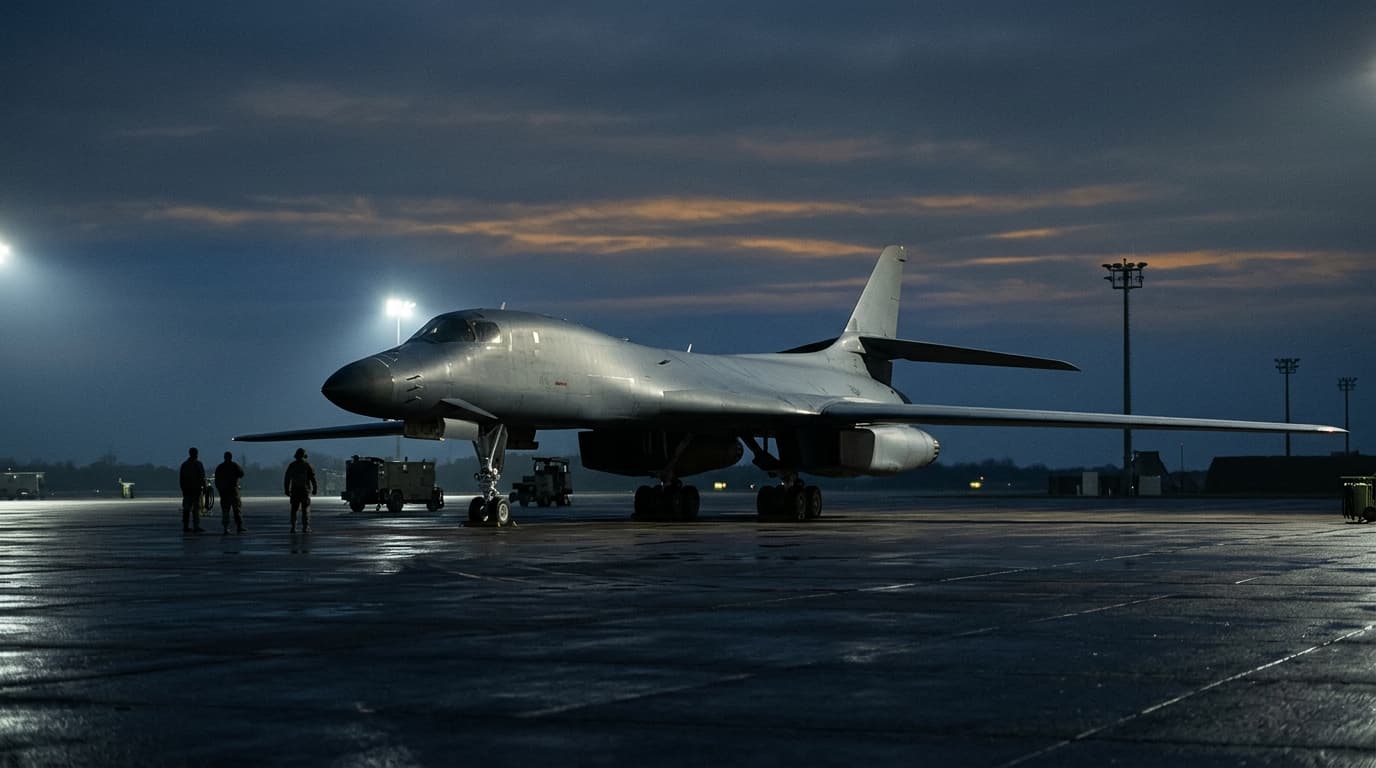
The United States military conducted a significant wave of strikes against Iranian military infrastructure overnight, marking the first deployment of B-1 strategic bombers in the current kinetic confrontation. The operation targeted naval capabilities, missile storage facilities, and drone sites across Iran, while a strike at a border crossing with Iraq reportedly resulted in two fatalities.
The United States has intensified its military campaign against the Iranian regime with an overnight wave of strikes that introduced heavy strategic aviation into the theater. According to U.S. officials cited by Axios and material reviewed by The Zioneer Intelligence Desk, the operation focused on degrading the Islamic Revolutionary Guard Corps (IRGC) ability to project power and defend its airspace.
Strategic Targets and New Capabilities
The strikes targeted a broad array of military assets, including Iranian naval capabilities, missile storage facilities, drone launch and storage sites, and coastal observation posts. Additionally, U.S. forces struck air defense systems, likely to ensure continued freedom of movement for coalition aircraft. For the first time in the current conflict, the U.S. deployed B-1 strategic bombers, a move that signals a shift toward higher-payload missions and long-range precision strikes against hardened targets.
Regional Impact and Casualties
Beyond the strikes within Iran, the operation extended to a border crossing with Iraq. Reports indicate that at least two people were killed in this specific engagement. This follows a pattern of U.S. efforts to disrupt the land bridge and supply lines used by Iran to equip its regional proxies. Simultaneously, reports from the Red Sea suggest the Houthis have joined the fray, allegedly attacking Saudi vessels, further complicating the regional maritime security environment.
Analysis and Outlook
The use of B-1 bombers represents a calculated message of deterrence and a practical expansion of the U.S. target set. While the full extent of the damage is still being assessed, the inclusion of air defense and surveillance sites suggests the U.S. is preparing for sustained operations if the Iranian regime does not alter its posture. The Zioneer Intelligence Desk notes that this escalation occurs amid a total collapse of prior diplomatic frameworks, with U.S. officials indicating that Tehran appears unready for a new agreement, leading to a rising 'nightly price' for its continued aggression.
3 developments
- The Zioneer Intelligence Desk
- Itamar Cohen stabbed by terrorists while extinguishing arson fire at Samaria farm, Farmers Union reports
- EU foreign minister Kallas calls on Houthis to halt Red Sea attacks, warns Saudi blockade threat 'dangerous escalation'
- EU approves 21st sanctions package against Russia after Greece lifts veto
- Carmiel opens public shelters, says move was local decision not by Home Front Command