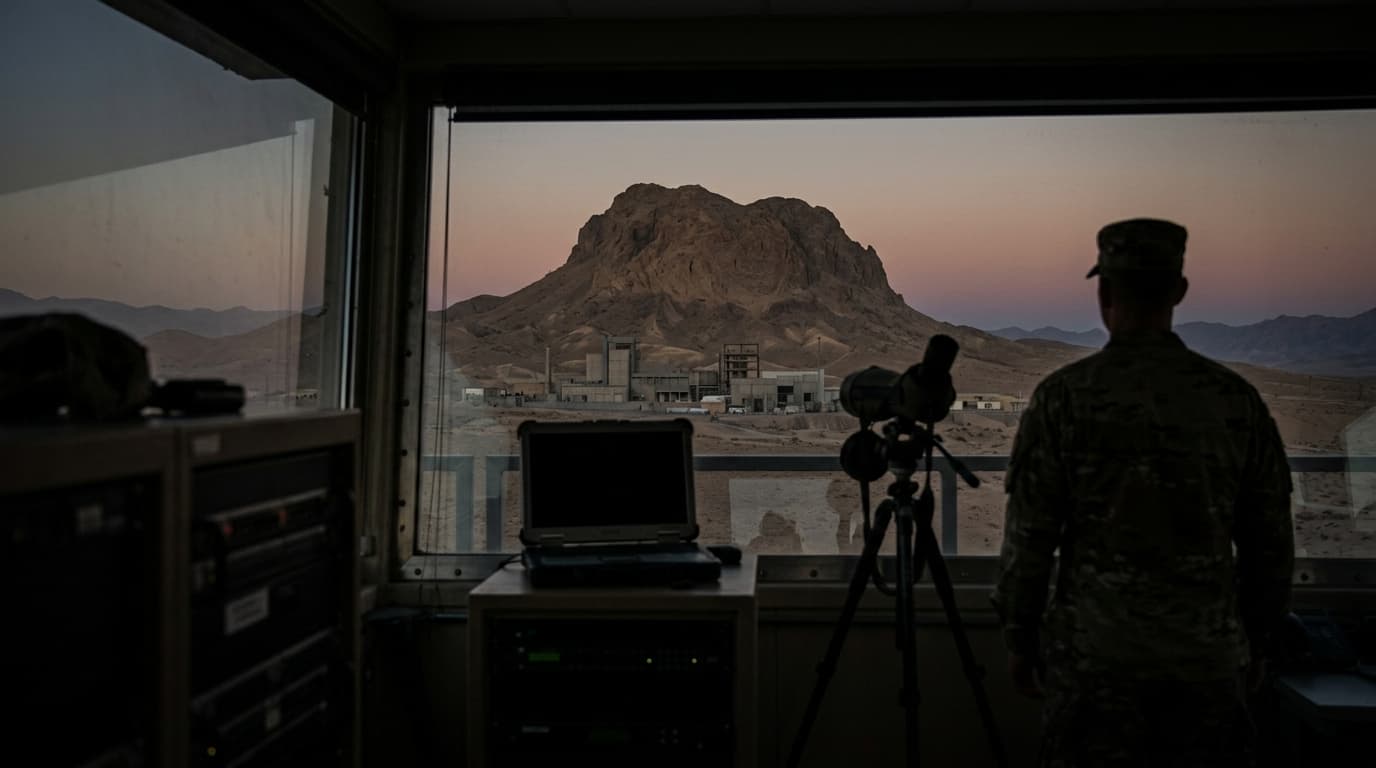
The Lead
President Donald Trump declared on Tuesday that the United States is "not ready to leave" its military confrontation with Iran, specifically pledging to attack the Mount Makosh nuclear site. Speaking alongside Lebanese President Joseph Aoun at the White House, Trump warned that a premature withdrawal would grant the Iranian regime a 20-to-25-year window to recover its strategic capabilities, asserting that the U.S. has "not finished the job."
The statements mark a significant escalation in American rhetoric regarding the direct kinetic conflict that has intensified since July 2026. President Trump’s focus on Mount Makosh follows reports, including from CNN, suggesting the site is being used to store enriched uranium and thousands of centrifuges. "We will definitely attack the new site they are talking about," Trump stated, adding that Iran "hasn't seen anything yet."
Strategic Context and Regional Pressure
The meeting with Joseph Aoun, who has led Lebanon toward a more sovereign stance away from Iranian influence since 2025, provided a backdrop for Trump to outline the broader U.S. strategy. The President linked Iranian regional activities to domestic U.S. concerns, accusing Tehran of attempting to influence the upcoming midterm elections through its actions in the Strait of Hormuz. This strategic waterway remains a primary flashpoint, where the U.S. maintains a naval blockade following the collapse of previous diplomatic frameworks.
Analysis of the Threat
By naming Mount Makosh, the U.S. administration is signaling that its intelligence on the Iranian nuclear program is actionable and that hardened underground facilities are no longer off-limits. Trump’s assessment that Iran would need 20-25 years to recover from continued U.S. pressure suggests a policy aimed at long-term containment or structural degradation of the regime's military-industrial complex. While the President characterized prior U.S. actions as "nice," his current posture indicates a transition toward more destructive strikes against high-value infrastructure.
Outlook for the Conflict
The immediate focus remains on the timing of the promised strike on Mount Makosh. As the U.S. air campaign continues to target strategic sites across Iran, the inclusion of nuclear-adjacent facilities like Mount Makosh raises the stakes for regional escalation. Observers should watch for Iranian retaliatory movements in the Persian Gulf and the potential for the conflict to expand as the U.S. maintains its "security-first" posture in the Middle East.
11 developments
- The Zioneer Intelligence Desk