The Lead
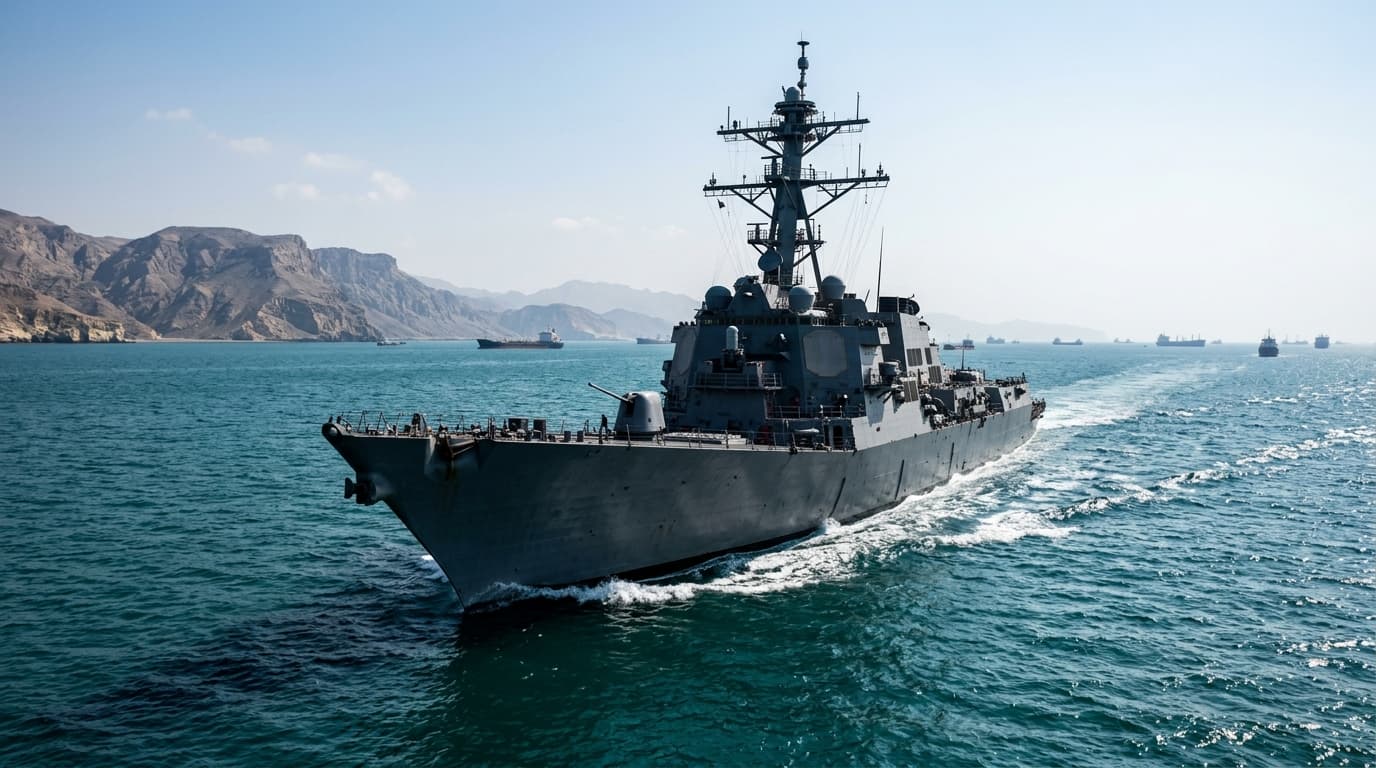
President Donald Trump stated Monday that the Strait of Hormuz is under the full control of the US Navy, declaring that no goods or vessels will reach Iran without Washington's explicit permission. The President's remarks, which emphasize a policy of maximum maritime pressure, framed the current status of the waterway as a choice for Tehran between a new deal or "total surrender."
President Donald Trump issued a series of assertive policy declarations on Monday regarding the Strait of Hormuz, the world's most critical oil chokepoint. According to the President, the US Navy has established a level of control over the waterway that allows the United States to effectively vet all traffic heading toward the Islamic Republic. "Nothing passes to Iran unless we want it to," Trump stated, adding that this posture will remain in place until a diplomatic breakthrough or a total Iranian capitulation is achieved.
Strategic Context and Maritime Pressure
The President's comments follow a volatile period in the Persian Gulf characterized by shifting levels of American naval intervention. As The Zioneer has previously reported, the Trump administration has alternated between imposing strict blockades and facilitating limited commercial transit under the 'Islamabad Agreement' framework. Today's declaration suggests a return to a more restrictive stance, positioning the US Navy as the ultimate arbiter of maritime movement in the region. This aligns with the President's long-standing objective of denying Iran the financial resources necessary to fund its regional proxies and its nuclear program.
Nuclear Red Lines and Regional Stability
Central to the President's rhetoric was the reiteration of a core US security pillar: the prevention of an Iranian nuclear weapon. Trump emphasized that the current maritime pressure is a direct tool to ensure that "Iran will never have nuclear weapons." By linking the freedom of navigation in the Strait of Hormuz to Iran's nuclear behavior, the administration is signaling that the economic and military costs of Tehran's current path will continue to mount.
Analysis of the Declaration
While the President's language is definitive, the operational reality on the water remains in a state of flux. Reports from earlier this summer indicated that some level of coordination with Iranian authorities was still required for transit, despite American claims of dominance. The current "Developing" signal reflects the gap between these high-level policy statements and the verified tactical situation in the Gulf. For Israel and regional allies, the President's insistence on "total surrender" or a deal suggests that the window for a middle-ground solution is closing, as Washington seeks to force a fundamental change in the Iranian regime's strategic calculus.
2 developments
- The Zioneer Intelligence Desk
- Senior Jerusalem officials: No retreat before Hamas disarmament, not part of original Trump framework
- Katz meets with Judea and Samaria council heads, says Blot not dismissed
- US officials tell CBS no new talks with Iran planned, contradicting Trump
- N12: 10 whistleblower protection requests rejected due to vacant State Comptroller