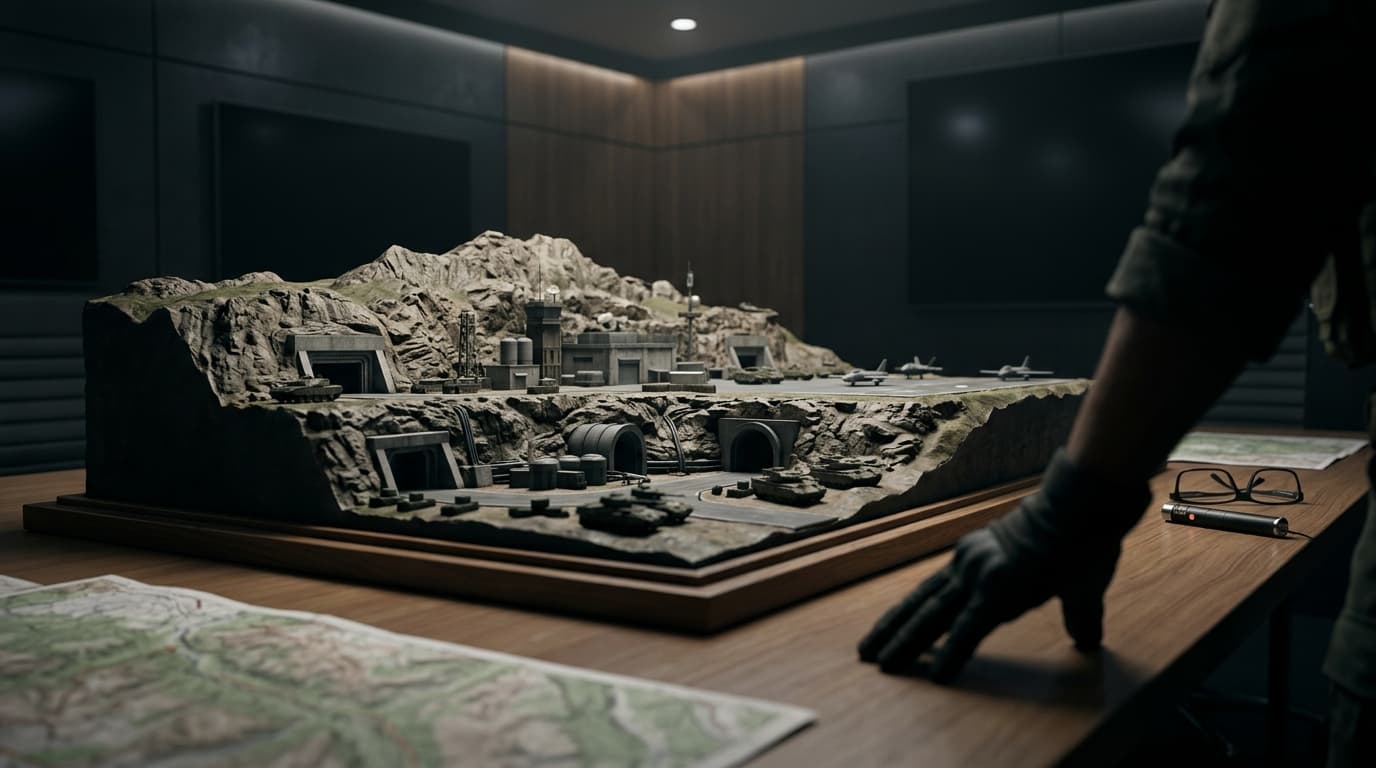
The New York Times reports that American officials described the underground nuclear facilities at Mount Machush as carved deep inside the mountain. The report adds that Iranian officials fear a US ground commando raid to destroy the complex from within.
The New York Times reported Friday night that US officials described the underground nuclear facilities at Mount Machush as carved deep inside the mountain. The report also stated that Iranian officials fear a US ground commando raid on the complex, in which special forces would enter and destroy it from within.
As The Zioneer reported Friday night, US officials had disclosed the extent of the site's hardening. The current report adds a new dimension — Iranian fears of a ground operation, signaling heightened anxiety in Tehran as the US military campaign continues. The Zioneer's earlier coverage placed the site in context: on July 14, an analysis noted that Mount Machush is more fortified than the Fordow plant and that the US had considered a phased strike targeting access routes and ventilation. On July 21, The Zioneer reported Israeli intelligence assessments that Iran had transferred thousands of centrifuges to the underground complex following US strikes. On July 23, reports indicated that the US was preparing strategic bomber strikes on the site.
The Mount Machush site, located near Natanz, has been a focal point of the US-Iran confrontation. The new report suggests that Iranian decision-makers view a ground raid as a plausible scenario, though no such operation has been confirmed and the US has not announced any ground operation.
5 developments
- StrongAnalysis: Iran's Mount Makush nuclear facility deeper than Fordow, US reportedly plans phased strike on access routes
- StrongAnalysis: US preparing strategic bomber strikes on Iran's Mount Hamakosh, report says
- DevelopingIran's Khatam al-Anbiya HQ: US strike on Mount Makosh would make all US interests legitimate targets
- StrongIranian official warns US troops, allies will pay price for Mount Makosh strike, tells CNN
Source and signal
- Open-source intake