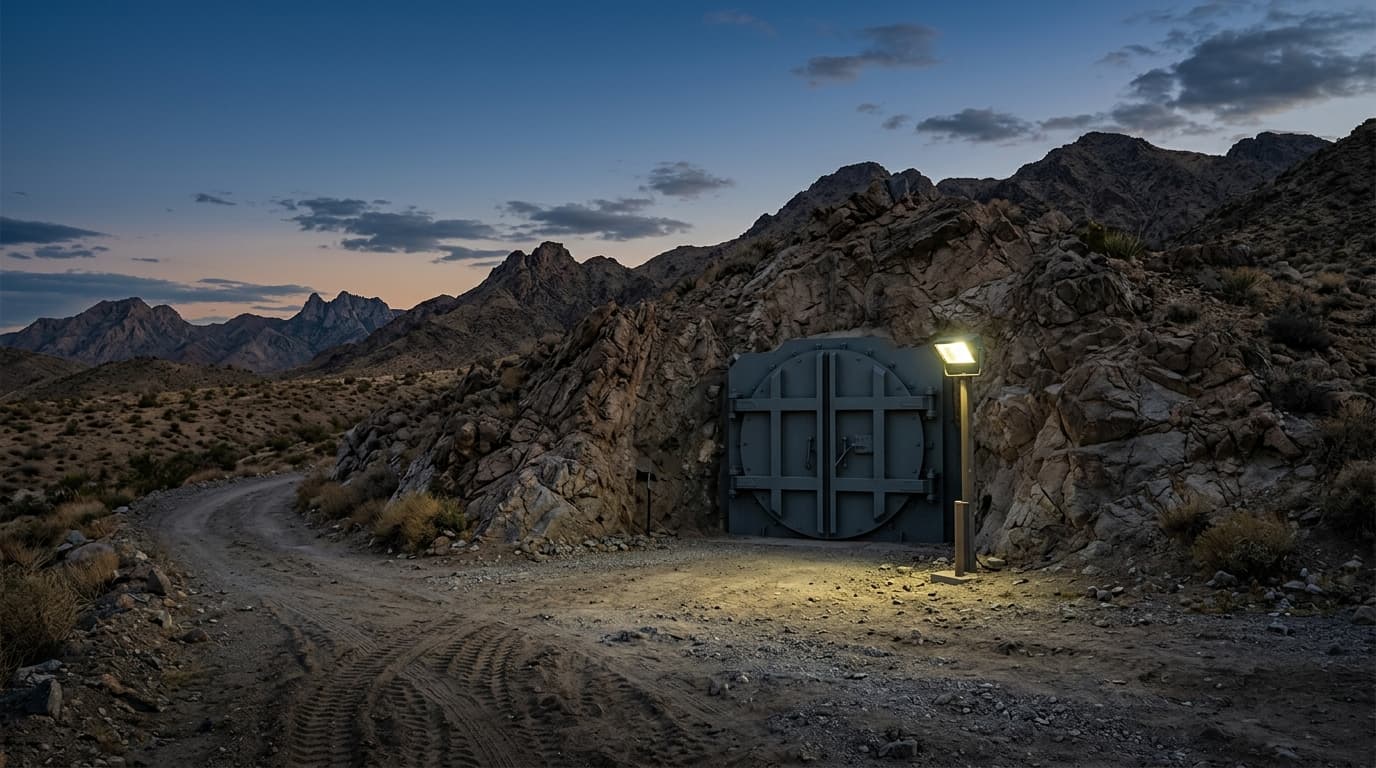
The Arab Desk channel reports, citing an Iranian source, that the underground nuclear facility at Mount Machush is 300 meters deep, contradicting the 100-meter figure previously cited. The claim, if accurate, would make the site significantly deeper than earlier assessments, potentially complicating US strike planning.
An Iranian source claimed Wednesday evening that the underground nuclear facility at Mount Machush is 300 meters deep, not 100 meters as previously cited. The claim was reported by the Arab Desk channel, which did not provide further details or corroboration.
The site, located near Natanz, has been a central focus in the US-Iran kinetic conflict since July 2026. The Zioneer has previously reported that Mount Machush houses a hardened nuclear facility that international inspectors never visited, and that President Trump vowed to strike it 'fairly soon.' If the new depth figure is accurate, it would make Mount Machush even more resistant to conventional bunker-busting munitions, potentially requiring alternative strike methods.
The claim remains unverified, and it is unclear whether the Iranian source is connected to the regime or to opposition circles. The depth of the facility has been a subject of debate, with earlier assessments by analysts and US officials citing depths of 80–100 meters. A depth of 300 meters would place the facility beyond the reach of most conventional penetrating weapons, possibly implicating tactical nuclear options or special operations.
- StrongAnalysis: Iran's Mount Makush nuclear facility deeper than Fordow, US reportedly plans phased strike on access routes
- StrongIran fears US ground commando raid on Mount Machush nuclear site, NYT reports
- DevelopingAnalysis: Only tactical nuclear weapons or ground forces can destroy Iran's Mount Makosh facility
- StrongSatellite imagery reveals construction activity at Iran's secret underground nuclear facility near Natanz
Source and signal
A single-sourced dispatch is never rated Confirmed or Strong. Its Signal strengthens only when a second, independent source corroborates it.
- Open-source intake