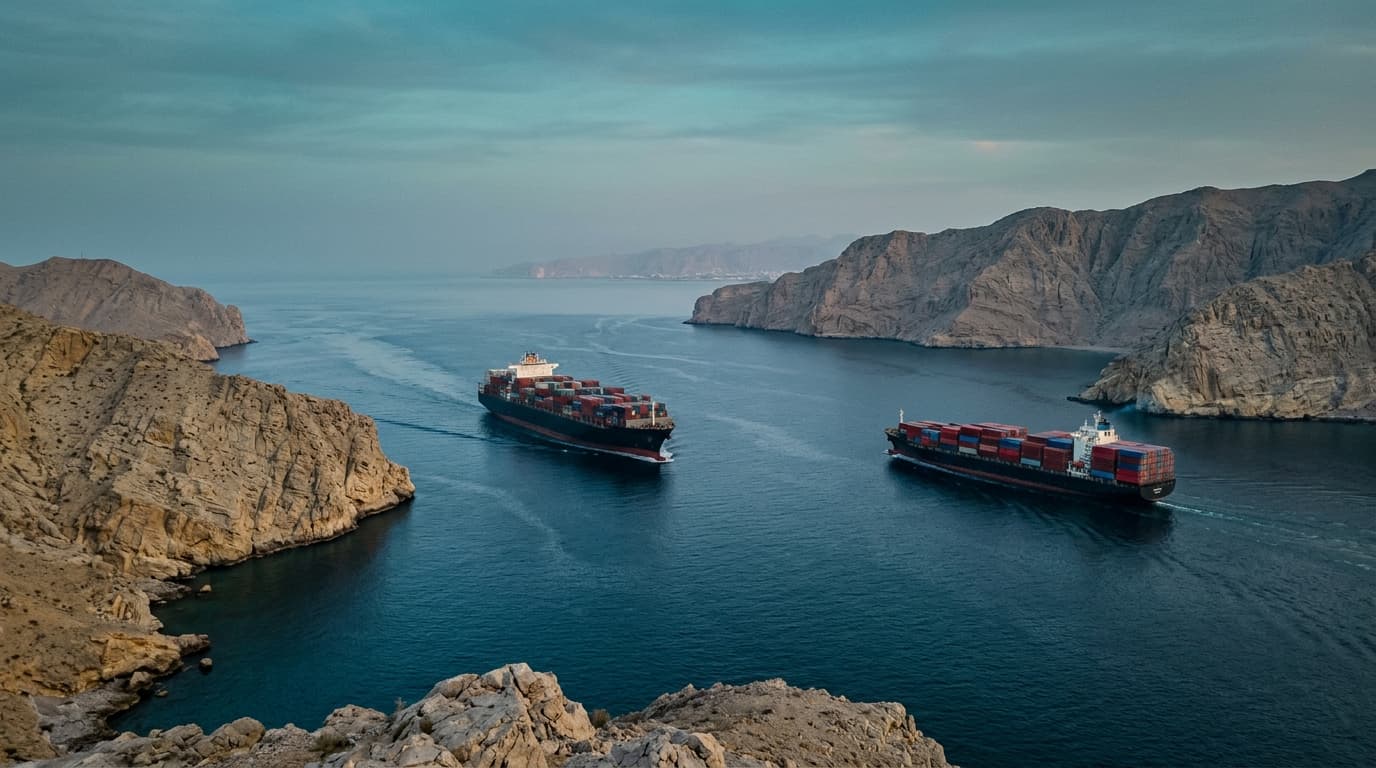
According to a review by the Jerusalem Center for Foreign Affairs and Security (JCFA) Iran desk, Tehran is insisting that the current talks, mediated by Oman, are limited to arranging a temporary shipping lane in the Strait of Hormuz and do not constitute direct negotiations with Washington. The analysis highlights a deep disagreement: the U.S. wants a fast-track deal including the nuclear program, while Iran demands a separation between opening the strait and any nuclear discussion.
The JCFA analysis, published Monday, provides a detailed look at the gap between U.S. and Iranian positions on the current diplomatic track. The analysis, citing Iranian officials, states that the only active channel is via Oman and concerns a temporary maritime corridor in the Strait of Hormuz — not a comprehensive nuclear deal. This distinction reflects a fundamental dispute: Washington seeks a rapid agreement that would also address Iran's nuclear program, while Tehran insists on a sequential approach, with Hormuz normalized first.
The desk's reporting on this story has evolved throughout the day. At 10:23 Jerusalem, Iran's Foreign Ministry spokesman confirmed that talks with Oman are focused on a temporary reopening of the Strait of Hormuz, and that no direct negotiations are taking place with the United States. Earlier, Iran had denied any talks with the US, and a subsequent report specified that the talks are narrowly focused on a new shipping lane. The JCFA analysis now adds expert corroboration, citing Iranian officials to detail the precise disagreement over the scope of the talks.
The broader context, as The Zioneer has reported previously, is a U.S. military campaign against Iran that began in early June, including strikes on Iranian facilities and a blockade on Iranian oil. The Strait of Hormuz was closed by Iran in response. President Trump has claimed progress toward a deal, but Iran has consistently denied that any direct negotiations are underway. The JCFA analysis suggests that the current Oman channel is limited to the shipping issue, and that the nuclear dispute remains unresolved.
What remains unclear is whether the U.S. administration will accept Iran's insistence on separating the Hormuz issue from nuclear talks, or whether Washington will continue to push for a comprehensive deal. The JCFA analysis itself notes that Iran's domestic economic situation remains difficult, and that even a diplomatic deal would not resolve the crisis without internal reforms.
7 developments
- StrongIranian FM spokesman: New route accord with Oman not about reopening Strait of Hormuz
- DevelopingIranian FM: Strait of Hormuz is not international waters, but a shared maritime route with Oman
- StrongIran confirms Muscat talks with Oman, agrees to continue Strait of Hormuz discussions
- StrongIran says Strait of Hormuz traffic unchanged despite 'useful' talks with Oman
Source and signal
- Open-source intake