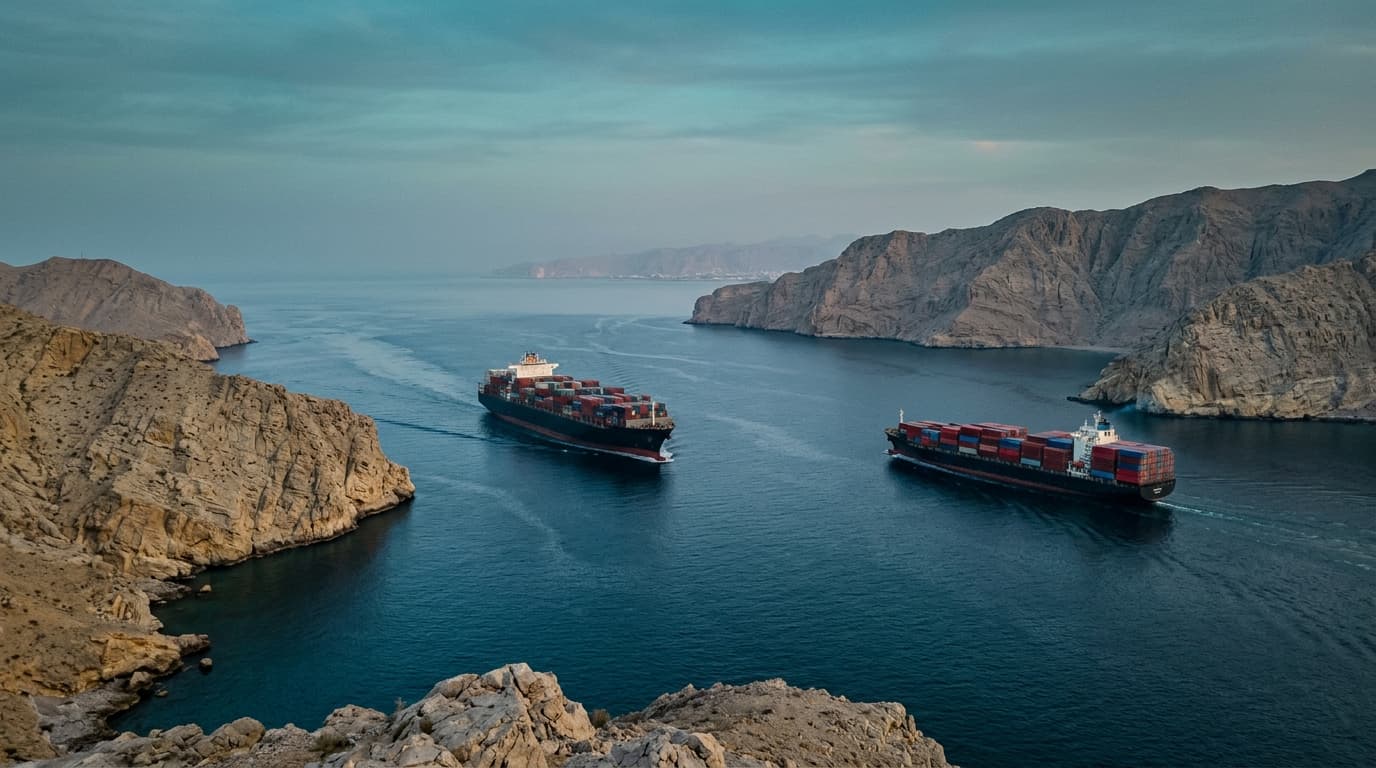
Iran stated Wednesday that even if an agreement with Oman is reached, the reopening of the Strait of Hormuz is conditional on the United States fulfilling its previous commitments — primarily lifting the naval blockade, removing export restrictions, and releasing frozen funds tied to the Islamabad Agreement, according to an Iranian statement.
Iran, in a series of official statements throughout Wednesday evening, has made clear that the reopening of the Strait of Hormuz is conditional on the United States fulfilling its commitments under the Islamabad Agreement—primarily lifting the naval blockade, removing export restrictions, and releasing frozen Iranian assets. The declarations came even as negotiations with Oman for an interim 60-day arrangement were reported to be nearing completion, with Tehran insisting that the US action is a prerequisite that no bilateral deal can bypass.
As The Zioneer reported earlier Wednesday (15:30 Jerusalem), diplomatic sources outlined details of the emerging Iran-Oman interim deal, which would route inbound shipping through Iranian waters and outbound traffic through Omani waters. In the hours that followed, a rapid succession of statements from Iranian officials tightened the conditions. At 17:43 Jerusalem, a senior Iranian official told Al Jazeera that only one or two issues remain before a final agreement but that the strait's status depends entirely on Washington's steps. Within the same hour, the Deputy Foreign Minister, speaking through the state news agency IRNA, first stated that a US return to MOU commitments is insufficient, then specified demands for sanctions relief and asset unfreezing, and finally—in the latest iteration—listed three concrete conditions: lifting the naval blockade, removing export restrictions, and releasing frozen funds. The consistency across multiple channels indicates a coordinated Iranian position.
The Islamabad Agreement, the framework memorandum of understanding between the US and Iran, was detailed by The Zioneer on June 13 as including five principles: destruction of enriched nuclear material, dismantlement of nuclear infrastructure, a 'relief in exchange for implementation' model, permanent reopening of the Strait of Hormuz, and a prohibition on Iranian financing of terror. The current US position, as reported by The Zioneer on June 14, has been that the Strait of Hormuz will reopen under a framework deal with no tolls. The interim Iran-Oman deal, still reportedly under negotiation, now appears contingent on US action.
It remains unclear whether the US or Oman will accept this linkage, and whether the reported interim deal with Oman can proceed under these new terms. The statement, coming amid ongoing US-Iran mediation tracks, signals that the Islamic Republic is reasserting its demand for tangible economic relief before any reopening of the strategic waterway.
7 developments
- DevelopingSenior US official: Strait of Hormuz to reopen 'with no tolls' under framework deal with Iran
- StrongUS, Gulf states condition sanctions relief on Iran reopening Strait of Hormuz
- DevelopingAP: Iran, Oman finalize draft Strait of Hormuz deal; awaits Khamenei's approval
- StrongIranian source: Strait of Hormuz reopening to begin Friday after MoU signing
Source and signal
- Open-source intake