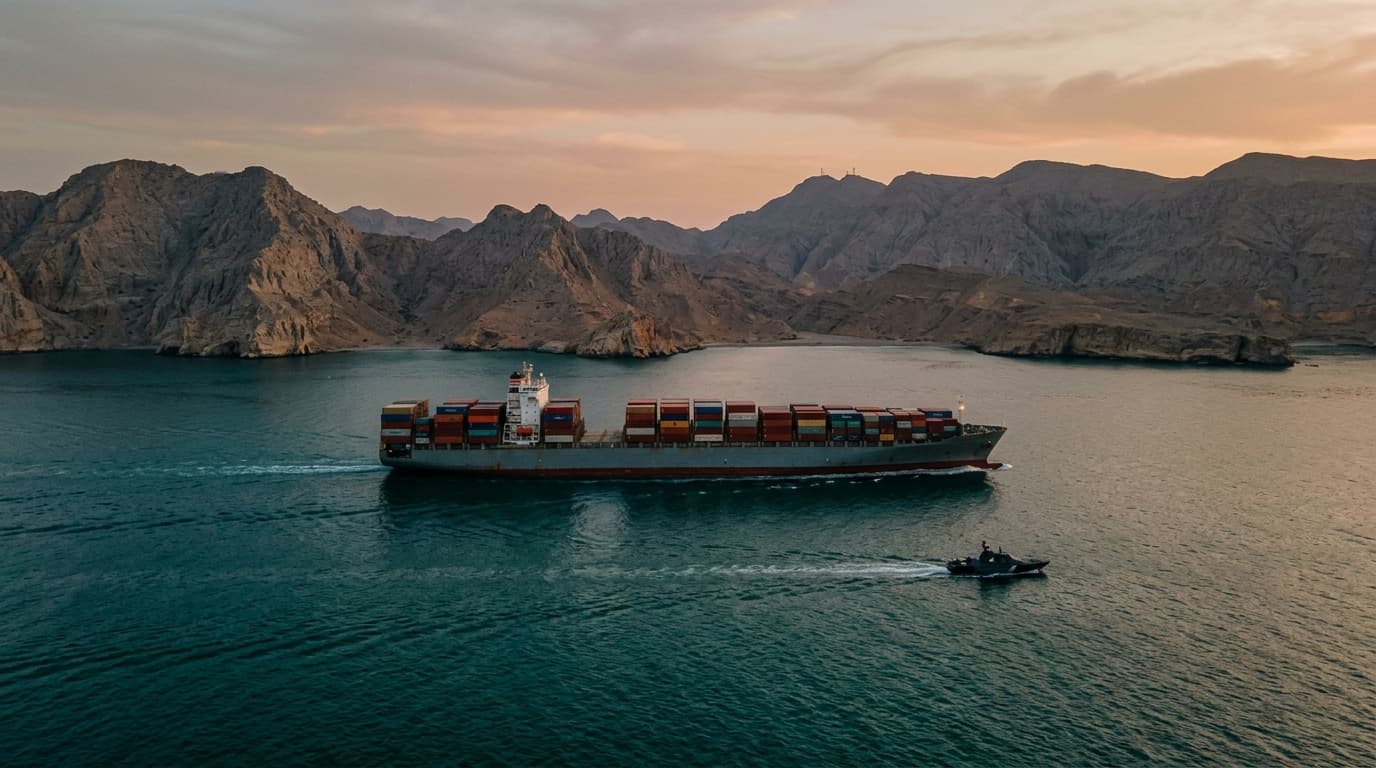
According to the Jerusalem Center for Foreign and Security Affairs' Iran desk review published Thursday, Iran and Oman have held eight rounds of talks on a temporary arrangement for the Strait of Hormuz. The draft reportedly includes a maritime corridor, mine clearance, and oversight mechanisms, but still awaits approval from the Supreme Leader and the Supreme National Security Council. The analysis highlights a gap between the regime's aggressive rhetoric and backchannel diplomatic efforts.
The Jerusalem Center for Foreign and Security Affairs (JCFA) released a review Thursday morning by its Iran desk, assessing that Iran is approaching a diplomatic opening of the Strait of Hormuz through backchannel talks with Oman. The review states that eight rounds of negotiations have taken place, resulting in a draft temporary arrangement that includes a maritime corridor, mine clearance procedures, and international oversight mechanisms. The draft has not yet been approved by Iran's Supreme Leader Ali Khamenei (before his death, the analysis notes) or the Supreme National Security Council. The analysis highlights a gap between the regime's aggressive rhetoric and its backchannel diplomatic efforts.
This development follows a flurry of reports on Wednesday, August 5, at 22:15 Jerusalem. The Associated Press reported that Iranian and Omani negotiators had finalized a draft agreement to reopen the strait for a 60-day interim period, pending approval from Khamenei and the Supreme National Security Council. Journalist Barak Ravid separately reported that the agreement was nearing signing, outlining its main points. The Zioneer confirmed that the negotiation teams had finalized the draft. The JCFA analysis now provides further detail on the draft's specific provisions, lending additional weight to the earlier reports.
As The Zioneer reported on August 2, Iranian Foreign Minister Abbas Araghchi had agreed to a compromise framework partitioning inbound and outbound traffic, with Qatari mediators seeking the backing of the Islamic Revolutionary Guard Corps (IRGC). The Hormuz crisis has been a central theater of the U.S.-Iran confrontation since March 2026, with the strait closed for months, disrupting global energy markets. Background reporting by The Zioneer has documented Tehran's use of the strait closure as leverage, including demands for Israeli withdrawal from Lebanon and threats to re-close the waterway.
It remains unclear whether the draft will receive final approval from Iran's Supreme National Security Council and the new Supreme Leader. The JCFA analysis is based on the center's own research and has not been independently confirmed by Iranian or Omani official statements. The analysis warns that the true test is whether Tehran will use the strait as leverage for a broader agreement or reject the draft and risk renewed conflict.
4 developments
- ConfirmedReport: Iran's deputy foreign minister discussed a joint center to manage Hormuz shipping with Oman
- StrongOmani mediators optimistic for Strait of Hormuz breakthrough in coming days, Bloomberg reports
- StrongIran-Hormuz talks enter technical phase, The Zioneer reports
- StrongIran says talks with Oman on managing Strait of Hormuz continue
Source and signal
- Open-source intake