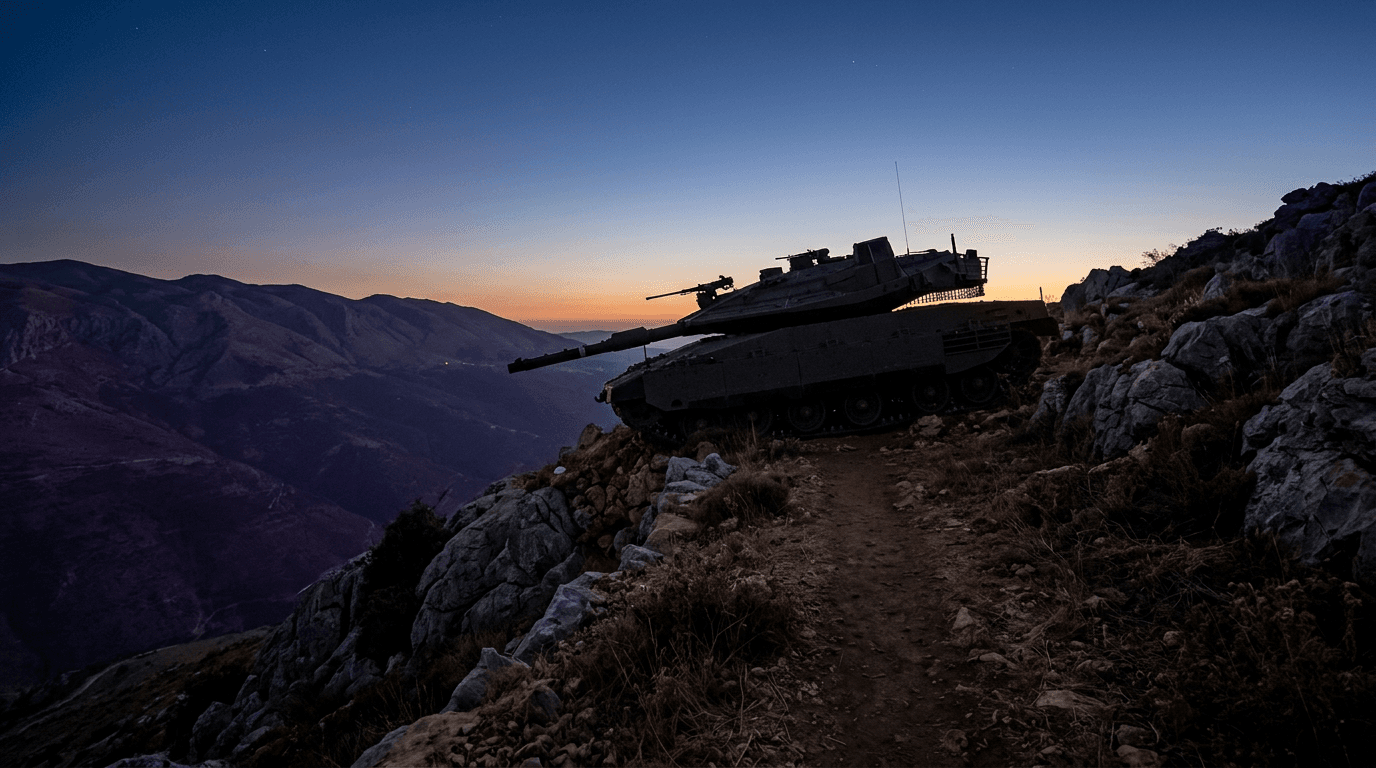
Lebanese sources report that Israeli forces have shifted to a so-called 'belt of fire' (Hezb-Allah) style of continuous barrages targeting the Ali al-Taher ridge in southern Lebanon, according to a single source. The tactical shift, if confirmed, signals a change in Israeli bombardment intensity on the strategic ridgeline. No casualty or damage figures are available.
Lebanese sources reported Saturday afternoon that Israeli forces have begun employing a 'belt of fire' pattern of continuous artillery or aerial strikes specifically against the Ali al-Taher ridge in southern Lebanon, narrowing the focus from the morning's broader strikes across the Nabatieh area. The report, circulated via a single source, describes sustained barrages on this strategic ridgeline, reminiscent of the Israeli tactic known in Arabic as 'Hezb-Allah' — a continuous, rolling bombardment that aims to suppress and destroy a defined area. This development comes hours after earlier reports described a morning 'fire belt' barrage across Nabatieh, Rihan, Soujod, and Tyre, with several Lebanese casualties reported (Sat 05:12 Jerusalem).
5 developments
- DevelopingFresh barrage of IDF heavy artillery pounds Ali al-Taher ridge
- StrongLebanese sources: Five killed in Israeli strike on south Lebanon's Ali Taher ridge
- StrongAl Jazeera confirms IDF maneuvering forces advancing toward Ali al-Taher ridge
- StrongIDF ground troops battle Hezbollah at Ali Taher ridge, southern Lebanon
Source and signal
- Internal intake