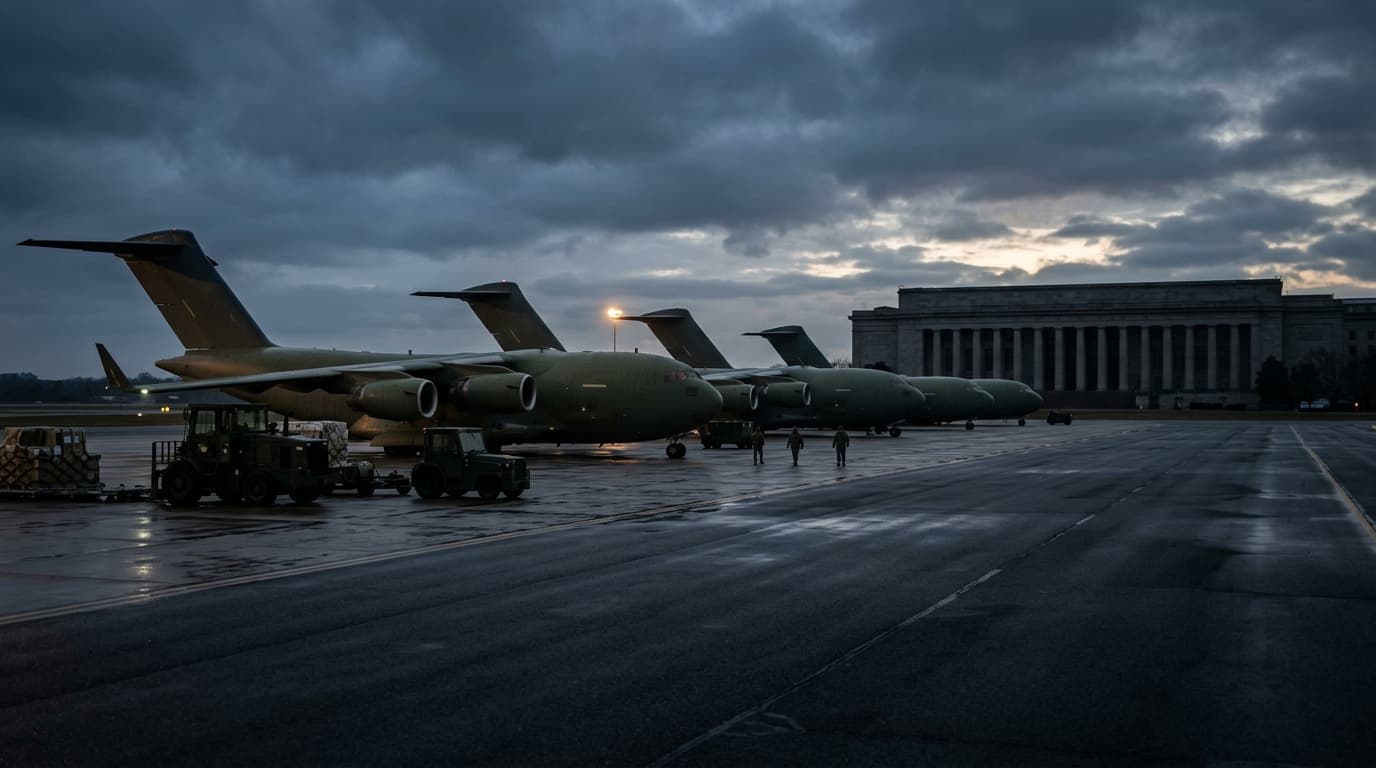
A new Pentagon Inspector General report finds the direct U.S. military campaign against Iran — Operation Epic Fury — cost $33.4 billion between February 28 and June 30, according to the New York Times. Munitions accounted for $22.3 billion. The report confirms a strategic ammunition shortage and bottlenecks in the defense industrial base, and details the loss of four F-15s, one damaged F-35, and up to 30 MQ-9 Reaper drones.
The Pentagon Inspector General's report on the direct U.S.-Iran confrontation provides the first official comprehensive accounting of the campaign's cost and material toll. Between February 28 and June 30, Operation Epic Fury consumed $33.4 billion, with $22.3 billion spent on munitions alone. The report documents significant strain on the U.S. defense industrial base, describing a strategic shortage of ammunition and production bottlenecks that hampered the ability to replenish depleted stockpiles. It also details losses to U.S. aircraft and infrastructure from Iranian strikes: four F-15 fighter jets destroyed, one F-35 damaged, and up to 30 MQ-9 Reaper drones lost. Hundreds of structures and facilities at U.S. bases across the Middle East were damaged or destroyed in Iranian attacks during the reporting period.
The report, formally published Tuesday (Sep 15), was first reported by The Zioneer at 05:55 Jerusalem, with the headline confirming the $33.4 billion cost and the Iranian strike on the U.S. Navy's central maritime logistics hub in Bahrain. The new details on munitions shortages and specific aircraft losses align with earlier independent estimates: on Aug 7, the Center for Strategic and International Studies (CSIS) assessed total war costs at $34-42 billion, including $26.1 billion in munitions; on Aug 10, the Wall Street Journal estimated $13 billion in damage and 42 U.S. aircraft damaged or destroyed. The IG report now provides official government corroboration of those figures.
The findings come against the backdrop of the U.S. House's $95 billion Iran war budget, passed in a 216-214 party-line vote on Jul 23, as The Zioneer reported. The Pentagon had previously warned that delays in funding would necessitate cutbacks in training and deployments. The IG report's identification of a strategic ammunition shortage underscores the industrial base strain that the supplemental funding was intended to address.
What remains unclear from the report is whether the identified shortfalls have been fully remedied by subsequent appropriations. The report covers only the period through June 30, leaving post-July replenishment and ongoing operations unassessed. The findings are expected to feature prominently in debates over further military aid and the long-term sustainability of the campaign.
2 developments
Source and signal
- Open-source intake