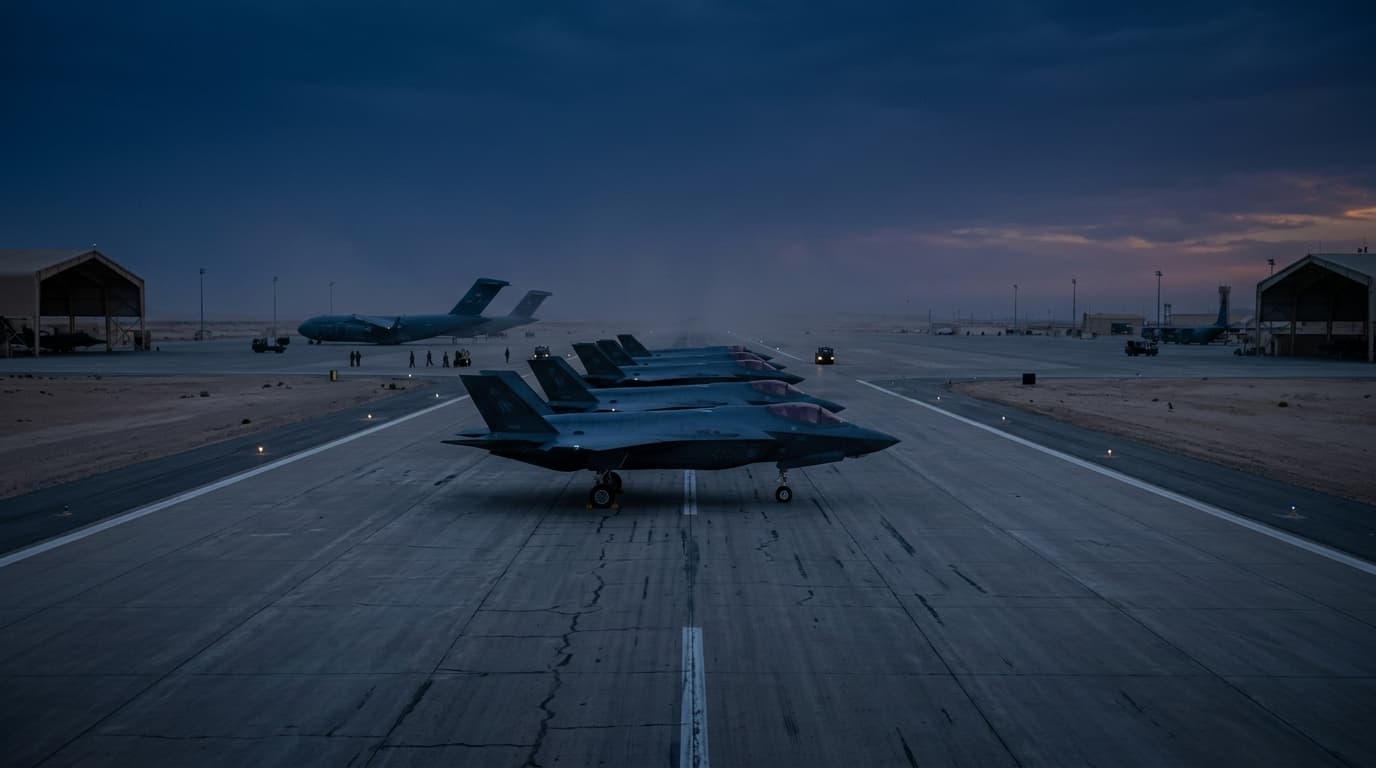
President Trump convened a secret emergency meeting aboard Air Force One immediately after the return of the coffins of four American soldiers killed in the ongoing US-Iran conflict, according to a Wall Street Journal report. The administration is debating whether to adopt CENTCOM commander Admiral Brad Cooper's plan for a 10-14 day intensive air campaign to neutralize Iran's missile infrastructure, or to pursue diplomatic channels. Chairman of the Joint Chiefs General Dan Kane has reportedly cautioned about the strain on US interceptor stocks. Trump, expressing frustration over renewed Iranian threats including deadly missile barrages that killed US soldiers in Jordan, said in a Fox News interview: 'We are going to hit them hard,' while leaving a narrow opening for continued talks. US forces have already launched a broad attack in response to the Iranian missile barrage, the report states.
The Wall Street Journal reports that President Trump convened a secret emergency meeting aboard Air Force One immediately after the return of the coffins of four American soldiers killed in the ongoing US-Iran conflict. The administration is actively debating whether to adopt CENTCOM commander Admiral Brad Cooper's 10–14 day intensive air campaign plan to neutralize Iran's missile infrastructure, or to pursue diplomatic channels. Trump expressed frustration over renewed Iranian threats and said in a Fox News interview, 'We are going to hit them hard,' while leaving a narrow opening for continued talks. The report states that US forces have already launched a broad attack in response to the Iranian missile barrage that killed the soldiers.
This development follows a series of reports earlier Thursday. At 01:46 Jerusalem, the WSJ first reported that CENTCOM had drafted a 10–14 day strike plan. Subsequent reports at the same time indicated that the plan faced internal criticism, that it was designed to avoid overstretching US interceptor stocks with Joint Chiefs Chairman General Dan Kane expressing reservations, and that Defense Secretary Pete Hegseth supports the plan while Trump weighs diplomatic options. At 06:05 Jerusalem, the Eye on Zion briefing confirmed a new wave of US strikes on Iran after a six-day pause, including strikes on IRGC missile facilities and UAV infrastructure, in response to a July 28 ballistic missile attack on US forces. At 06:29 Jerusalem, The Zioneer reported that CENTCOM commander presented the plan to Trump, with Hegseth supporting and Trump considering diplomacy. The source base has evolved from a single WSJ report to corroboration across multiple news outlets.
The US-Iran conflict has escalated dramatically since June 2026, with direct kinetic engagement replacing proxy warfare. As The Zioneer reported on July 20, Trump confirmed overnight US strikes on Iran and linked them to the deaths of American soldiers. The administration has grappled with interceptor stock constraints, as reported on July 26 when Trump froze plans for a broad airstrike due to warnings from General Kane about dwindling Patriot missile stocks. The current plan reflects the tension between the CENTCOM commander's push for decisive action and the logistical limits highlighted by the Joint Chiefs.
It remains unclear whether President Trump has approved the 10–14 day campaign. The internal debate between military momentum and resource constraints continues, with no final decision reported. The WSJ report adds that the return of the fallen soldiers' coffins precipitated the emergency meeting, signaling the human cost factor in the administration's deliberations.
6 developments
- Developingynet: Trump Weighs Up to Two Weeks of Intense Strikes on Iran
- DevelopingWSJ: US military prepared comprehensive plan for all-out war with Iran
- StrongTrump says US military operations against Iran could last two to three weeks
- StrongTrump leans toward expanding operations against Iran, ynet reports
Source and signal
- Open-source intake