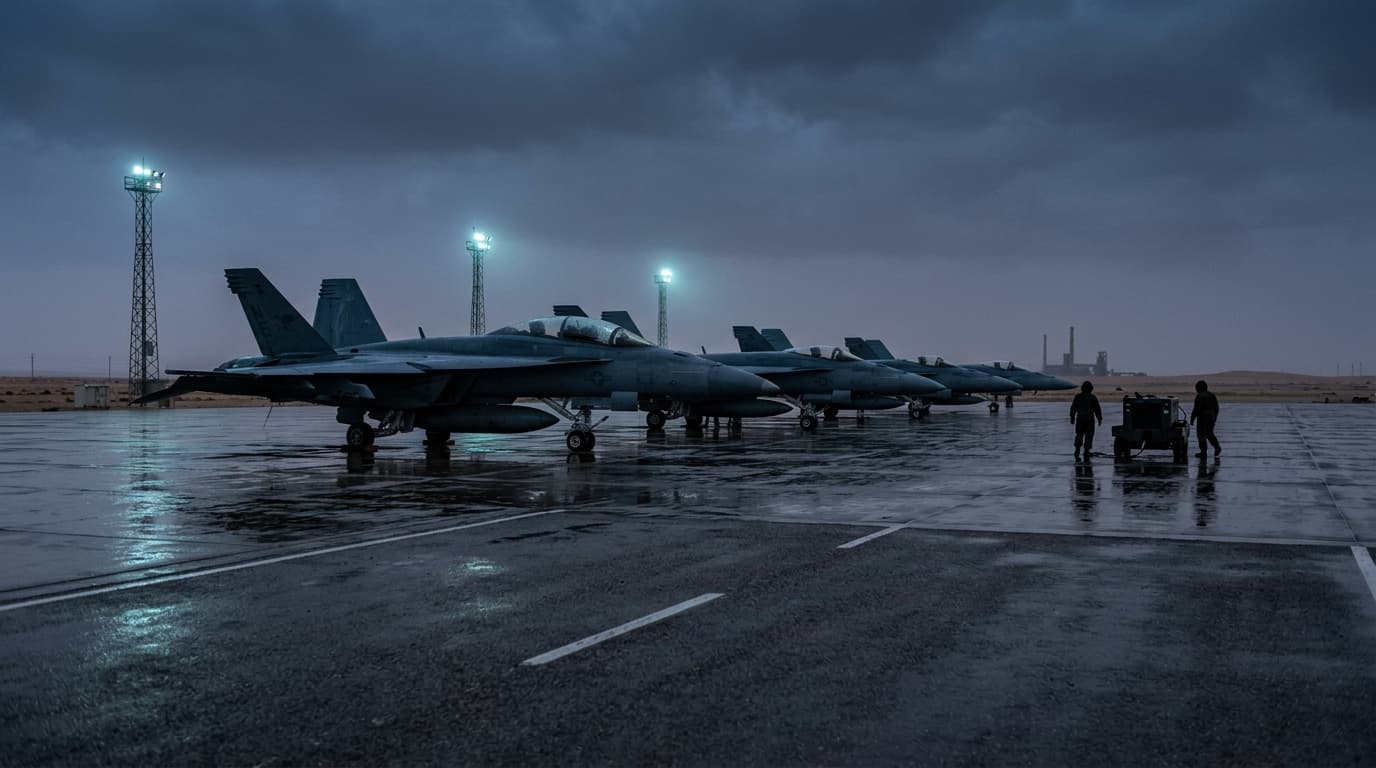
A US official told i24NEWS that the overnight strike on Iran was significantly more impactful than previous strikes, with double the effect. The Chairman of the Joint Chiefs reportedly noted that resuming large-scale hostilities is possible but would lead to depletion of interceptor stocks.
A US official told i24NEWS that the overnight strike on Iran 'had a significant impact — twice as large as the previous ones.' The assessment was provided on condition of anonymity. The Chairman of the Joint Chiefs reportedly clarified that resuming large-scale hostilities is possible but would come at the cost of depleting interceptor stocks. This warning echoes earlier reports that The Zioneer covered on Thursday at 01:47 Jerusalem, when the Wall Street Journal reported that CENTCOM had drafted a 10-14 day intensive strike plan designed to avoid overwhelming the US military's dwindling interceptor inventory. At the time, Joint Chiefs Chairman General Dan Kaine was said to have expressed reservations about resuming hostilities, citing the same inventory concerns.
The overnight strike, first reported by The Zioneer earlier this morning at 07:08 Jerusalem, was the first US operation against Iran in six days. CENTCOM announced the resumption of strikes early Thursday, targeting IRGC missile facilities and UAV infrastructure in response to a July 28 ballistic missile attack on US forces. At 07:08, The Zioneer published three updates: a report that the strike fulfilled President Trump's earlier threats of a massive military response, and a US official's initial assessment that the operation was significantly more intense than previous strikes. The official's latest assessment now quantifies the impact as double that of earlier operations, while the interceptor warning adds a new strategic dimension to the campaign.
As The Zioneer reported in its Eye on Zion briefing on Thursday at 06:05 Jerusalem, the US military struck dozens of IRGC targets, including missile facilities and UAV infrastructure. The broader context includes a WSJ report from Thursday at 01:47 Jerusalem, which noted that Admiral Brad Cooper, CENTCOM commander, had drafted an intensive strike plan to degrade Iran's missile capabilities while managing the strain on US interceptor inventories. The Chairman of the Joint Chiefs' warning about depletion aligns with those earlier concerns.
The extent of damage to Iranian targets and whether the US will sustain the current pace of operations remain unverified independently. The operational pause that preceded this strike lasted six days, and it is unclear whether future pauses or further escalations are anticipated.
4 developments
Source and signal
- Open-source intake