The Lead
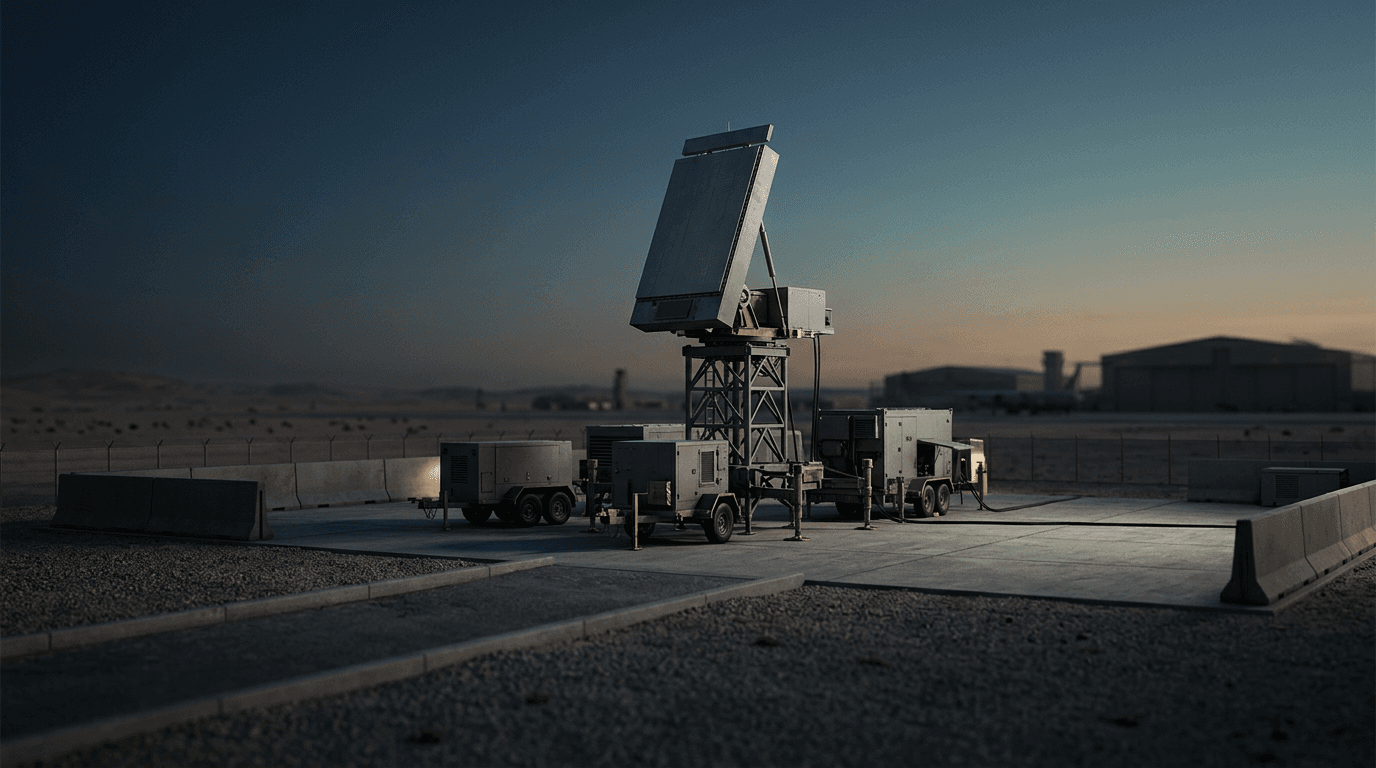
Iran released satellite imagery on Friday claiming to show the complete destruction of a high-value U.S. tactical air surveillance radar at the Ali Al Salem Air Base in Kuwait. The claim, which follows a wave of Iranian drone and missile strikes in the region, targets an ASR-1000 L-Band system valued at approximately $20 million. While Tehran presents the imagery as proof of a successful strike, the reports remain developing and have not been independently verified by international observers or confirmed by U.S. officials.
The Iranian Claim
According to material reviewed by The Zioneer Intelligence Desk, Iranian-linked channels released satellite imagery on Friday morning purportedly showing the aftermath of a precision strike at Ali Al Salem Air Base in Kuwait. The imagery focuses on a specific site located at coordinates 29°21'31.1"N 47°31'39.9"E, where an ASR-1000 L-Band tactical air surveillance radar was stationed. Iranian sources claim the system was "completely obliterated" by a drone or missile, rendering a key component of the regional air defense architecture inoperable.
Context of the Information War
This development follows a pattern of Iranian media releases aimed at challenging the narrative of U.S. and allied air defense superiority. In recent days, Tehran has published similar visual claims regarding sites in Bahrain and Israel's Ramat David Airbase. While U.S. Central Command (CENTCOM) and regional allies like Kuwait have previously stated that the majority of incoming threats were successfully intercepted, these new images are intended to suggest that Iranian munitions are reaching high-value targets.
Analysts note that the ASR-1000 is a critical asset for detecting low-flying threats, including the very drones Iran is utilizing. If the destruction is confirmed, it would represent a significant tactical loss and a gap in the surveillance net covering the northern Persian Gulf.
Analysis and Verification Gaps
At this stage, the claim remains classified as "Developing" by The Zioneer Intelligence Desk. There is a notable discrepancy between official military statements and the visual evidence provided by adversarial sources. While satellite imagery can be compelling, it requires expert forensic analysis to distinguish between actual strike damage, decoys, or digital manipulation. Furthermore, the U.S. military has historically been slow to acknowledge damage to specific sensitive systems to avoid providing battle damage assessment (BDA) to the enemy.
Regional Implications
The reported strike on Ali Al Salem is part of a broader Iranian strategy to degrade the U.S. military footprint in the Arabian Peninsula. Similar reports have emerged regarding radar sites in Jordan and the UAE, suggesting a coordinated effort to blind regional missile defense batteries. For Israel and its partners, the persistence of these attacks—and Iran's ability to document them—highlights the evolving challenge posed by Tehran's unmanned aerial vehicle (UAV) programs. Observers should watch for official satellite updates from independent firms like Maxar or Planet Labs to confirm the extent of the damage in the coming days.
- The Zioneer Intelligence Desk (Telegram channel)
- Satellite Imagery Shows Iranian Drone Strike Destroyed US Radar Site in BahrainEditorially linked
- Iran publishes satellite imagery claiming total destruction of Ramat David hangarRelated analysis
- Satellite imagery suggests Iranian missiles damaged F-16 at Jordan air baseRelated analysis
- Trump: US destroyed Iran's new radar systems in overnight strikeRelated analysis
- US F-15 WSO 'Bravo' recounts shootdown and survival deep inside Iran in new interview
- Leaders of Scotland, Wales, and Northern Ireland meet to discuss plan to leave UK and rejoin EU
- Co-director of film 'Naz'a' says claims verified, hopes to screen in Israel
- Hamas confirms elimination of senior commander Ahmad al-Batsh in northern Gaza