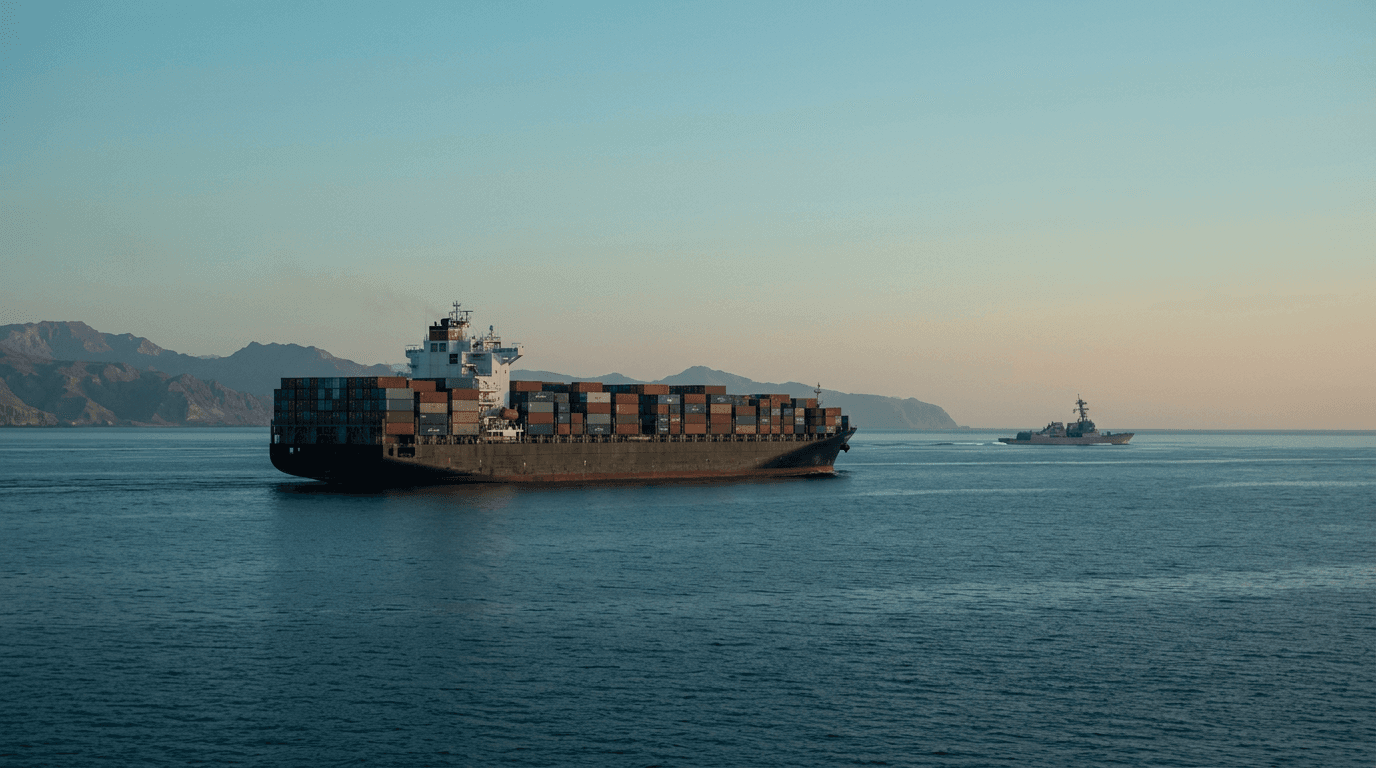
U.S. Central Command officially announced Thursday that the naval blockade on all Iranian ports has been formally lifted and enforcement has ceased. Concurrently, Iran's Supreme Leader Ali Khamenei issued a formal statement confirming the signing of the Islamabad Memorandum of Understanding, warning that Iran will not yield to excessive demands. The announcements move the reported U.S.-Iran understanding from claim to formal implementation.
U.S. Central Command formally announced the end of the naval blockade on Iran at 20:39 Jerusalem time on Thursday, confirming that American forces have ceased all enforcement of maritime restrictions and are no longer intercepting vessels heading to or from Iranian ports. The announcement follows a presidential directive and implements the operational aspects of the broader understanding reached between Washington and Tehran.
Simultaneously, Iran's Supreme Leader Ali Khamenei issued a formal statement confirming the signing of the Islamabad Memorandum of Understanding, marking the first direct acknowledgment from the country's highest authority. Khamenei's statement included a warning that Iran 'will not yield to excessive demands,' signaling Tehran's expectation that the 60-day negotiation phase will proceed within the agreed framework.
The dual announcements — the operational confirmation from CENTCOM and the supreme leader's endorsement — transform what had been a series of claims and reports into formalized implementation. As The Zioneer reported Thursday at 20:09 Jerusalem, CENTCOM had earlier announced the lifting of the blockade as a presidential directive; the timing of the CENTCOM confirmation and Khamenei's parallel statement within the same minute suggests a coordinated release.
The development follows a week of rapid progress: the signing of the memorandum of understanding on Wednesday at the Palace of Versailles, the initial confirmation by President Trump (reported by The Zioneer at Monday 01:27), Iran's Deputy Foreign Minister detailing the MoU terms on Monday at 08:55, and a senior Iranian source's claim on Tuesday that the blockade had been lifted. The current confirmations from both parties' highest levels substantiate what had, until now, been a chain of claims from Iranian officials and single reports.
The naval blockade had been in place as a central component of the Trump administration's "maximum pressure" campaign, restricting all maritime trade with Iran in coordination with allied naval forces. Its formal lifting clears the way for a 60-day negotiation framework during which the parties will negotiate a more comprehensive settlement.
What remains open is the content of the negotiations over the next 60 days and whether both sides adhere to the agreed framework. While CENTCOM confirmed the lifting of the blockade, its statement noted that ships will remain in the area to monitor that other conditions of the agreement are upheld.
5 developments
- StrongMojtaba Khamenei says he initially opposed US-Iran MOU, Pezeshkian convinced him to sign
- StrongTrump says he was told Mojtaba Khamenei agreed to the Iran deal
- DevelopingNew York Times: Iran's Mojtaba Khamenei approved MOU Saturday, ordered missiles readied after Dahiyeh strike
- DevelopingAxios: Iran tells regional states 'in-principle' MOU agreement; needs Mojtaba Khamenei's OK
Source and signal
- Internal intake