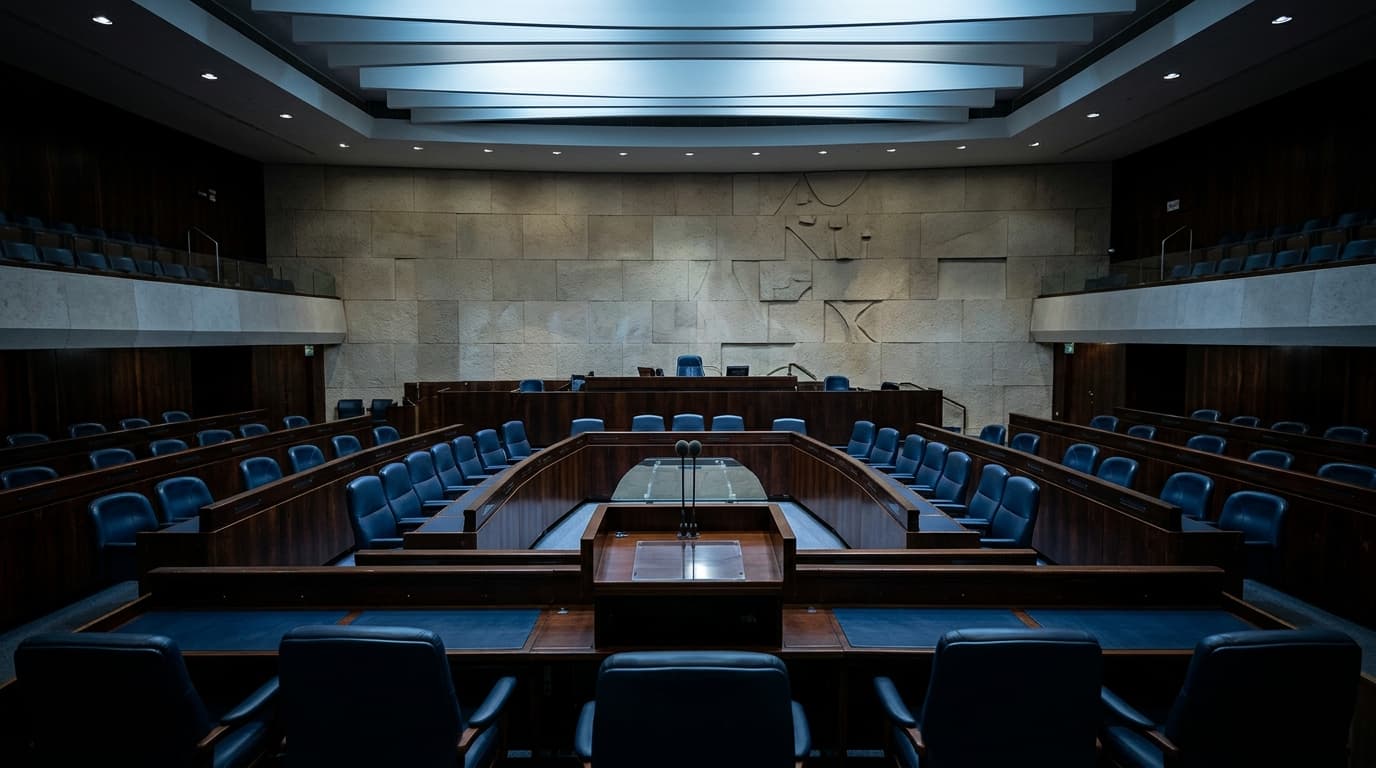
Communications Minister Shlomo Karhi submitted signatures from 25 MKs to Knesset Speaker Amir Ohana, demanding a plenum session during the recess to pass a declaration asserting Knesset legislative supremacy. The move follows the High Court's injunction against the Broadcast Law, which Karhi called a 'serious deviation from authority.' The proposed declaration states that judicial review does not grant authority to freeze a law passed legally.
The move by Minister Karhi represents the latest escalation in the ongoing institutional confrontation between the Israeli government and the judiciary. The demand to convene the Knesset plenum during the summer recess comes just hours after the High Court of Justice issued an injunction halting the Broadcast Law, which had been passed by the Knesset in second and third readings.
Karhi's letter to Speaker Ohana described the court's injunction as a 'serious deviation from authority' and 'a blow to the sovereignty of the people.' The proposed plenum declaration, which Karhi attributes to a 'historic decision,' asserts that the Knesset is the sole legislative authority and that judicial review does not grant the power to freeze or suspend a law that was passed legally. The move has the support of 25 MKs, the minimum required to demand a plenum session during the recess.
This is not the first time the government has challenged the High Court's authority. Earlier this month, on July 5, the government formally told the High Court it would not abide by any ruling on the Second Authority for Television and Radio, a move that Communications Minister Karhi and Justice Minister Yariv Levin championed. That defiance drew a rare joint warning from five former Supreme Court presidents, who called it the 'last nail in democracy's coffin.' On July 19, the High Court halted the Communications Law, drawing sharp criticism from right-wing commentators.
The current proposal, if passed by the plenum, would mark a significant constitutional step, effectively declaring that the Knesset's legislation is not subject to judicial review. Legal experts and opposition figures have already warned that such a move could lead to a full-blown constitutional crisis. The next steps will depend on Speaker Ohana's decision to schedule the session and the coalition's ability to secure a majority for the declaration.
3 developments
- StrongKnesset committees to approve final bills ahead of election recess
- DevelopingKahana: High Court has become Israel's upper house, freezing Knesset legislation
- DevelopingKnesset plenum to convene Tuesday for cross-party legislative package
- DevelopingMK Moshe Saada says Knesset must set a red line as High Court oversteps boundaries
Source and signal
A single-sourced dispatch is never rated Confirmed or Strong. Its Signal strengthens only when a second, independent source corroborates it.
- Open-source intake