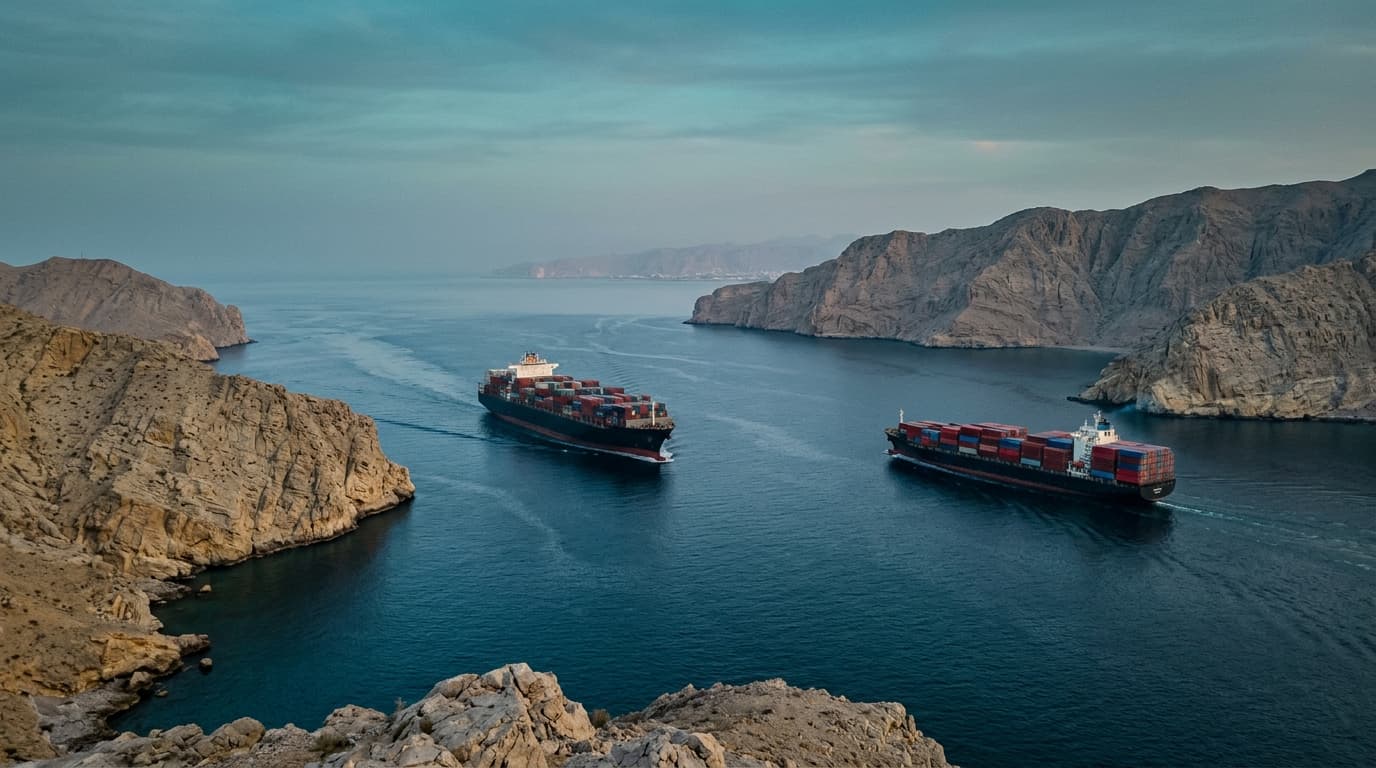
A source in the Iranian Foreign Ministry said Thursday that under the emerging agreement with Oman, vessels entering the Strait of Hormuz will use a northern route near Iran's coast, while those exiting will use a southern route near Oman, according to a report. After a temporary period, both routes will be replaced by a single central lane. The source said payments will be collected for services including insurance, fueling, and environmental protection, and denied reports of a dispute with Oman over fee rates. A US source told NewsNation that any temporary route must be free of obstacles, including permits and fees, asserting the strait is an international waterway.
An Iranian Foreign Ministry source provided new details Thursday evening on the emerging plan with Oman to manage traffic through the Strait of Hormuz, according to a report. The source said vessels entering the strait would use a northern route near Iran's coast, while those exiting would use a southern route near Oman's coast. After a temporary period, both routes would be replaced by a single central lane. The source clarified that payments would be collected for services — insurance, fueling, environmental protection — and denied reports of a disagreement between Iran and Oman over the fee rate.
Earlier Thursday, The Zioneer reported a series of developments: Iran officially announced it would collect tolls in the strait (13:12 Jerusalem), followed by details on service fees, denials from Iran's Fars News Agency of fixed percentage fees, and reports that Oman sought a 3% fee alongside Iran's 5–7% demand. The thread also included an assessment that the Islamic Revolutionary Guard Corps may be undermining negotiations. The latest statement from the Foreign Ministry source adds operational specificity and reiterates Tehran's framing of payments as service fees, while denying any rift with Muscat.
As The Zioneer reported earlier this week, the draft agreement between Iran and Oman — completed on Wednesday and awaiting Supreme Leader approval — envisions a 60-day toll-free period followed by a permanent arrangement. The dual-routing system was outlined in previous reports, with inbound vessels through Iranian waters and outbound through Omani waters. The US has consistently opposed any toll regime, with a source telling NewsNation on Thursday evening that any temporary route must be "without obstacles" — meaning no permits, fees, or payments — and that the Strait of Hormuz is an international waterway.
It remains unclear whether the IRGC will endorse the final agreement, and whether the US position will shift. The transition to a single central lane after the temporary period also depends on further negotiations with Oman.
9 developments
- DevelopingSource details phased Strait of Hormuz plan: Iran to control entry, joint exit with Oman, transit fees
- StrongIranian official: Tehran unlikely to accept alternatives to joint Oman Strait of Hormuz plan
- DevelopingIran and Oman advance joint plan for Strait of Hormuz transit fees
- StrongOman drafts proposal for separate Strait of Hormuz lanes, with southern route free of Iran's permit requirements
Source and signal
- Open-source intake