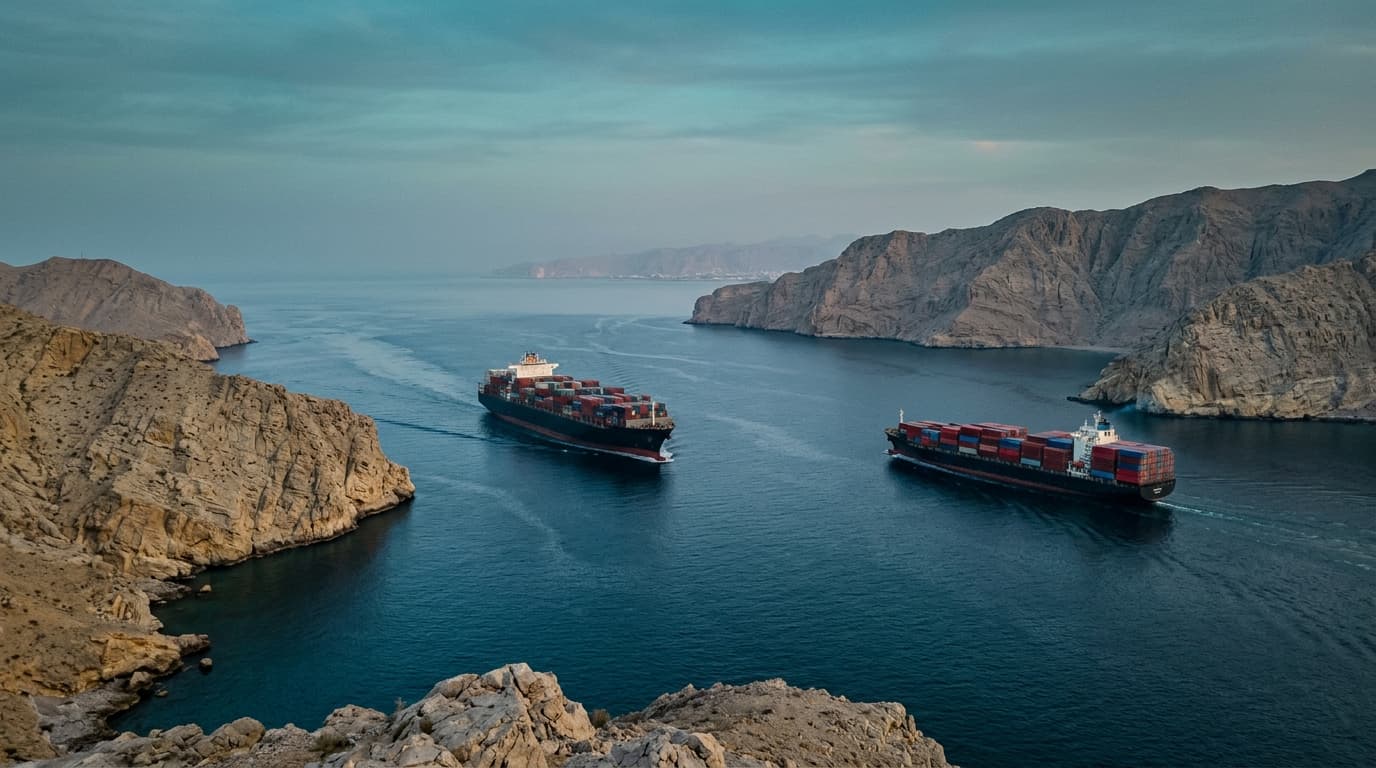
A source familiar with the details told the IRGC-affiliated Fars News Agency on Thursday that the emerging plan for the Strait of Hormuz would initially use separate northern and southern lanes for entry and exit, later consolidating to a single middle lane. Under the plan, Iran would manage all vessel entry, while exit would be managed jointly with Oman. The plan also includes mandatory transit fees covering insurance, fuel, and environmental services, according to the source.
The Zioneer reported at 19:02 that a source familiar with the details told Fars News Agency about an emerging plan for the Strait of Hormuz. Now, at 19:04, the same source has provided additional specifics.
According to the source, the plan will be implemented in phases. Initially, vessels entering the Persian Gulf will use a northern lane close to Iran, while those exiting will use a southern lane near Oman. After a period to be determined in the agreement, all traffic will shift to a single middle lane, with Iran managing all entry and exit managed jointly with Iran and Oman.
The source also detailed the fee structure: transit fees will be determined based on various factors, including the scope of services Iran can provide. Services for which vessels will be charged include insurance, fuel, environmental payments, and other similar services.
The IRGC has been tightening control over the waterway in recent weeks, as The Zioneer has reported. The IRGC previously announced mandatory coordination and transit fees for passage, and Iran has begun charging ships up to $2 million per vessel. The plan with Oman has been under discussion for weeks, with Oman agreeing to a compromise routing but demanding IRGC support for the agreement.
The source did not provide a timeline for implementation or indicate whether the plan has been formally approved by Iranian authorities.
2 developments
Source and signal
- Open-source intake