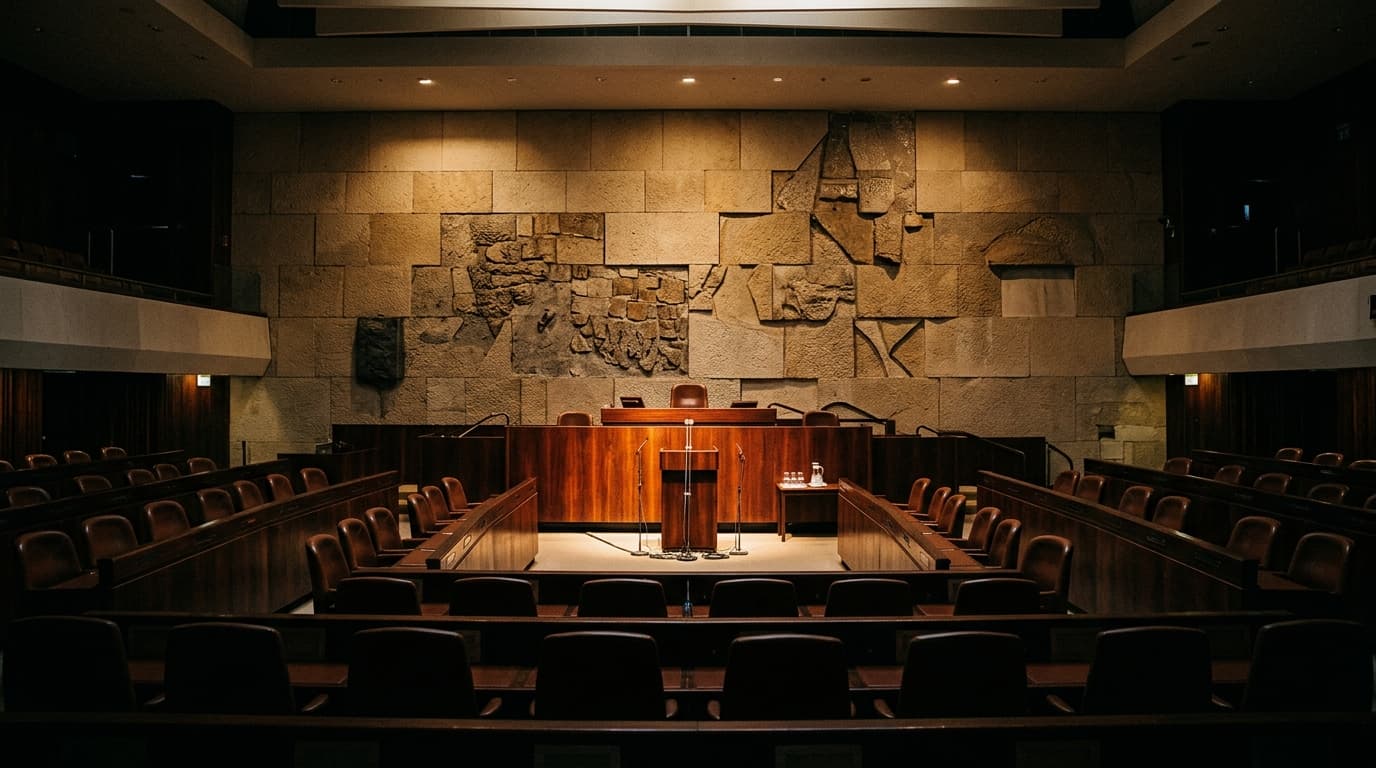
The Knesset legal advisor told the High Court of Justice on Sunday that the legislative process of the arrest law contained a flaw and does not meet the required standard. The advisor has previously warned that the bill is fundamentally flawed and likely to be struck down. The response is part of an ongoing legal battle over the coalition-backed measure that would grant immunity from arrest to draft-dodging yeshiva students.
The Knesset legal advisor on Sunday submitted a formal response to the High Court of Justice arguing that the legislative process of the arrest-exemption bill for draft-dodging yeshiva students contained a flaw and does not meet the required high standard. The submission, reported by Amit Segal (N12) and ynet, cited two interrelated flaws: the bill's content exceeds the scope of the original proposal, constituting a 'new subject,' and the process did not meet the elevated standard demanded by the post-October 7 circumstances. The advisor concluded that the bill is fundamentally flawed and likely to be struck down—the strongest warning yet from the Knesset's own legal counsel.
The opinion is the latest in a chain of institutional objections. On July 1, the same advisor warned that the bill was substantively flawed and likely to be invalidated by the High Court. On July 24, Attorney General Gali Baharav-Miara submitted her own position arguing the law is unconstitutional and must be annulled. Earlier, on July 13, the advisor expressed anger at the chief of staff for bypassing committee discussions on the arrest law and the Basic Law: Torah Study by sending a letter directly to the media.
The legal battle over the coalition-backed measure has drawn multiple petitioners. The Movement for Quality Government petitioned the High Court on July 13 against the Basic Law: Torah Study, arguing it is a backdoor attempt to enshrine draft exemptions in quasi-constitutional law and bypass High Court rulings on equal burden-sharing, as The Zioneer reported at the time. The Knesset legal advisor's earlier opinions on related legislation—including a July 7 ruling that an illegal-content provision cannot be enacted as law—have consistently highlighted procedural deficiencies in coalition bills.
What remains open is the High Court's deliberation on the petitions. No date for a ruling has been set, and the court has not issued an interim order. The legal advisor's submission strengthens the petitioners' case but does not decide the outcome.
4 developments
- DevelopingKnesset legal advisor warns arrest-exemption bill for yeshiva students is flawed, likely to be struck down
- DevelopingKnesset legal adviser fumes at chief of staff for bypassing committee on arrest law, Torah study bill
- DevelopingKnesset legal adviser: Arrest freeze bill lacked desertion arrest clause, new subject claim valid
- DevelopingKnesset Legal Adviser: illegal-content provision cannot be enshrined in law
Source and signal
- Open-source intake