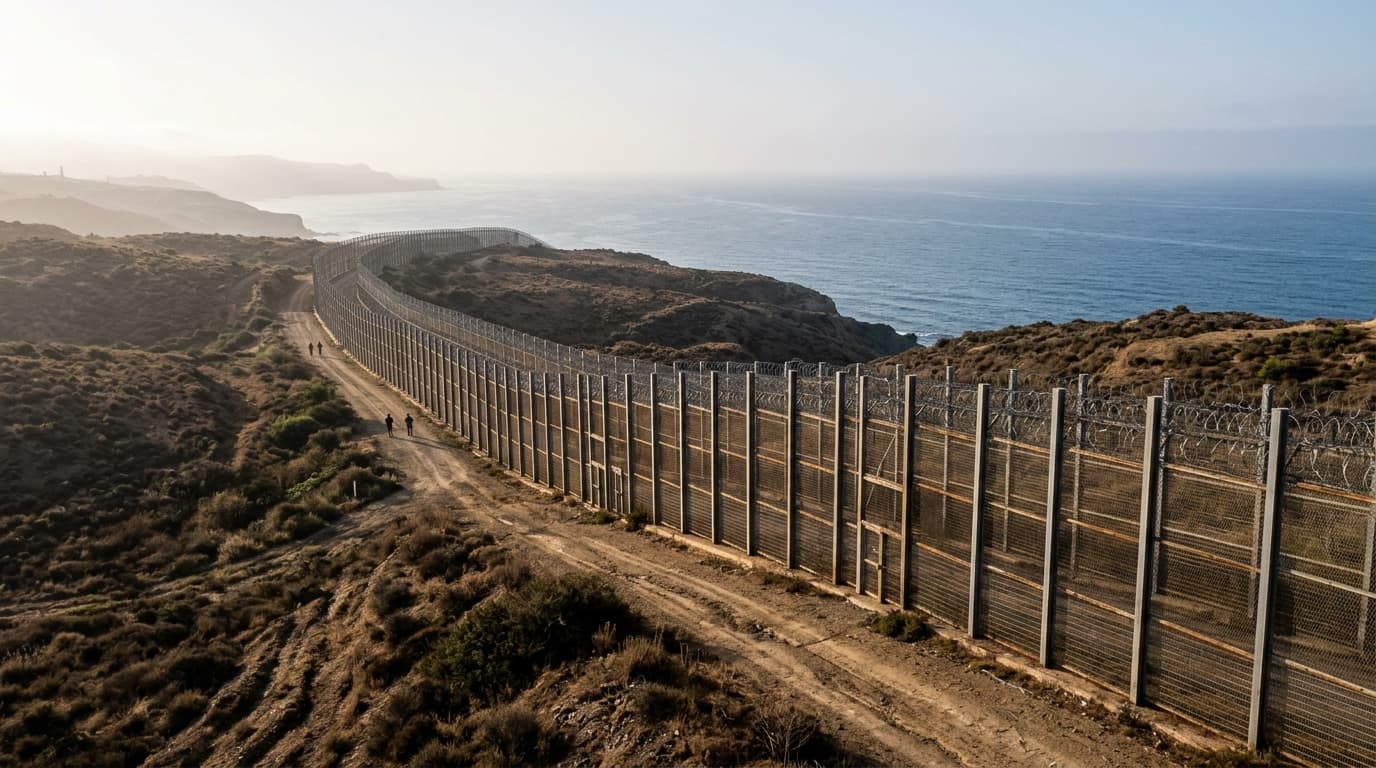
Spain's Interior Ministry announced that more than 25,000 migrants who entered the Spanish enclave of Ceuta in recent days have returned to Morocco. The development follows an earlier estimate of 49,000 entries and a court ruling that blocked immediate repatriations.
The Spanish Interior Ministry announced on Friday that more than 25,000 migrants have returned to Morocco from the Spanish enclave of Ceuta, marking a dramatic reversal of the mass entry that began Thursday. The figure represents about half of the earlier estimate of 49,000 entries reported by the ministry (The Zioneer, Fri 10:56). The returns come after a Spanish court blocked the immediate repatriation of migrants arriving by sea (The Zioneer, Fri 12:02) and as Prime Minister Pedro Sánchez visited Ceuta, calling the surge an 'attack on national sovereignty.'
The crisis unfolded rapidly. Thursday evening, the Guardia Civil estimated up to 40,000 border crossings, with a senior Spanish official confirming tens of thousands had entered but cautioning that the figure was unverified (The Zioneer, Thu 23:46). By Friday morning, the Interior Ministry had issued an official estimate of 49,000. The governor of Ceuta later claimed the number exceeded 60,000 and alleged that Moroccan soldiers were actively assisting the migrants (The Zioneer, Thu 23:46). Reports of casualties emerged: initially 18 deaths, then at least 27 by Friday afternoon (The Zioneer, Fri 14:33). The court ruling and the PM's visit framed the day's response.
As The Zioneer reported earlier, citing El País, the Spanish government assesses that Morocco directly assisted the mass entry, viewing it as leverage over Gibraltar's status or Spain's recent rapprochement with Algeria (Fri 14:02). The Zioneer has also noted the broader geopolitical context: Ceuta is a European Union territory on the African continent, making it a flashpoint for border security and migration diplomacy.
The cause of the sudden return flow remains unclear. The Interior Ministry did not specify whether the returns were coordinated with Moroccan authorities. The status of the estimated 24,000 migrants still in the enclave is uncertain, and the legal effect of the court ruling on sea arrivals remains unresolved.
9 developments
- DevelopingCeuta migrants seek places to sleep without property owners' consent, reports say
- DevelopingAbu Ali Express: Spanish police, soldiers not intervening in Ceuta as migrants mock authorities
- StrongSpanish residents curse PM Sánchez, blame him for Ceuta migrant crisis
- DevelopingMoroccan source tells ynet: Many in Morocco say Ceuta is under Spanish occupation
Source and signal
- Open-source intake