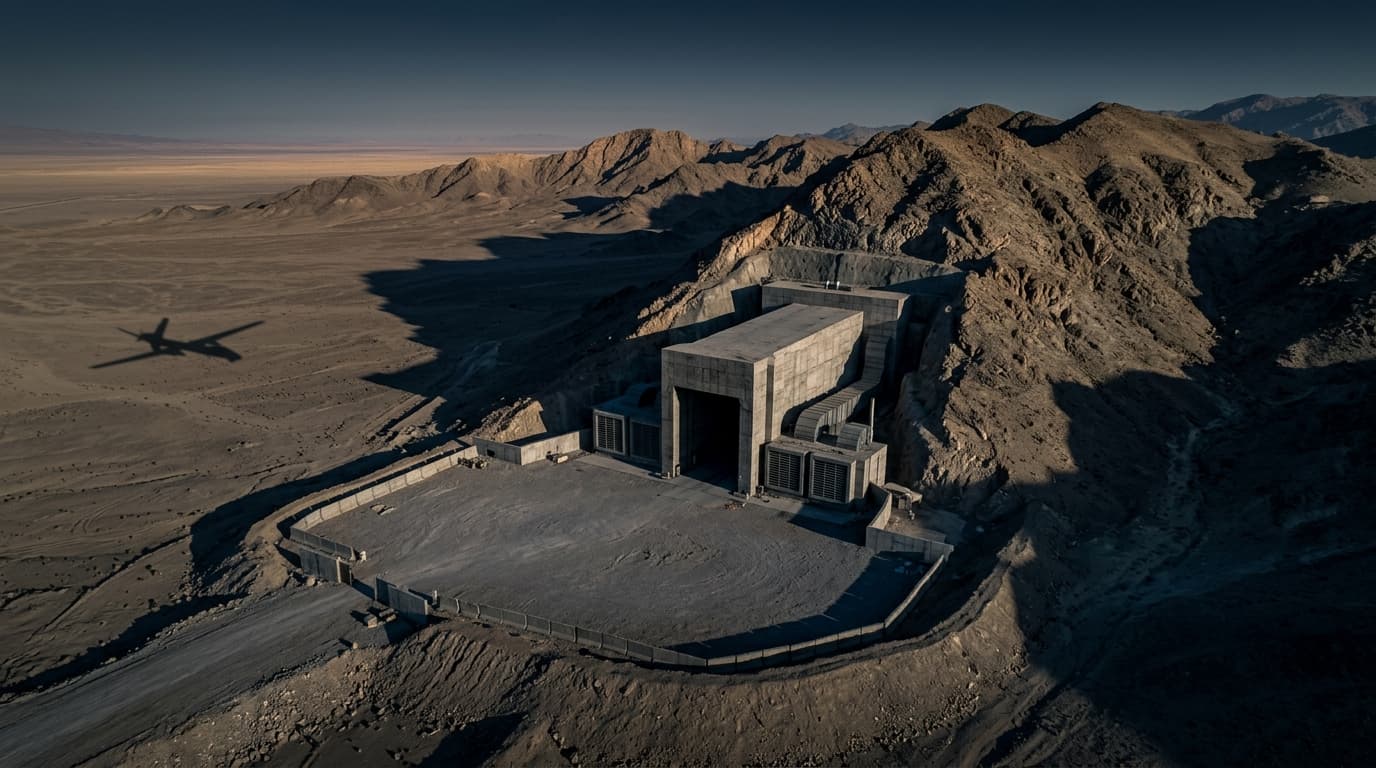
A detailed analysis by the Institute for Science and International Security, reported by Moriah Asraf and Doron Kadosh (N13 / Army Radio), reveals that Iran's deeply buried Mount Machush site near Natanz remains under construction and has not yet become operational. The facility, carved into a granite mountain, is designed to house thousands of advanced centrifuges and could support military-grade uranium enrichment, but it is currently not active. The report notes the site was not struck in the 2025 and 2026 conflicts, and identifies vulnerabilities in its power, ventilation, and supply lines.
The Institute for Science and International Security (ISIS), led by nuclear expert David Albright, has published a detailed assessment of Iran's Mount Machush (הר המכוש) underground facility, as reported by journalists Moriah Asraf and Doron Kadosh (N13 / Army Radio). The analysis confirms that the site, carved into a granite mountain near Natanz, remains under construction and is not yet operational as a nuclear facility. Construction began in 2020, two years after the U.S. withdrawal from the JCPOA, and the complex includes two entrances leading to chambers at depths of 100–145 meters below the mountain peak. Iran has added perimeter walls, concrete and earth layers above the tunnel openings, and partially blocked the eastern entrances, while the western ones remain active.
As The Zioneer has reported throughout the day (topic page, 07:07; WSJ report, 08:04; officials statement, 08:25), the facility has been a focal point of U.S.-Israeli intelligence cooperation. Israeli assessments indicated Iran moved thousands of advanced centrifuges to Mount Machush, prompting President Trump to threaten a strike. However, the current analysis makes clear that the site has not been attacked in the 2025 or 2026 operations against Iran, and its underground halls are not yet in use. The ISIS assessment notes that the caverns are large enough to accommodate a full-scale enrichment plant capable of producing weapons-grade uranium, as well as additional nuclear weaponization activities.
Key vulnerabilities identified include the facility's reliance on above-ground infrastructure for electricity, ventilation, and cooling, as well as the need for regular movement of personnel and supplies. The report does not determine whether the facility is immune to aerial bombardment, but it highlights these chokepoints as potential targets for the U.S. or Israel. The timeline for operational activation remains unclear, pending decisions by Iranian leadership.
3 developments
- StrongAnalysis: Iran's Mount Makush nuclear facility deeper than Fordow, US reportedly plans phased strike on access routes
- StrongSatellite imagery reveals construction activity at Iran's secret underground nuclear facility near Natanz
- DevelopingZioneer analysis: Trump threatens Mount Pikaks; only tactical nuke or ground op can destroy site
- DevelopingTrump: Mount Makosh a possible target for 'big, fat and beautiful' attack
Source and signal
A single-sourced dispatch is never rated Confirmed or Strong. Its Signal strengthens only when a second, independent source corroborates it.
- Internal intake