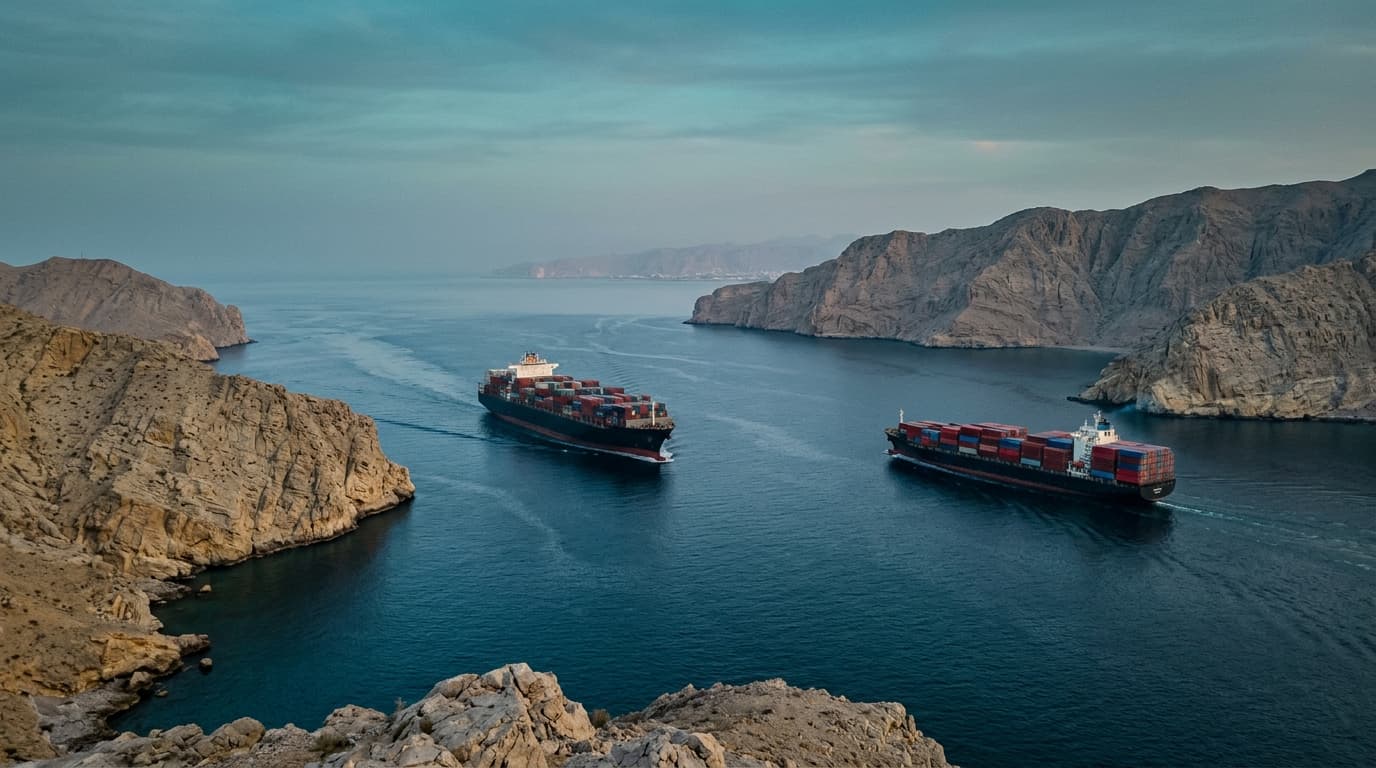
Regional sources told the Wall Street Journal that Iran is discussing a proposal with Oman and other mediators for a temporary new shipping lane in the Strait of Hormuz. Under the plan, vessels entering the Gulf would pass through Iranian waters and exit through Omani waters, reportedly without tolls. Iran initially responded positively but later demanded guarantees that attacks on its territory will not resume and that oil sanctions be lifted; mediators are awaiting the Islamic Revolutionary Guard Corps' response.
The Wall Street Journal reported Tuesday morning, citing regional sources, that Iran is discussing a temporary new shipping lane arrangement for the Strait of Hormuz with Oman and other mediators. The proposal envisions vessels entering the Gulf passing through Iranian waters and exiting through Omani waters, reportedly without tolls. Mediators said Iran initially responded positively but later conditioned its approval on guarantees that attacks on its territory will not resume and that oil sanctions are lifted. The Islamic Revolutionary Guard Corps (IRGC) has not yet responded.
Earlier today (Tue 08:05 Jerusalem), The New York Times published a detailed report indicating that Iran and Oman are close to finalizing an agreement that would include a lane separation system and a service fee for Iran. A prior i24NEWS report at the same time also cited nearing agreement. The new WSJ report adds that Iran has now formally raised demands for security guarantees and sanctions relief, complicating the mediation. This follows weeks of diplomatic efforts: on July 27, Bloomberg reported Omani optimism for a breakthrough; on July 28, i24NEWS cited progress on a temporary solution; on July 29, Iran reportedly struck three additional ships in the strait; on August 2, N12 reported that Iranian Foreign Minister Abbas Araghchi agreed to a similar compromise, and Oman conditioned its approval on IRGC support.
As The Zioneer reported on June 27, the IRGC struggled to maintain its declared blockade as about 70% of vessel traffic shifted to a southern route within Omani waters. The diplomatic efforts have since centered on a dual-routing system that would effectively shift control of the waterway from exclusive Iranian authority to a shared arrangement with Oman.
The IRGC's position remains the key unknown. Mediators are awaiting the Revolutionary Guard's response to the proposal, which will determine whether the Strait of Hormuz — through which about 20% of global oil passes — can return to normal operations. Iran's demand for sanctions relief adds a further layer of uncertainty.
5 developments
- DevelopingIran and Oman announce joint management company for Strait of Hormuz
- StrongIran: Strait of Hormuz management is solely Iran and Oman's responsibility, toll collection continues
- StrongIran says talks with Oman on managing Strait of Hormuz continue
- DevelopingIran and Oman advance joint plan for Strait of Hormuz transit fees
Source and signal
- Open-source intake