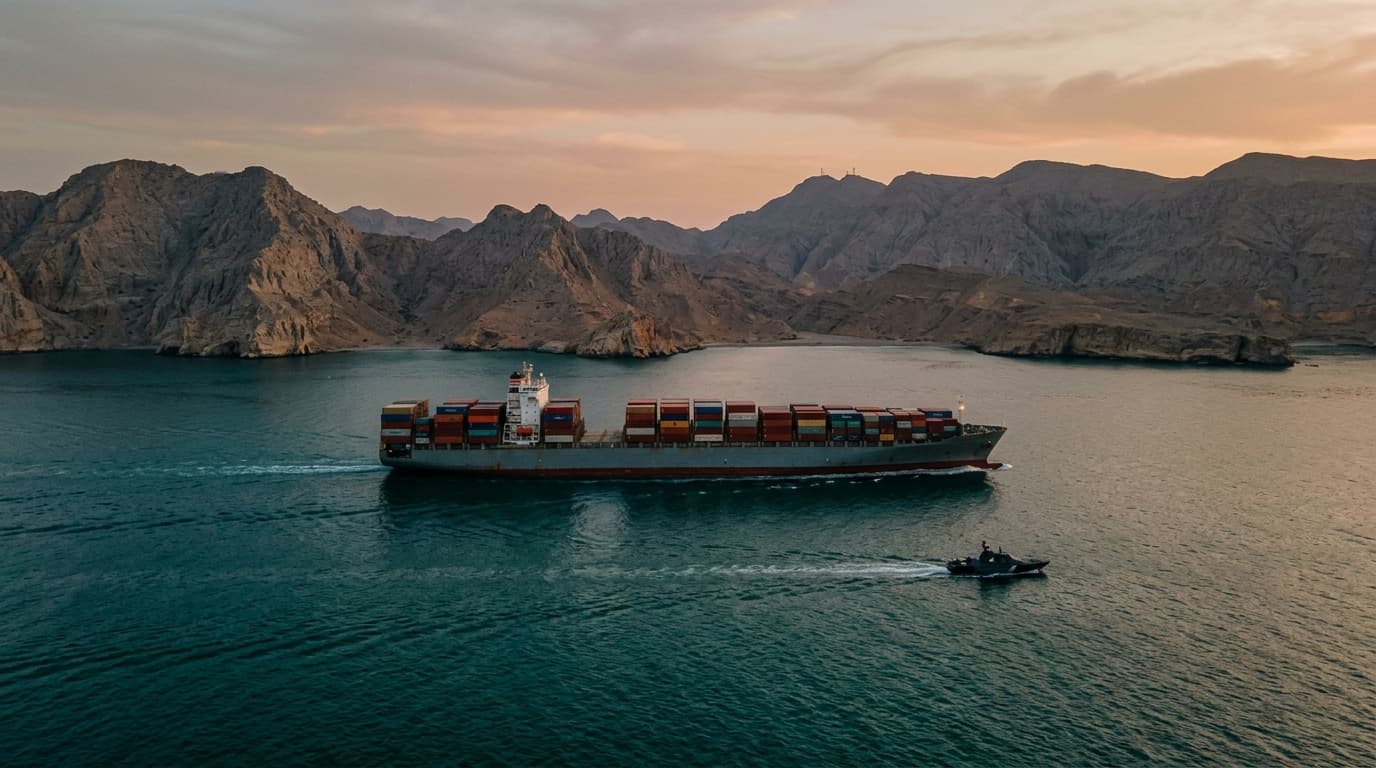
The New York Times reports that Iran and Oman are nearing an agreement on the future management of the Strait of Hormuz. Under the proposed arrangement, vessels entering the Persian Gulf would pass through waters controlled by Iran, while outgoing vessels would use a lane near Oman. The deal would not include tolls but would involve 'service fees' for environmental protection, security, and personnel, split equally between the two countries — effectively cementing Iran's de facto control over the strategic chokepoint, according to the report.
The New York Times reported Tuesday morning that Iran and Oman are close to finalizing an agreement to regulate shipping in the Strait of Hormuz, with a detailed structure that includes separating incoming and outgoing vessels into distinct lanes and imposing a 'service fee' split equally between the two countries. The report, cited by Israeli journalist Asaf Rozentzweig (N12), outlines that vessels entering the Persian Gulf would pass through waters controlled by Iran, while outgoing vessels would use a lane near Oman — effectively cementing Iran's de facto control over the strategic chokepoint, according to the report.
The first bulletin on this development, at 08:05 Jerusalem, cited i24NEWS reporting that Iran and Oman were nearing an agreement to renew shipping through the strait, without providing specific conditions. Subsequent reports from The New York Times, also at 08:05, added that the deal would include a 'service fee' commission for Iran. The Zioneer's own dispatch at 08:05 combined the WSJ and NYT reports, noting that the WSJ had reported Iran's initial positive response to a temporary shipping lane proposal, followed by demands for guarantees against renewed attacks and sanctions relief. The NYT report, citing Iranian sources, indicates the talks are now further advanced, with the fee structure agreed upon.
This development follows a months-long process of diplomatic efforts and military tensions in the region. As The Zioneer reported on June 14, a senior US official stated that the Strait of Hormuz would reopen 'with no tolls' under a framework deal with Iran. However, on June 15, Iran claimed that the US had recognized its right to collect tolls after a 60-day grace period — a claim that contradicted the US narrative. The current deal, as reported by the NYT, does not include tolls per se but introduces 'service fees' for environmental protection, security, and personnel, which the report frames as a mechanism that effectively gives Iran control over the waterway.
What remains open is the official response from Iran's Islamic Revolutionary Guard Corps (IRGC), which the WSJ reported as the next step mediators are awaiting. The deal's viability depends on whether the IRGC backs the agreement, as the force controls Iran's maritime operations. Additionally, the US position on this specific arrangement — whether it accepts the 'service fee' structure as consistent with the 'no tolls' framework — has not been publicly stated.
5 developments
- DevelopingIran and Oman announce joint management company for Strait of Hormuz
- StrongIran: Strait of Hormuz management is solely Iran and Oman's responsibility, toll collection continues
- StrongIran says talks with Oman on managing Strait of Hormuz continue
- DevelopingIran and Oman advance joint plan for Strait of Hormuz transit fees
Source and signal
- Open-source intake