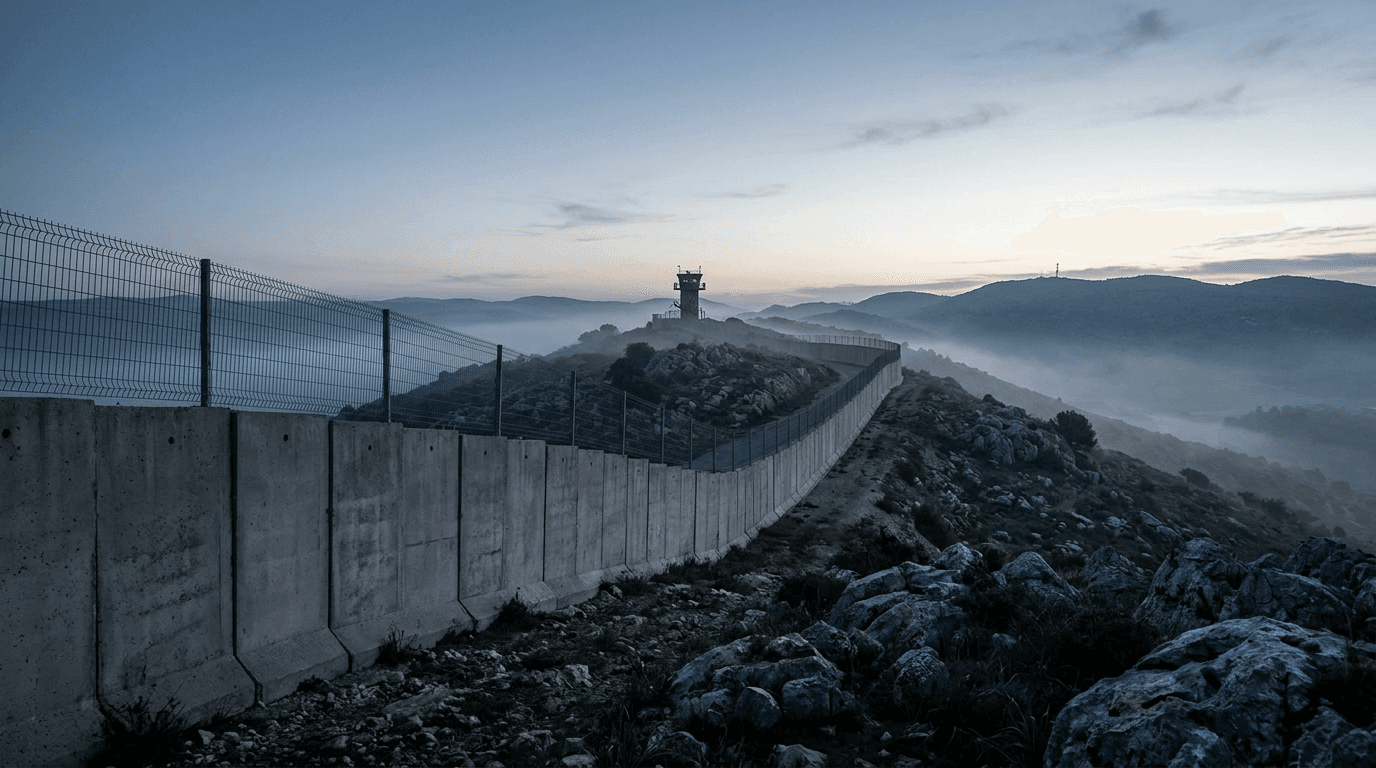
Defense Minister Israel Katz denied reports that the IDF has tightened operational restrictions in southern Lebanon, saying there is no limitation on forces to remove threats. The military reportedly raised approval thresholds for strikes amid U.S. pressure tied to the emerging Iran deal, sparking internal debate over tactical autonomy.
Defense Minister Israel Katz on Sunday attributed the reported tightening of IDF operational restrictions in southern Lebanon directly to U.S. pressure tied to the emerging Iran deal, framing public denials of limitations within that context. Katz's statement, published at 13:39 Jerusalem, rejected reports of new restrictions — saying there is no limitation on forces to remove threats — but his own phrasing acknowledged the U.S. factor, as The Zioneer reported. The thread evolved rapidly: at 13:39 Jerusalem, all three versions — the initial denial, Katz's clarification that Israel will not withdraw from the security zone, and the commentary criticizing the phrasing — were published simultaneously, reflecting the desk's effort to capture a fast-moving political-military debate. Analyst Yair Goldblatt noted earlier that while Katz said there is no restriction on preempting threats, initiated offensive operations are not currently taking place or at least are not being reported to the media — a gap that remains unaddressed by the defense minister's statement.
As The Zioneer reported on Sunday June 14 (20:52 Jerusalem), Prime Minister Netanyahu told President Trump that Israel is not bound by any Lebanon clause in the U.S.-Iran deal. Two days later, on June 16 (20:23 Jerusalem), Jerusalem officials stressed that freedom of action against Hezbollah is non-negotiable despite reported U.S. pressure. On June 18, Netanyahu said the IDF will stay in southern Lebanon as long as needed (17:25 Jerusalem), and Israel and Lebanon were set for another round of talks as Trump urged a 'softer touch' toward Hezbollah (14:11 Jerusalem). On June 19 (09:18 Jerusalem), the IDF launched heavy strikes in Lebanon after 'significant' Hezbollah ceasefire violations. On June 20 (08:08 Jerusalem), Israel dismissed reports of a ceasefire, saying 'There is no ceasefire.' The June 21 thread thus represents the latest chapter in a weeks-long effort by Jerusalem to publicly assert operational autonomy while diplomatic pressure from Washington intensifies.
The evolving dynamic highlights a central tension: Katz and Netanyahu publicly reject any limits on IDF action, but the reported elevation of approval thresholds — to the level of the Chief of Staff or political leadership — suggests a de facto restriction even if not officially acknowledged. As The Zioneer reported on June 7 (07:04 Jerusalem), Netanyahu ordered the IDF chief to draft a Beirut-option response plan as the ceasefire framework frayed, indicating that planning for escalation coexists with these operational debates. The fifth round of indirect Israel-Lebanon talks, hosted by Washington, is expected to focus on contested 'pilot zones' in southern Lebanon, with Lebanese military sources signaling conditional openness but concern over Israeli intentions.
What remains open: whether Katz's attribution of U.S. pressure constitutes an operational acknowledgment of the reported restrictions or merely diplomatic framing; whether the military's reported higher approval thresholds for strikes are actually in effect despite the minister's denial; and whether the internal IDF debate over tactical autonomy will affect the pace of operations on the ground. No official U.S. or IDF comment has directly confirmed or denied the Walla report's details about specific command-level approval requirements.
6 developments
- DevelopingIDF Chief: Army ready to immediately resume fighting Iran
- DevelopingKatz: IDF has full backing, freedom of action against all threats in Lebanon, Gaza
- StrongKatz: IDF commanders and soldiers will continue operating decisively in Lebanon
- StrongKatz warns Iran: Any attack on Israel over Lebanon will draw 'full-force' response
Source and signal
- Open-source intake