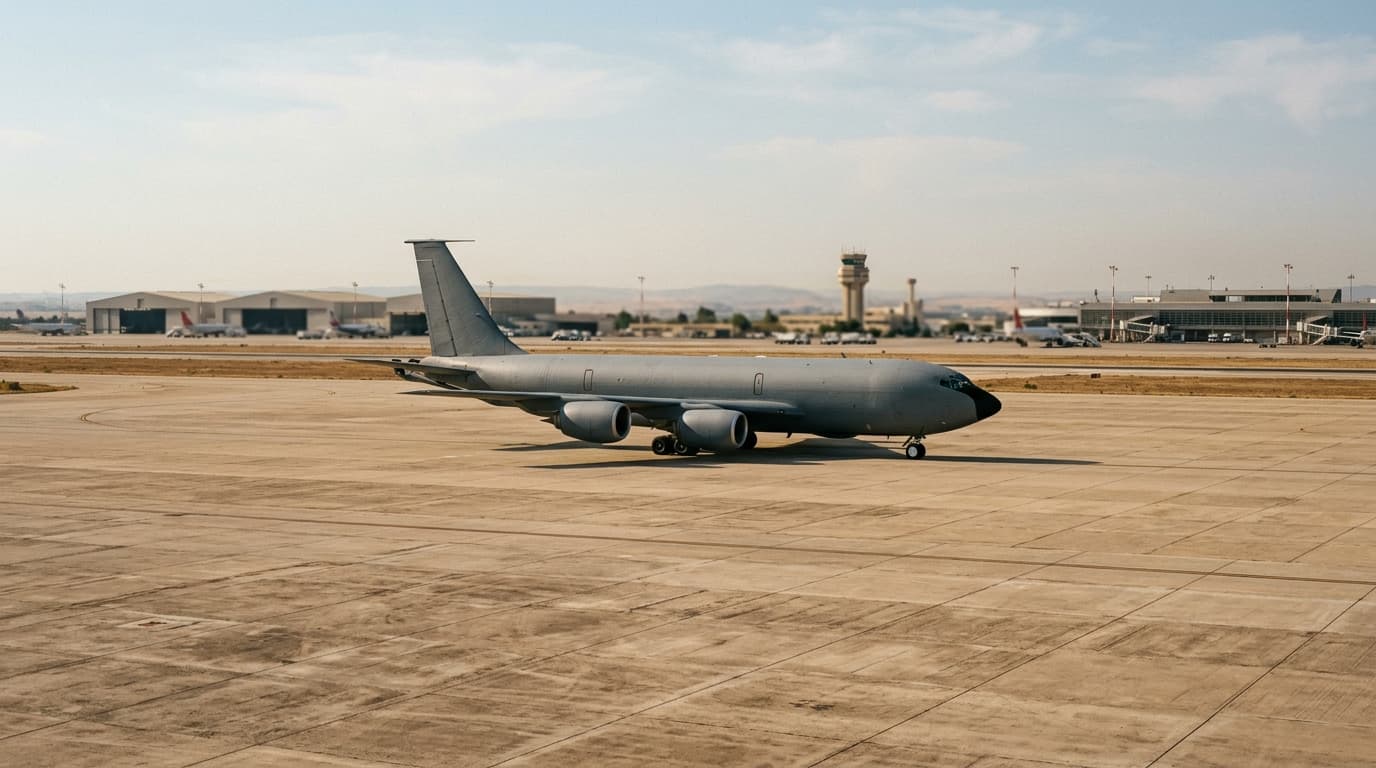
President Trump has decided to add additional US aerial refueling aircraft to the existing array in Israel and station them at Israeli Air Force bases, according to a report. The move, coordinated with the IDF, aims to reduce the impact on civilian transportation and reflects a change in the US assessment in the region.
A report on Saturday afternoon said President Trump has ordered additional US aerial refueling aircraft to be stationed at Israeli Air Force bases, in coordination with the IDF. The move, according to the report, aims to reduce the burden on civilian transportation arteries and reflects a change in the US assessment in the region. The number of additional aircraft and the timeline for deployment remain unspecified.
Earlier Saturday, a rapid sequence of reports and confirmations unfolded. At 10:23 Jerusalem, Channel 14 reported that the first US tankers were expected to land at an IDF base in southern Israel. A military source then told Israeli media that the US would add tankers and land them at Air Force bases to minimize disruption to civilian air traffic. The IDF confirmed that the tankers would land at Air Force bases rather than Ben Gurion Airport. After a military censor failed to block a prior publication, journalist Nir Dvori (N12) confirmed the stationing, and the IDF issued an official statement confirming the deployment.
These developments follow a broader US posture adjustment in the region. As The Zioneer reported on July 14, the US deployed approximately six additional refueling aircraft across Israel overnight. Earlier, on June 16, The Zioneer reported that the US military planned to relocate about 20% of its refueling aircraft from Ben Gurion Airport to ease congestion. A senior Israeli military official told journalist Yossi Yehoshua on July 14 that the US demand for the tankers was justified and integral to the joint deployment against Iran.
The specific number of aircraft ordered by Trump and the deployment timeline remain unconfirmed, and the report's source has not been named.
5 developments
Source and signal
- Internal intake