The Lead
Viral footage and images circulating from Oman purportedly show dozens of commercial vessels massing at the Strait of Hormuz, unable to move, following Iran's official declaration that the strategic waterway is closed until further notice. The developing situation, reported by Israeli media and social channels, raises immediate concerns regarding a severe disruption to global shipping lanes and the international oil supply. While the footage appears to show a significant maritime bottleneck, the exact scale of the disruption and the current status of every vessel in the area remain under verification.
Visual Evidence of Blockade
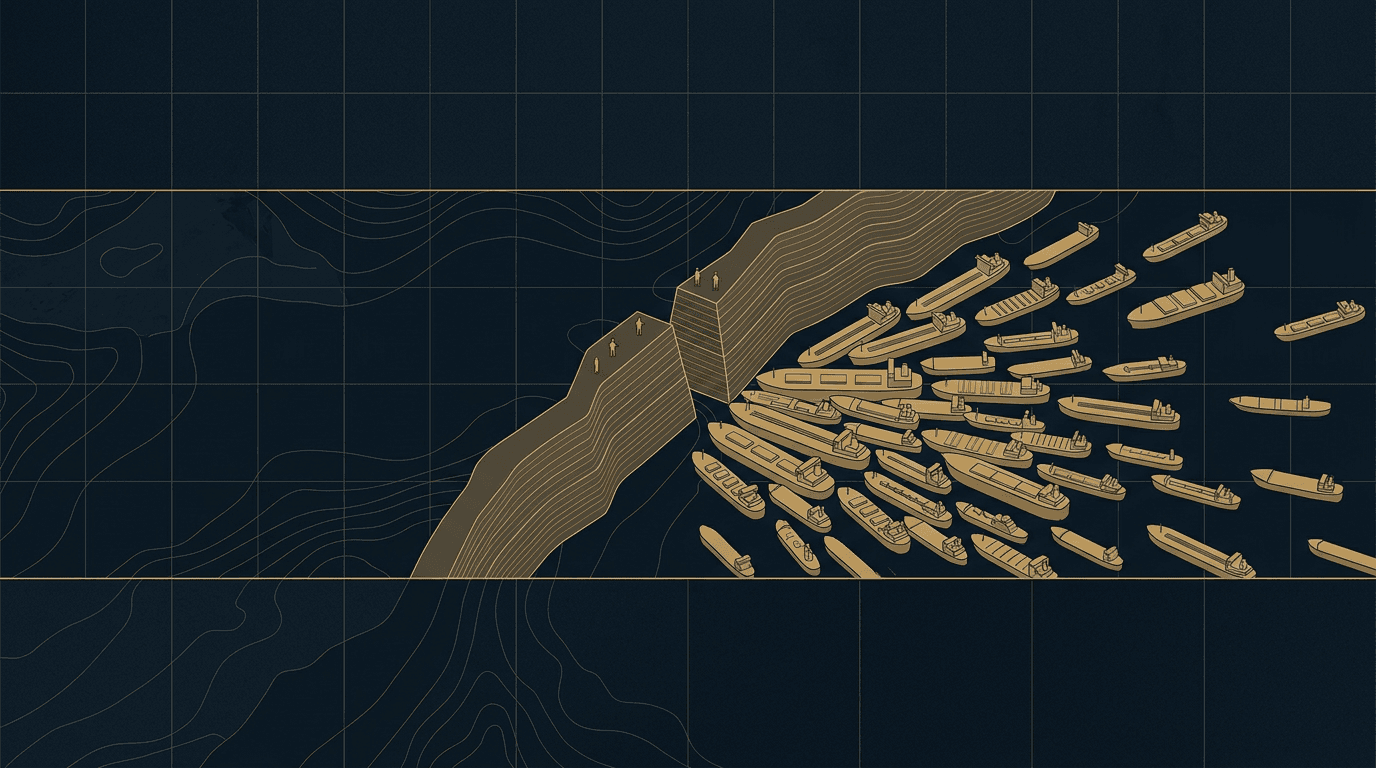
Recent visuals emerging from Omani waters depict a dense gathering of commercial tankers and cargo ships anchored or idling near the entrance to the Strait of Hormuz. These reports follow a dramatic announcement by Iran's top joint military command, which declared the waterway a closed zone. According to material reviewed by The Zioneer Intelligence Desk, the footage suggests that the flow of maritime traffic has reached a near-standstill, corroborating earlier unverified satellite imagery that indicated a total halt in the region's usual shipping activity.
Strategic Context and Iranian Threats
The closure of the Strait—the world's most critical oil transit point—comes amid escalating regional tensions. Iranian state media and military officials have framed the blockade as a response to recent U.S. strikes on Iranian territory. Tehran has explicitly warned that any vessel attempting to transit the waterway without authorization could be targeted. Reports from the region suggest that while a "trickle" of ships may be allowed through under Iranian auspices—allegedly involving exorbitant transit fees—vessels linked to the United States and Israel are being strictly excluded.
Analysis of the Maritime Situation
At this stage, the situation remains "Developing." While the viral footage provides a snapshot of the congestion, it is not yet clear if the "jam" is a result of physical obstruction by the Iranian Navy or a voluntary halt by shipping companies fearing IRGC intervention. Previous reports have confirmed that the Iranian Revolutionary Guard Corps (IRGC) has already seized at least two vessels in the area, which currently appear stationary off the Iranian coast. The presence of dozens of ships waiting in Omani waters indicates that commercial operators are treating the Iranian threat as a high-probability risk, effectively honoring the blockade to avoid seizure or attack.
Global and Security Implications
The Strait of Hormuz handles approximately one-fifth of the world's petroleum traffic. A sustained closure would likely lead to a significant surge in global energy prices and a restructuring of international naval priorities in the Persian Gulf. For Israel and its allies, the blockade represents a direct challenge to the principle of freedom of navigation. The IDF and U.S. Central Command have previously indicated they are monitoring the situation closely, though a coordinated military response to reopen the strait has not yet been observed. The Zioneer Intelligence Desk will continue to track vessel movements and official statements as the crisis evolves.
- Satellite Imagery Reportedly Shows Total Halt of Traffic in Strait of HormuzRelated analysis
- CNN: Iran Seizes Control of Strait of Hormuz, Grants Transit to Select NationsRelated analysis
- Oil Spikes to $85 as Strait of Hormuz Traffic Nearly Halts, Bloomberg Data ShowsRelated analysis
- Qatar Orders Mandatory Halt to All Maritime Traffic Citing Safety ConcernsRelated analysis
- IRGC reportedly launches more than 20 missiles toward Strait of Hormuz
- Houthis capture Kahbub area in Lahj, tighten grip on Bab el-Mandeb Strait
- Katz: Approaching Ali Taher ridge will be destroyed; no withdrawal until Hezbollah disarmed
- Report: Iranian hardliners attacked three ships without top leaders' approval, unraveling US truce