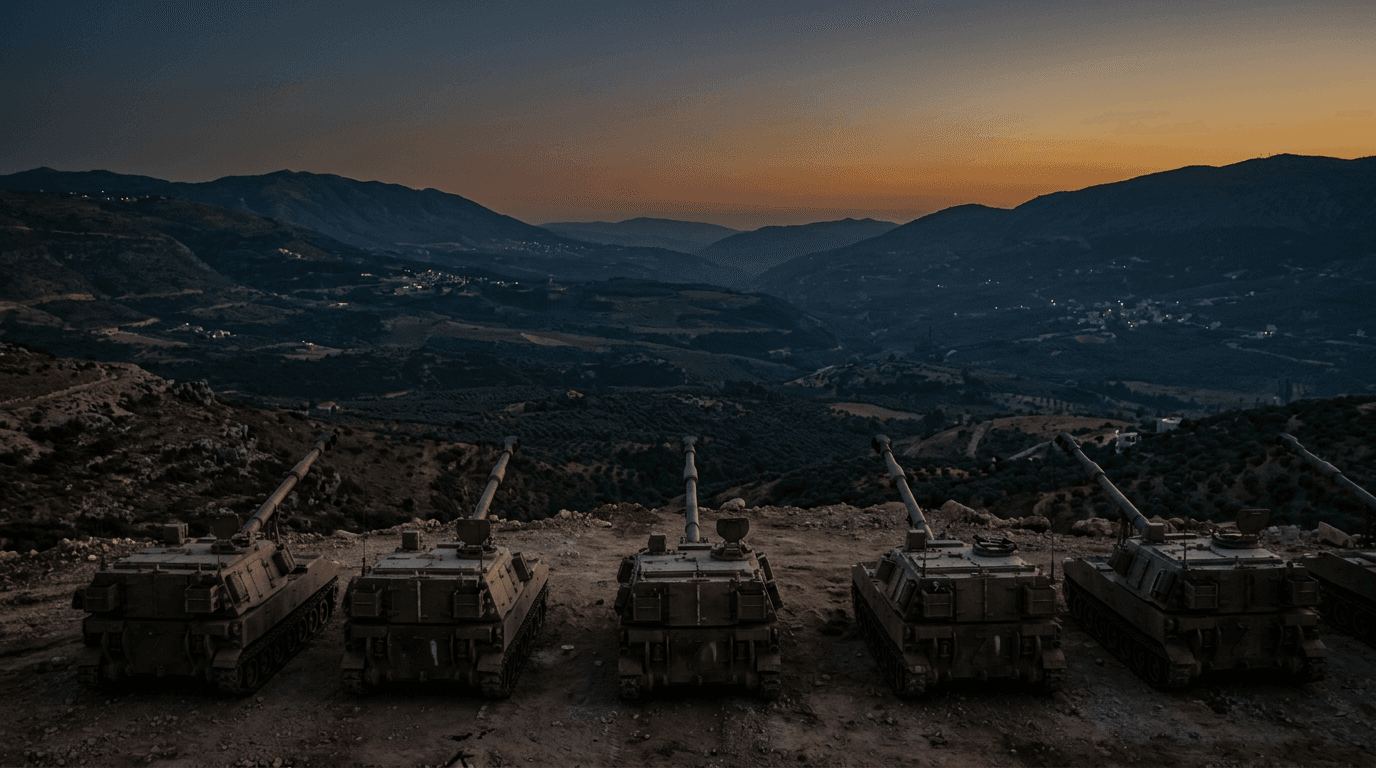
A dramatic policy shift has severely constrained IDF airstrikes in southern Lebanon, a military source tells Yedioth Ahronoth. Operations that recently required division or corps command authorization now need personal approval from the chief of staff — and in some cases the political echelon. The restriction was ordered before five soldiers were killed last weekend and before the Iran-US MOU was signed, reportedly at American request.
A military source has told Yedioth Ahronoth that the IDF's freedom to strike in southern Lebanon was drastically curtailed by a new approval ladder — and that the policy was implemented at an American request prior to the signing of the Iran-US memorandum of understanding. Strikes that days ago were authorized at the division or Northern Command corps level now require the chief of staff's personal sign-off, and in some cases approval from the political echelon. The source says the restriction was ordered before the weekend in which five IDF soldiers were killed in southern Lebanon, and before the Iran-US MOU was signed. Officers who spoke to Yedioth criticized the restriction, saying it limits the military's ability to target Hezbollah operatives near Israeli ground forces and undermines force protection. The IDF Spokesperson's Unit has not commented.
The Zioneer first reported a decline in IDF strike tempo across southern Lebanon on Friday, Jun 12 at 15:59 Jerusalem, with sources noting the cause was unclear. By Saturday, Jun 20 at 17:37 Jerusalem, multiple thread items established an evolving picture: Chief of Staff Lt. Gen. Eyal Zamir directed a hold-fire (a military correspondent report, later confirmed by an Israeli official); the political echelon — Prime Minister Netanyahu and Defense Minister Katz — ordered a ceasefire while retaining captured territory; and Yedioth reported the order stemmed from Iranian pressure. Subsequent versions added that the IDF confirmed the directive, and that operations were reduced due to US pressure and Iranian threats to close the Strait of Hormuz. The current report, from a single source (Yedioth Ahronoth), adds that the approval ladder was tightened at American request before the MOU.
As The Zioneer reported on Saturday, Jun 20 at 21:00 Jerusalem, military officials reportedly opposed the directive, citing restricted operational freedom for troops. Broader context includes earlier heavy IDF strikes in Lebanon (reported Jun 19) and a US Embassy shelter directive for its personnel in Israel (reported Jun 8), amid ongoing high-level security consultations on Iran.
The precise geographic and operational scope of the new approval ladder — whether it applies to all of southern Lebanon or specific sectors — has not been detailed. The IDF has not officially commented on the policy change or the source's claim of American involvement.
13 developments
- ConfirmedIDF reportedly ordered to halt strikes in Iran, continue operations in southern Lebanon
- Developing18 killed, IDF strikes 150 targets in South Lebanon as ceasefire violations mount
- DevelopingIDF sharply constrained its strikes in southern Lebanon since last week, source says
- DevelopingReport: IDF ordered to restrict offensive operations in southern Lebanon, destruction of major terror infrastructure requires American approval
Source and signal
- Open-source intake